Ricoh GR IV vs Full Frame: Can a pocket camera compete with a beast?
This article contains affiliate links. If you purchase through them, I may earn a small commission at no extra cost to you.
My Shooting Setup
In my recent YouTube video I put the tiny Ricoh GR IV up against a full frame setup (Sony A7C II + Voigtlander Nokton 28mm). My goal was to find out if a pocket camera like the GR IV could hold up against a full-frame beast. This blog is meant to complement the video, giving you the chance to compare the images from both cameras side by side.
⚠️ All photos were shot in RAW and were taken in real-life street situations, not in a controlled studio. I did my best to capture the same scenes with similar settings on both cameras. I have not done any colorgrading or editing, except in a few cases where I slightly adjusted the exposure to keep the results directly comparable (ex. in the color reproduction photos).
⚠️ Images viewed directly on this page are compressed, but I have also included the uncompressed files (including EXIF data) for the ISO and sharpness tests. These files were exported at 100% quality with the long edge limited to 5000px (due to hosting file size restrictions). It is recommended to view the uncompressed files for an accurate comparison.
Image Quality
First, let’s take a look at how both cameras perform in daylight. I captured a series of photos to test them across the following categories:
Dynamic Range
Color Reproduction
ISO Performance
Sharpness
Dynamic Range
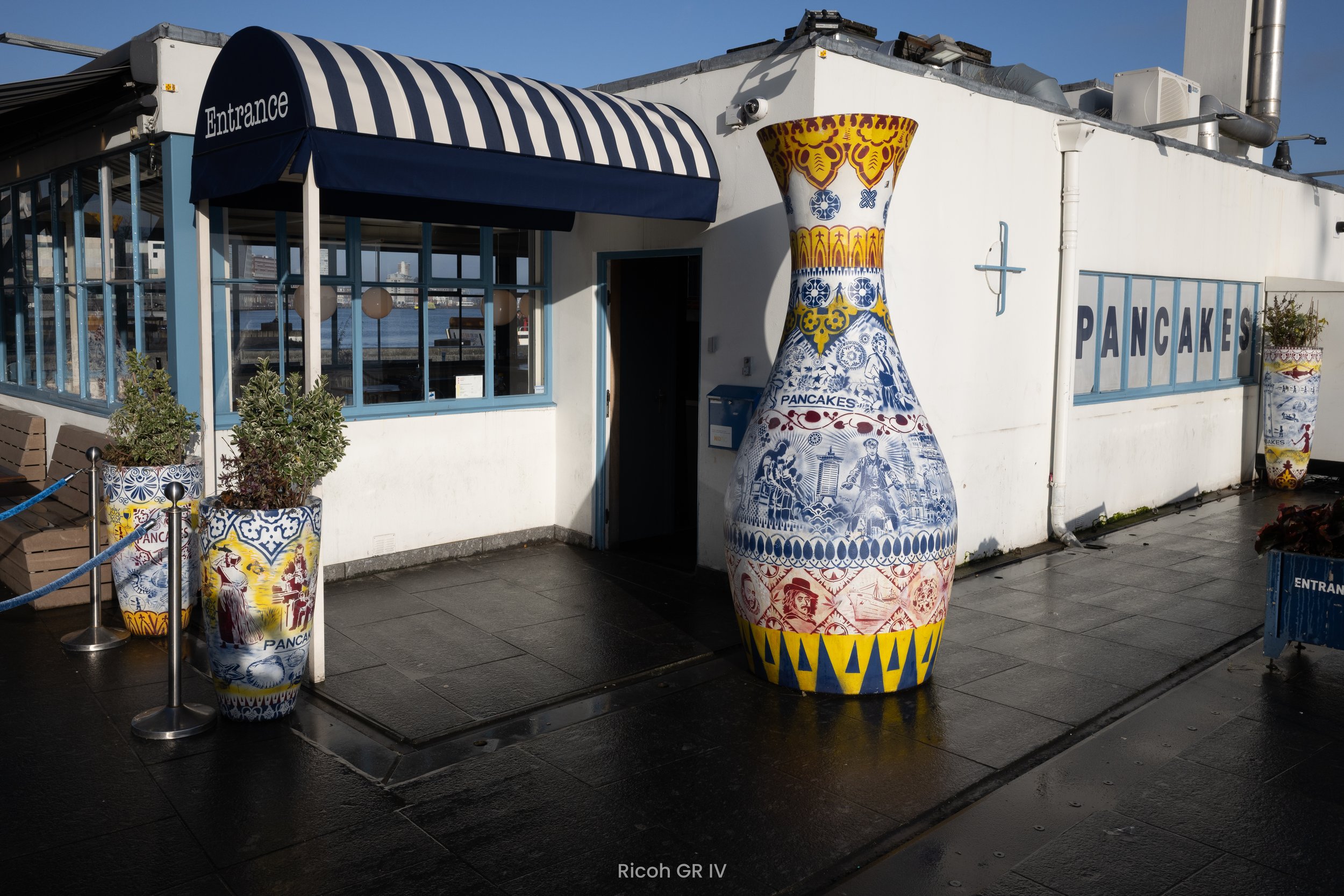
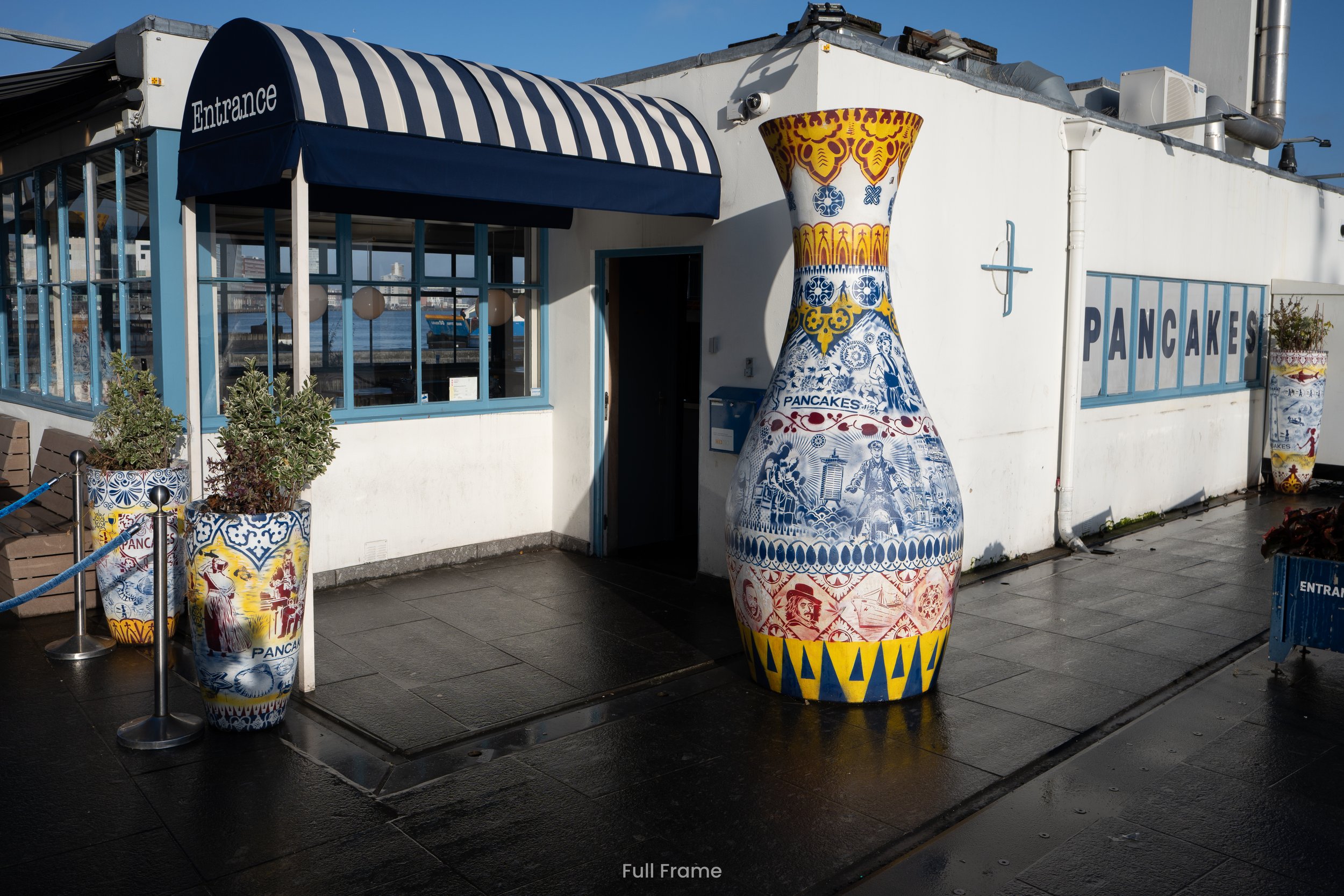
Here’s a selection of high-contrastphotos. I am not sure what you think but I had a hard time spotting any differences and sometimes I couldn’t even tell which camera took which shot. In both cases, the blacks are equally deep and the highlights hold up surprisingly well.
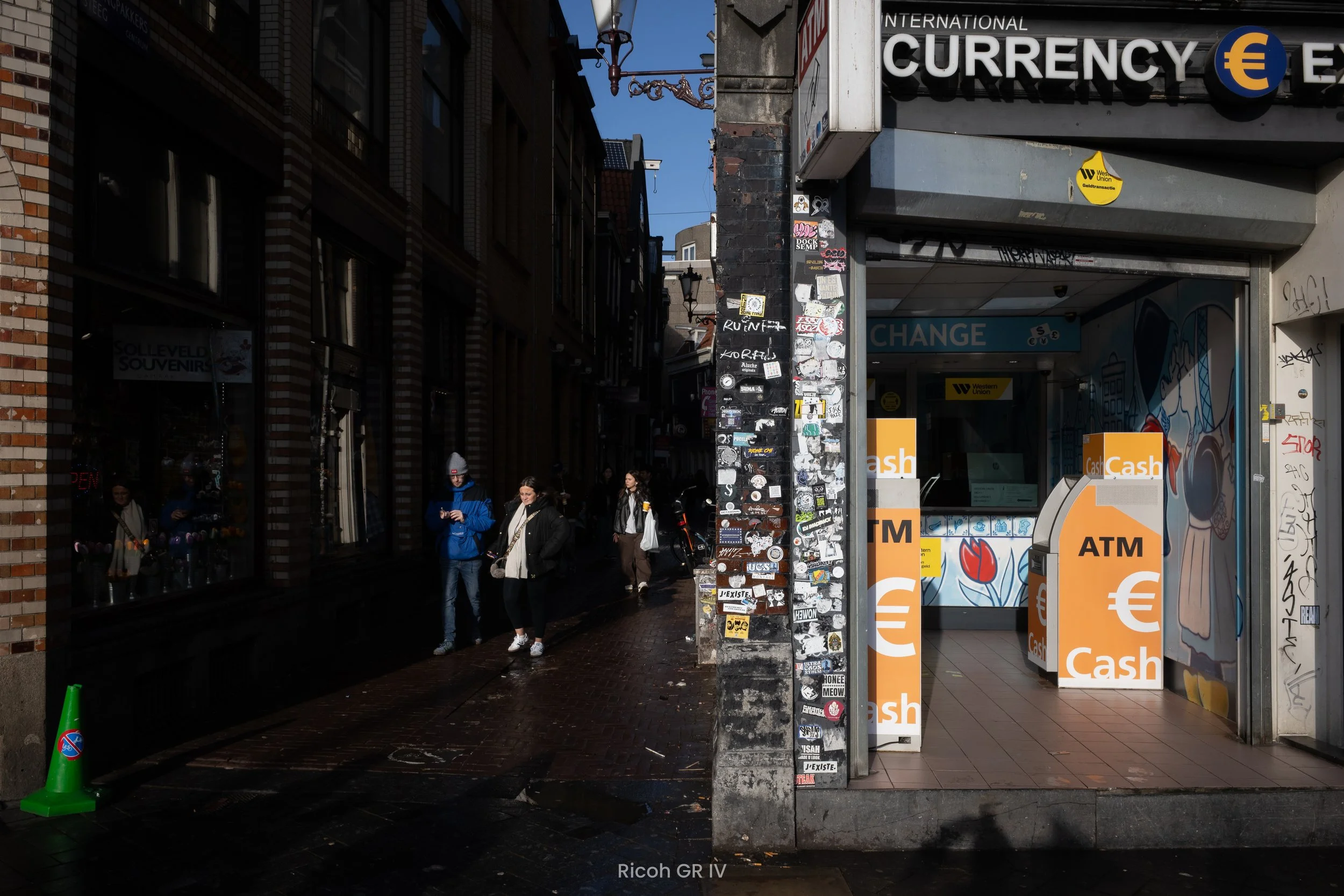
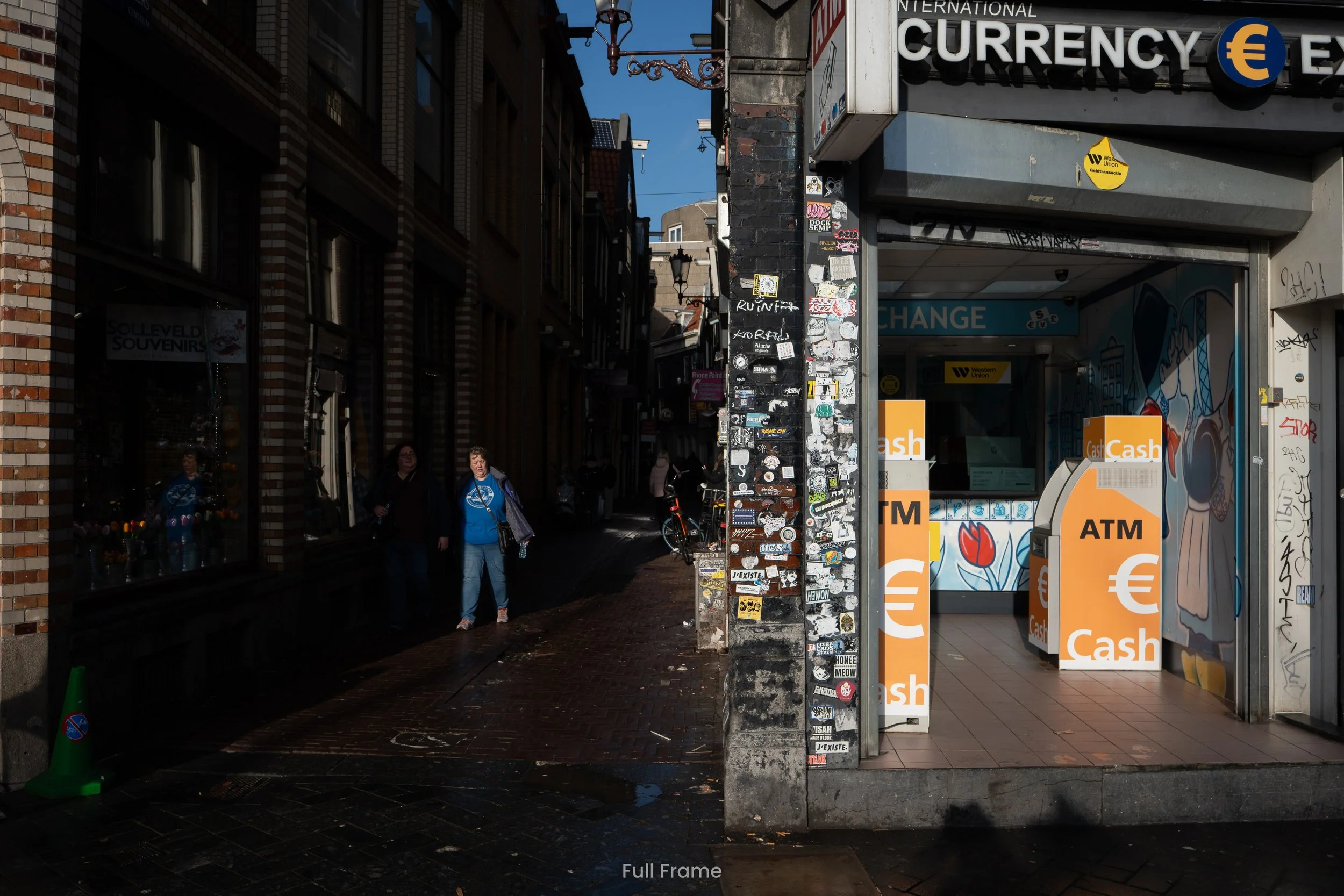
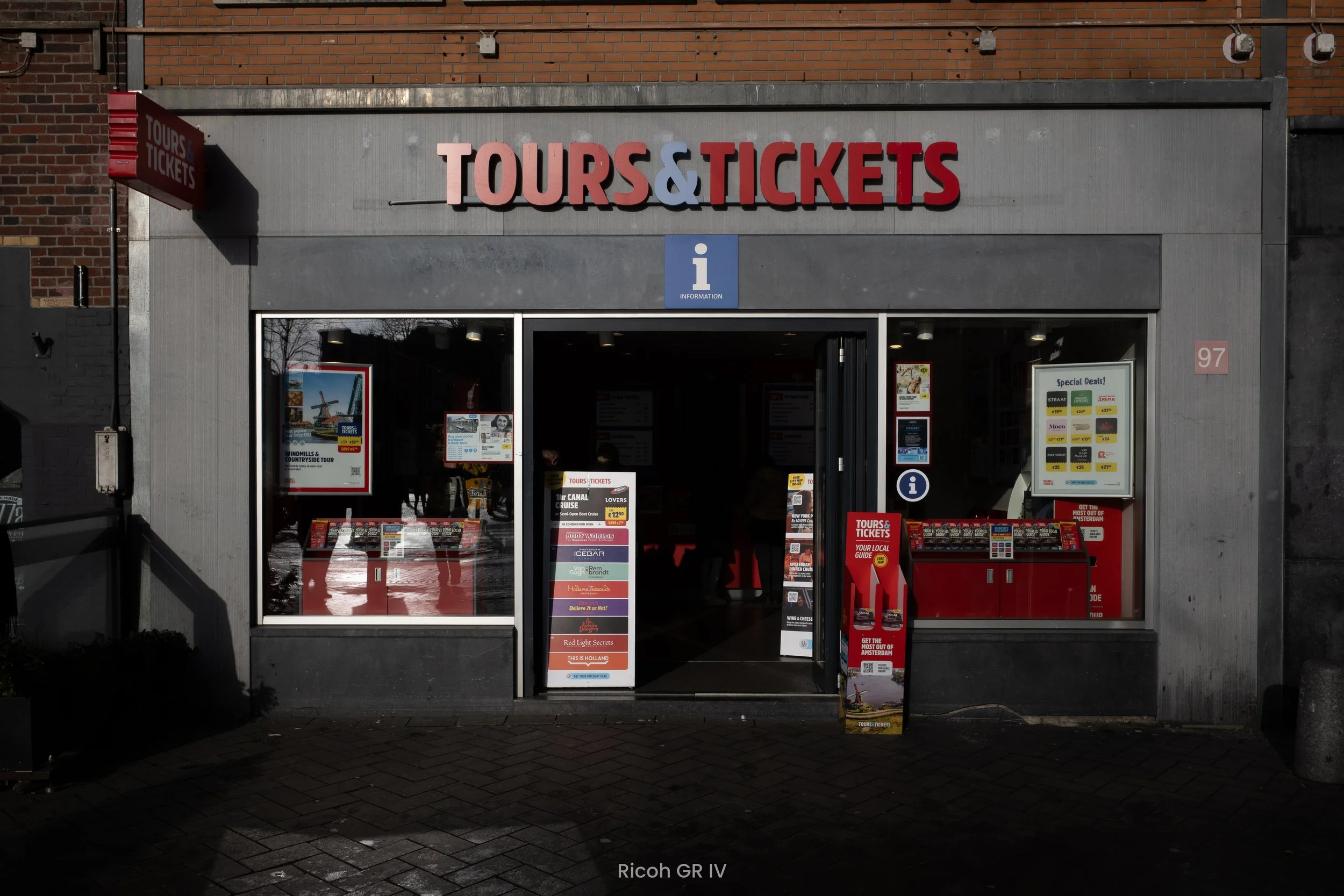
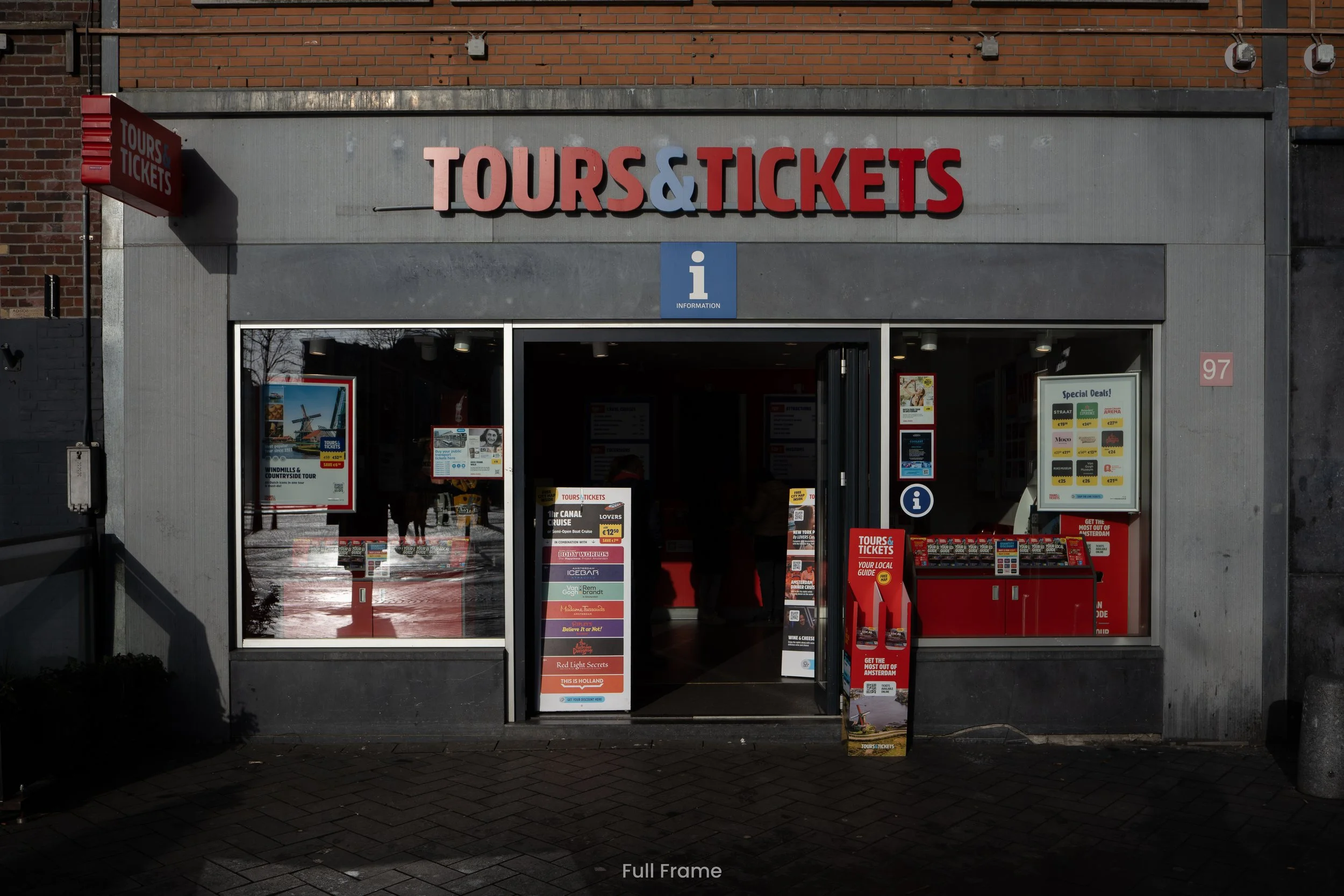
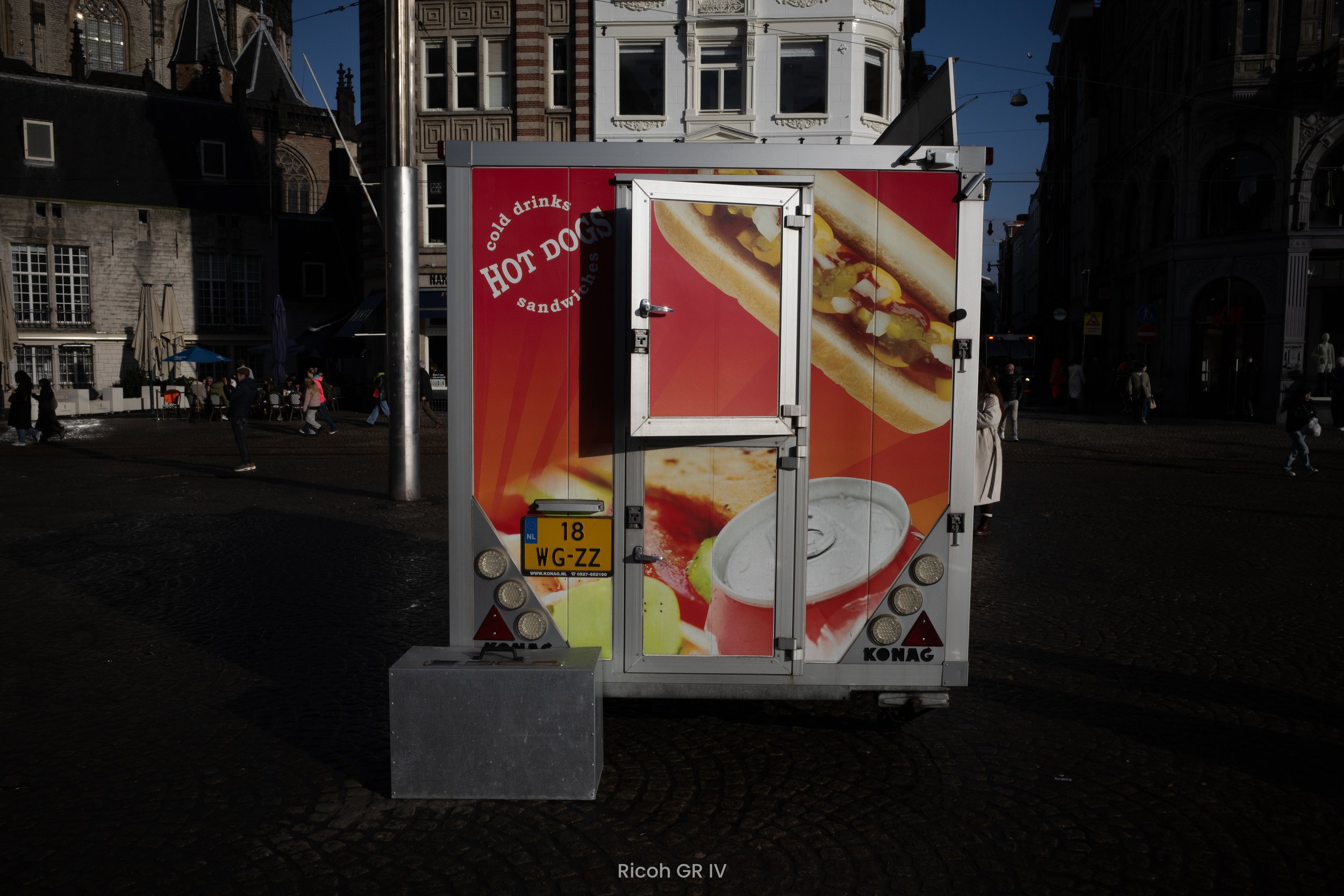
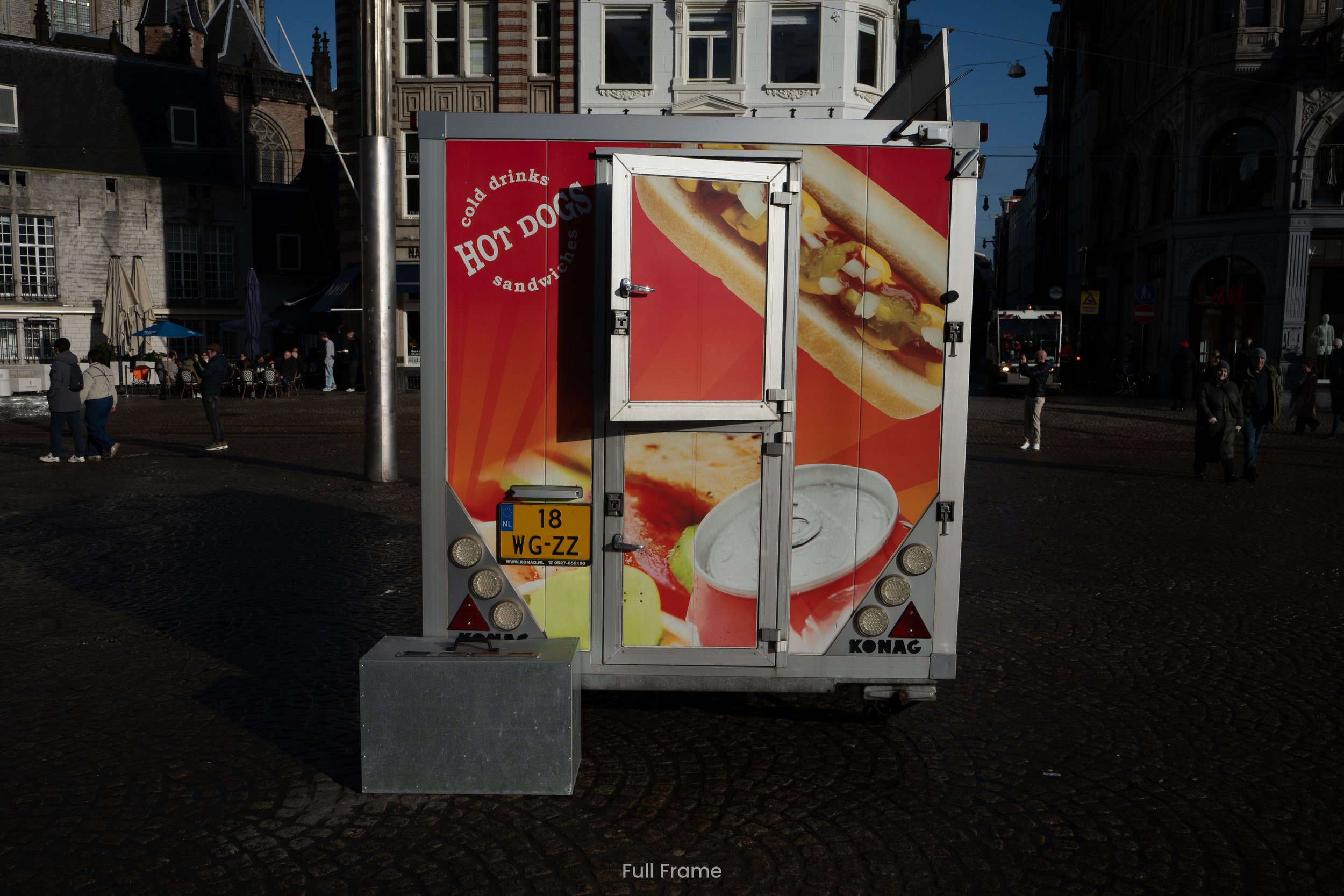
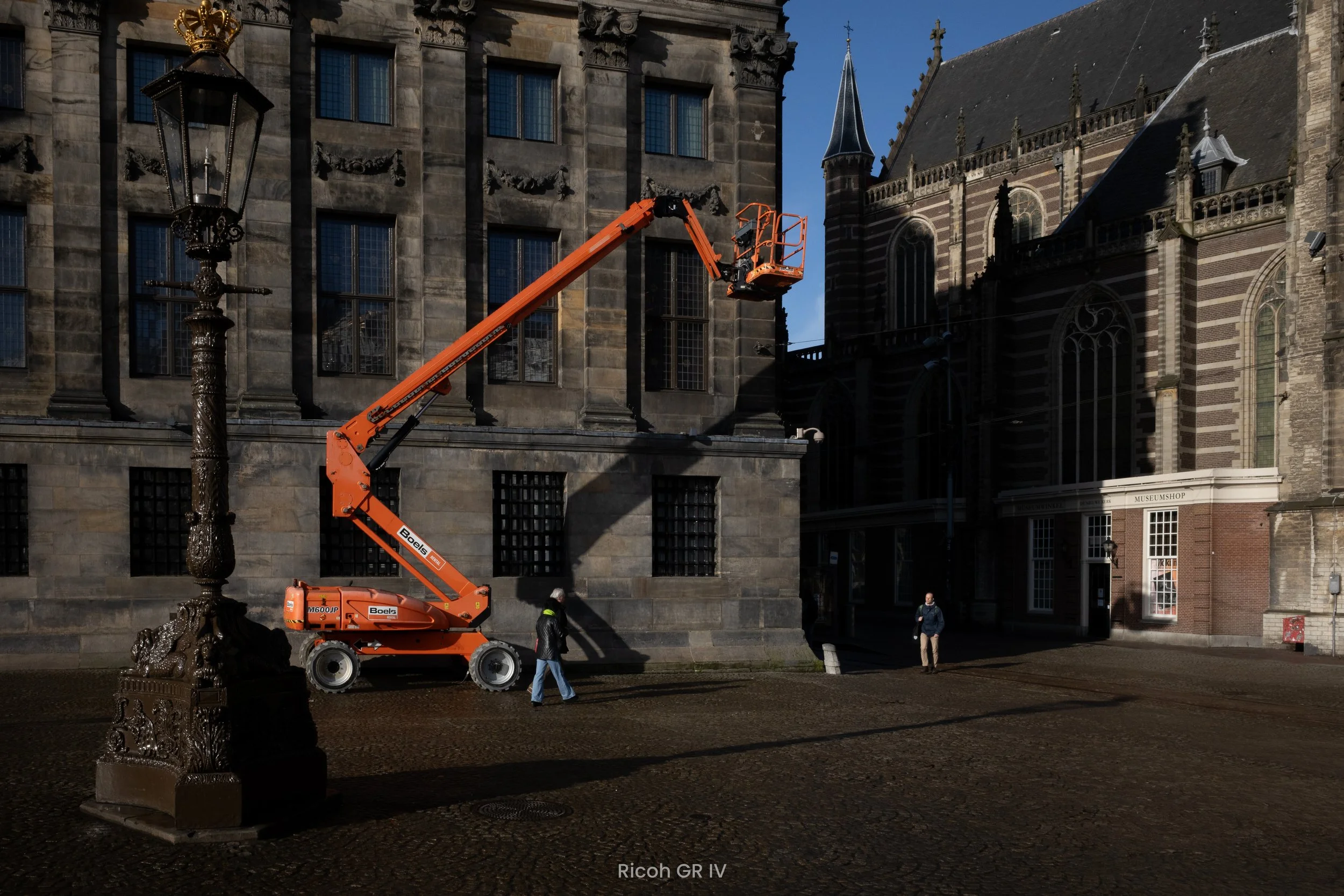
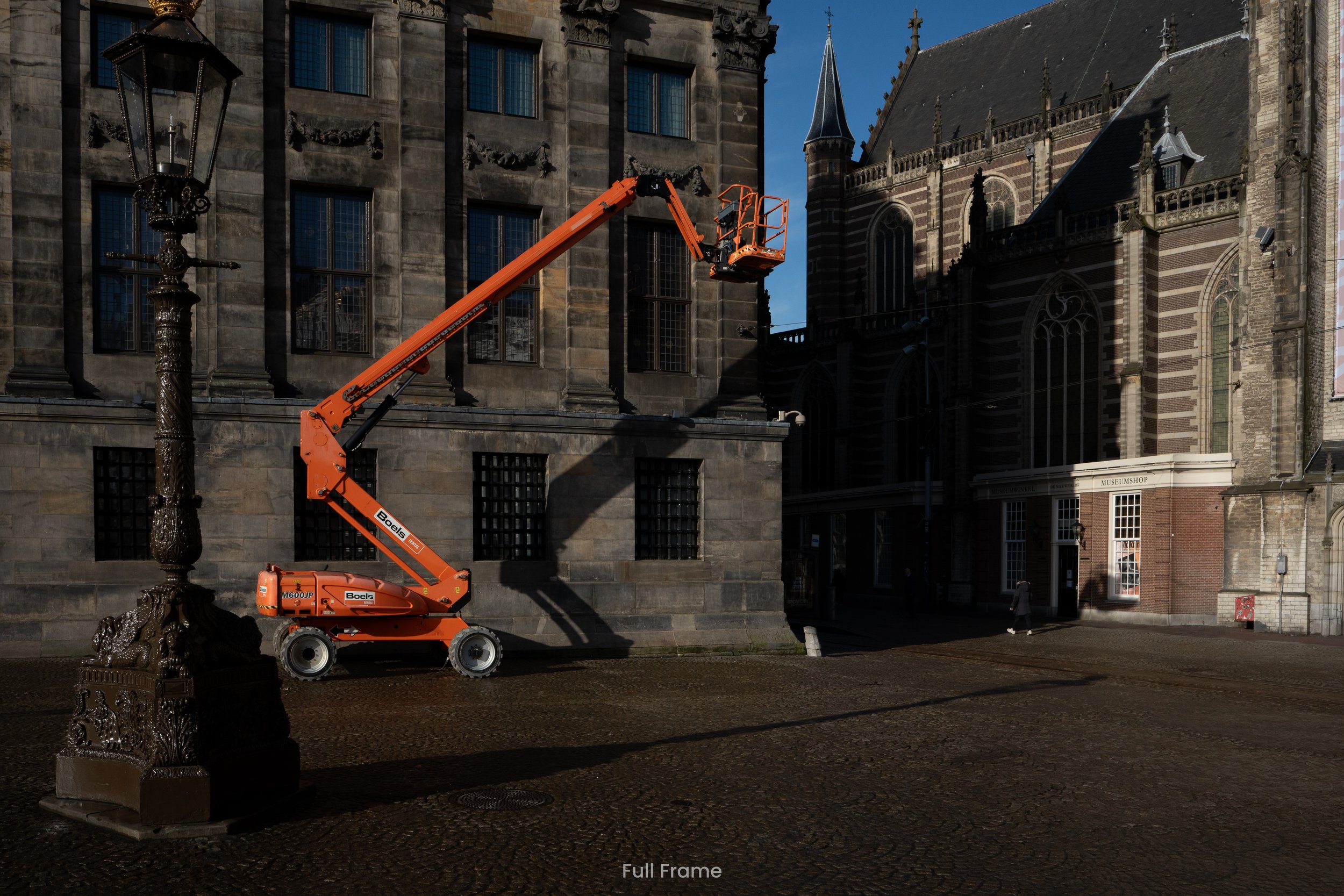
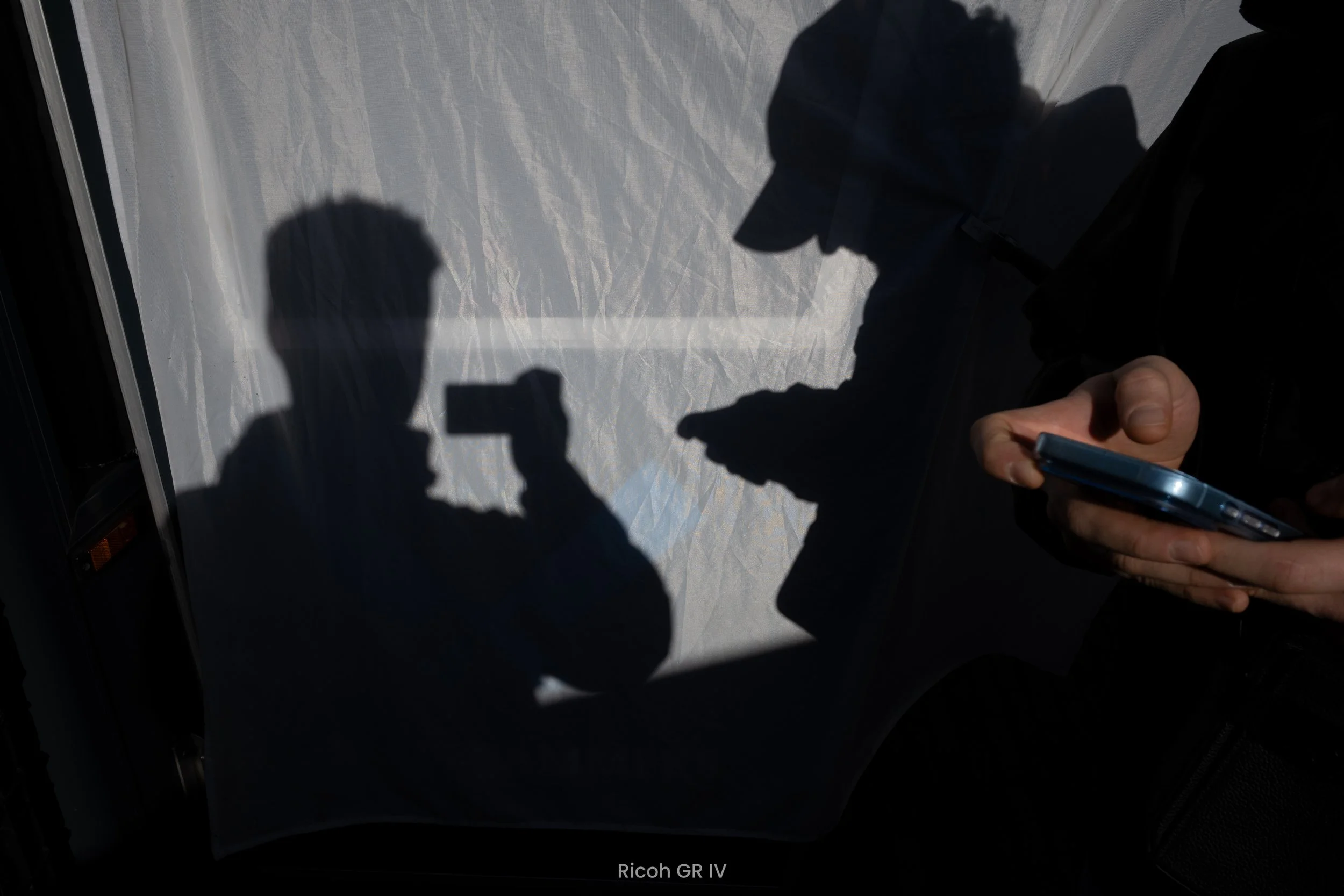
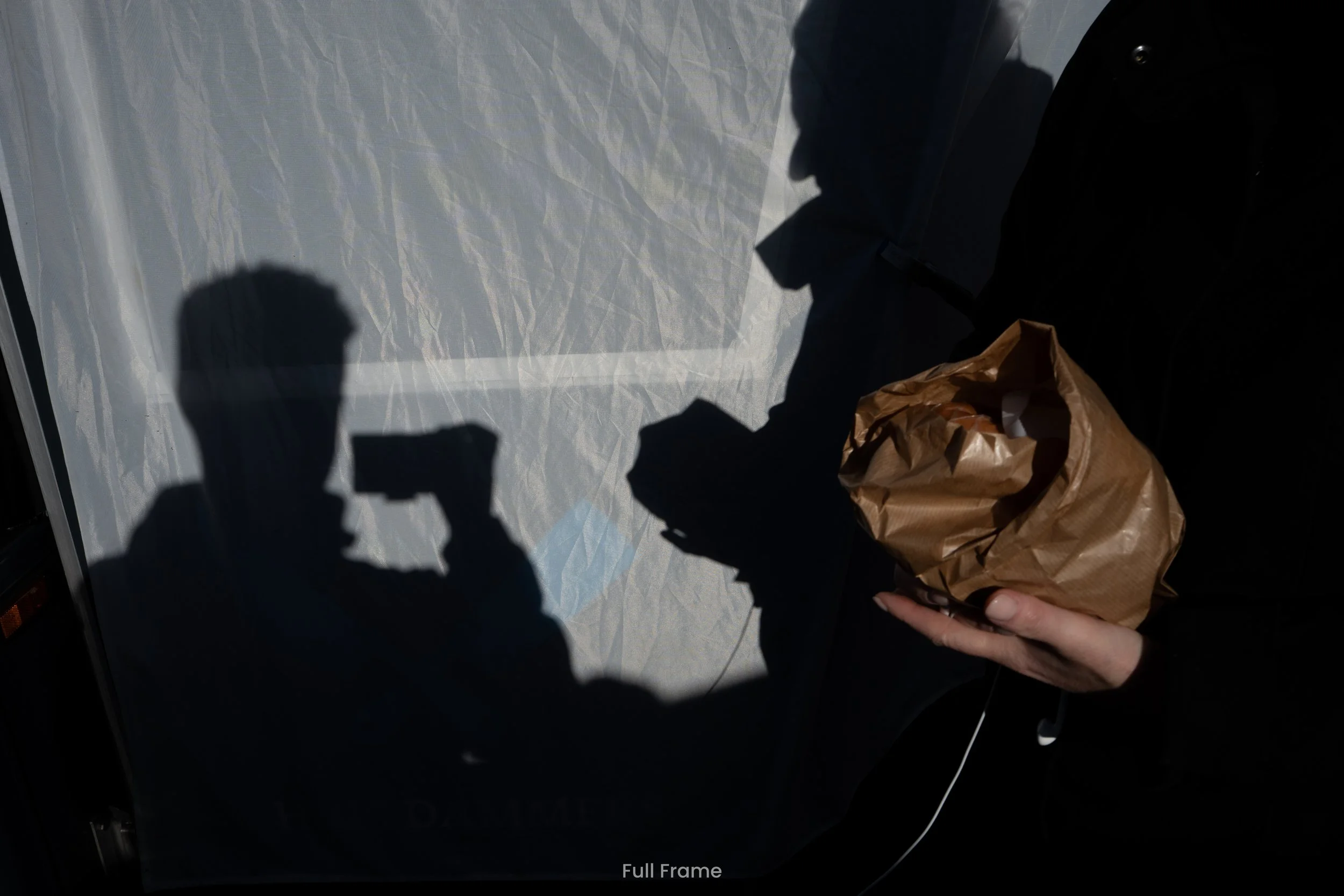
I also took it a step further and tested dynamic range while editing:
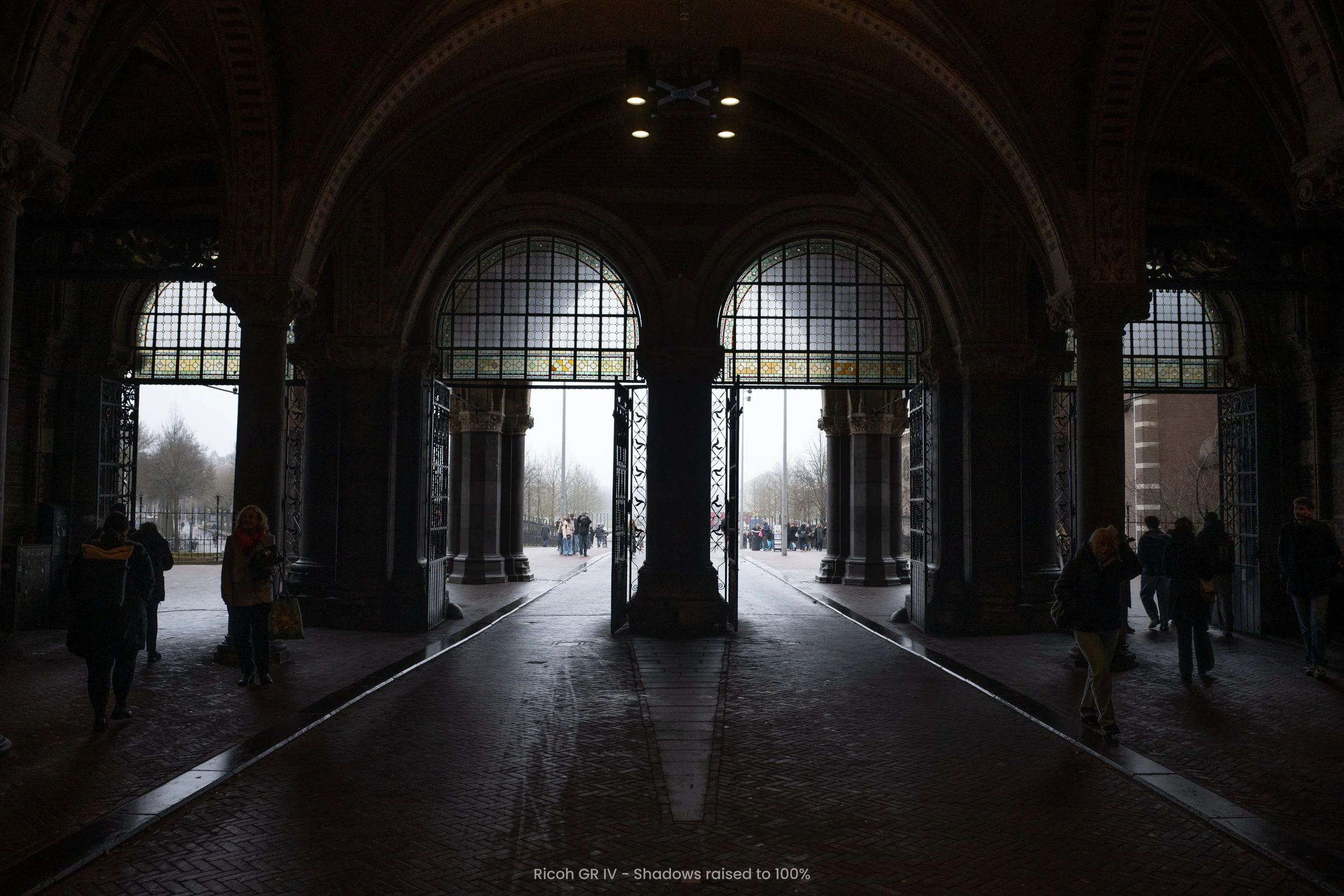
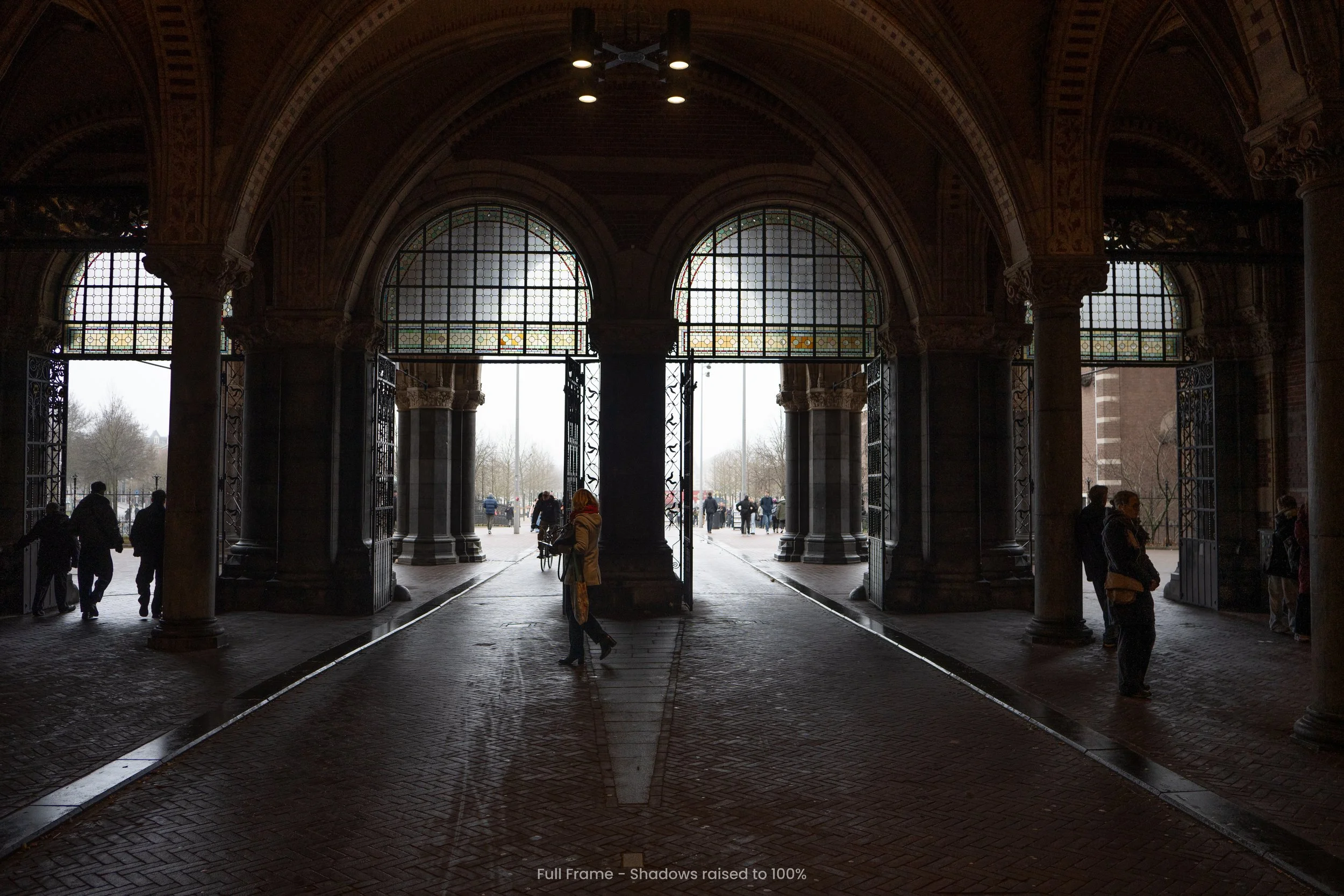
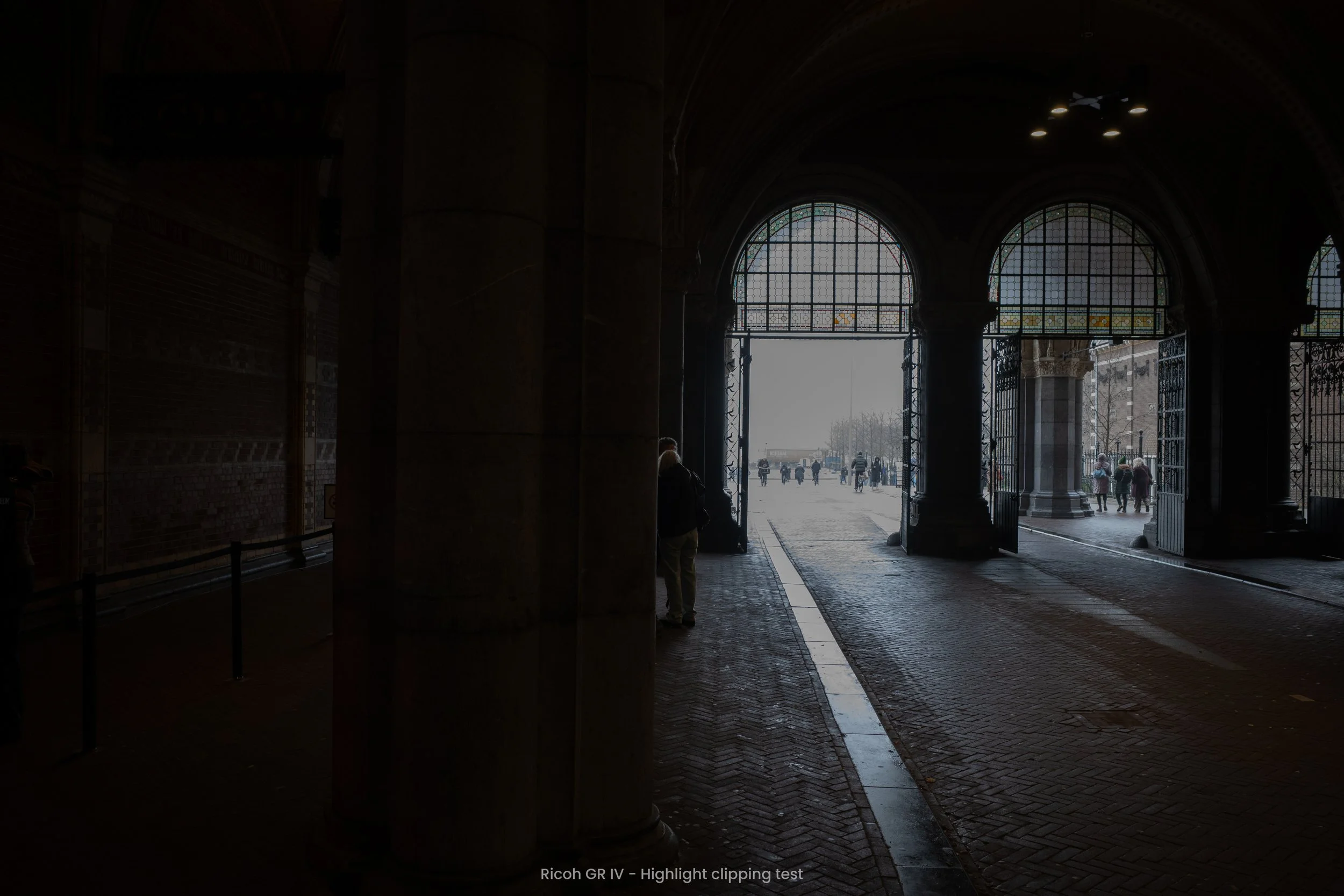
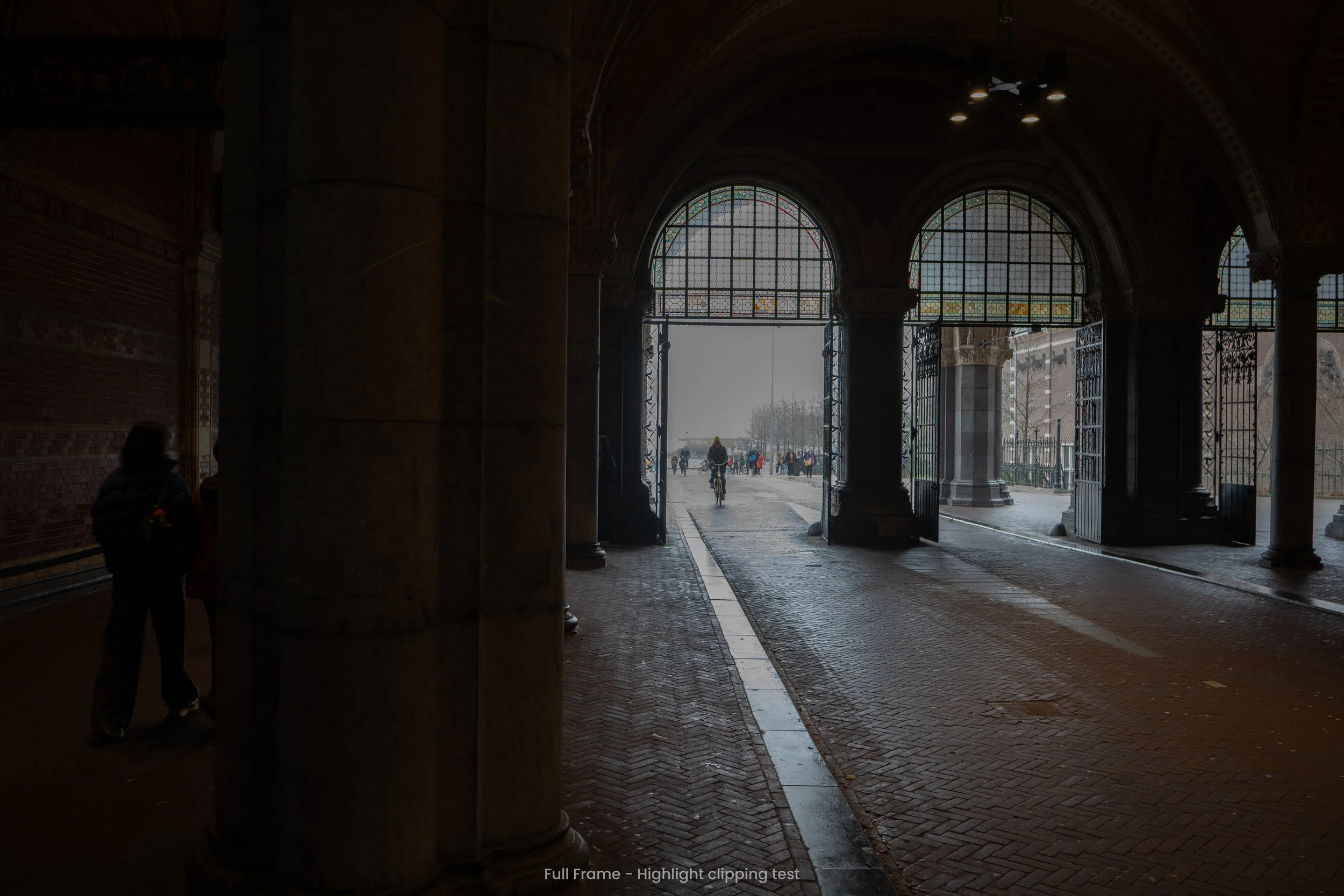
First example: I exposed for the highlights and then pushed the shadows 100% on both photos. As you can see, the full-frame files reveal a bit more detail in the shadows, but the difference isn’t huge, at least in daylight. We’ll revisit this later in low-light situations.
Second example: I exposed for the shadows and then lowered the highlights to see if they clipped. The Ricoh GR IV couldn’t fully recover all the highlights, as expected, but the difference is very small considering the sensor size.
⚠️ To keep this part of the test fair, I used exactly the same settings on both cameras.
ISO Performance
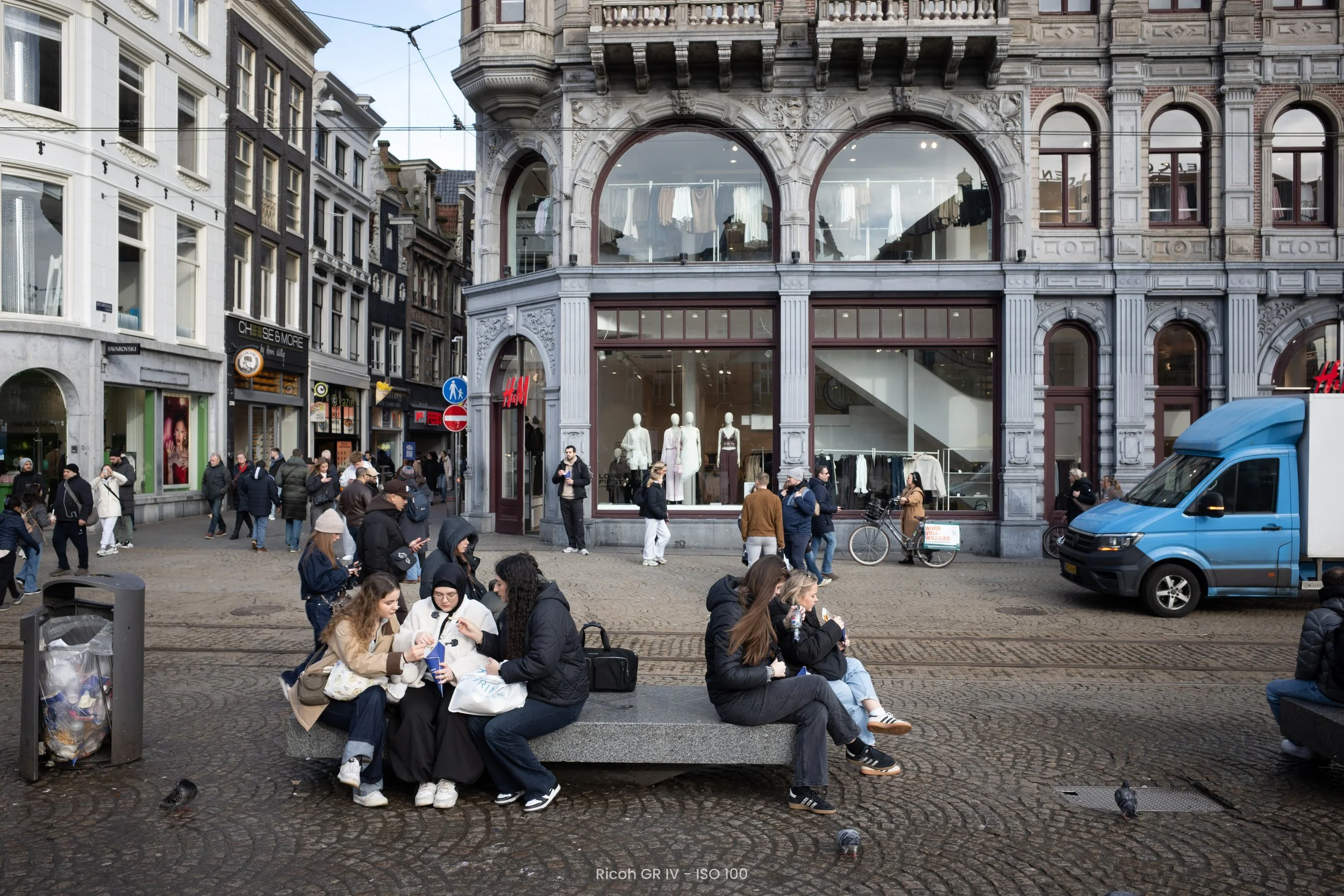
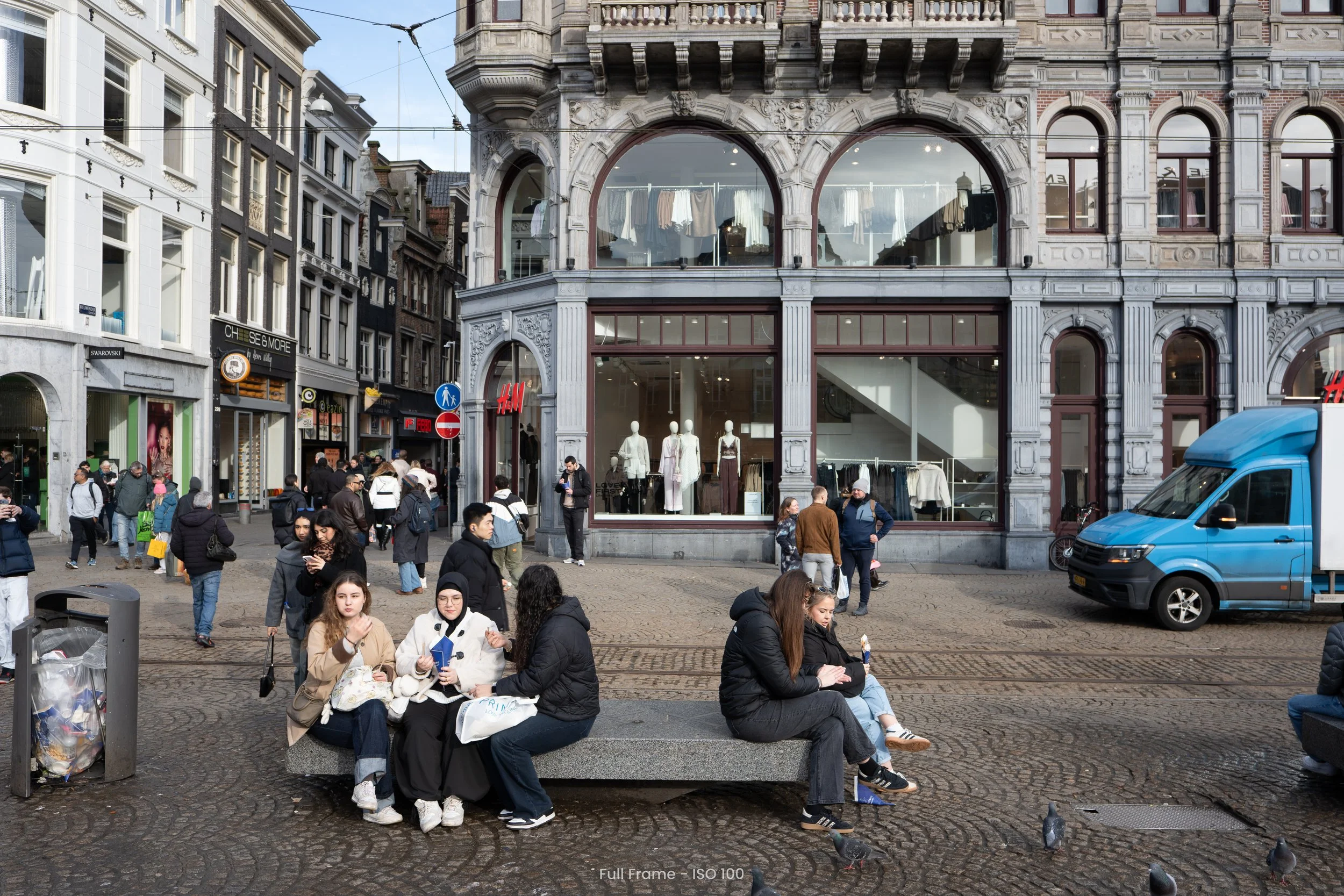
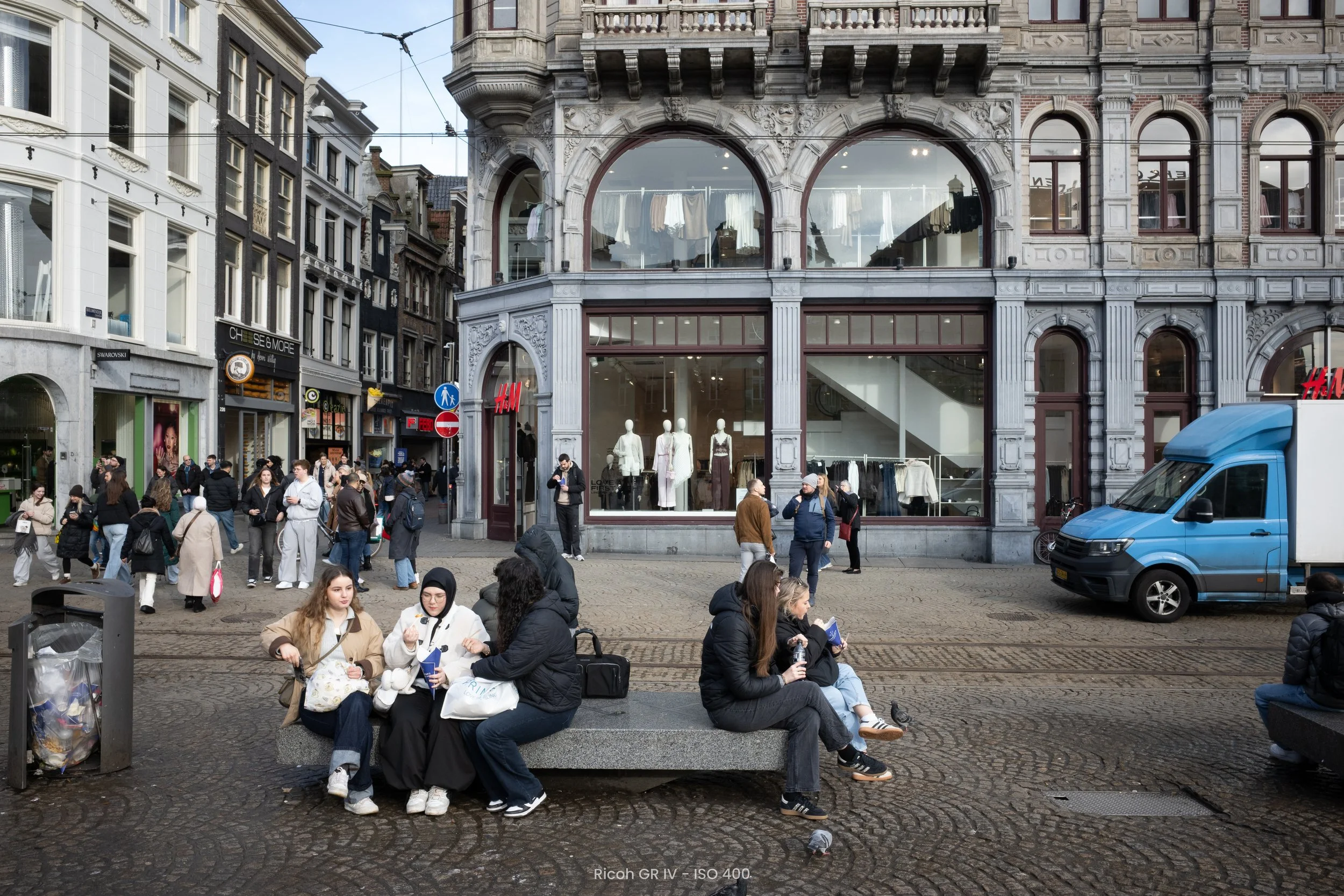
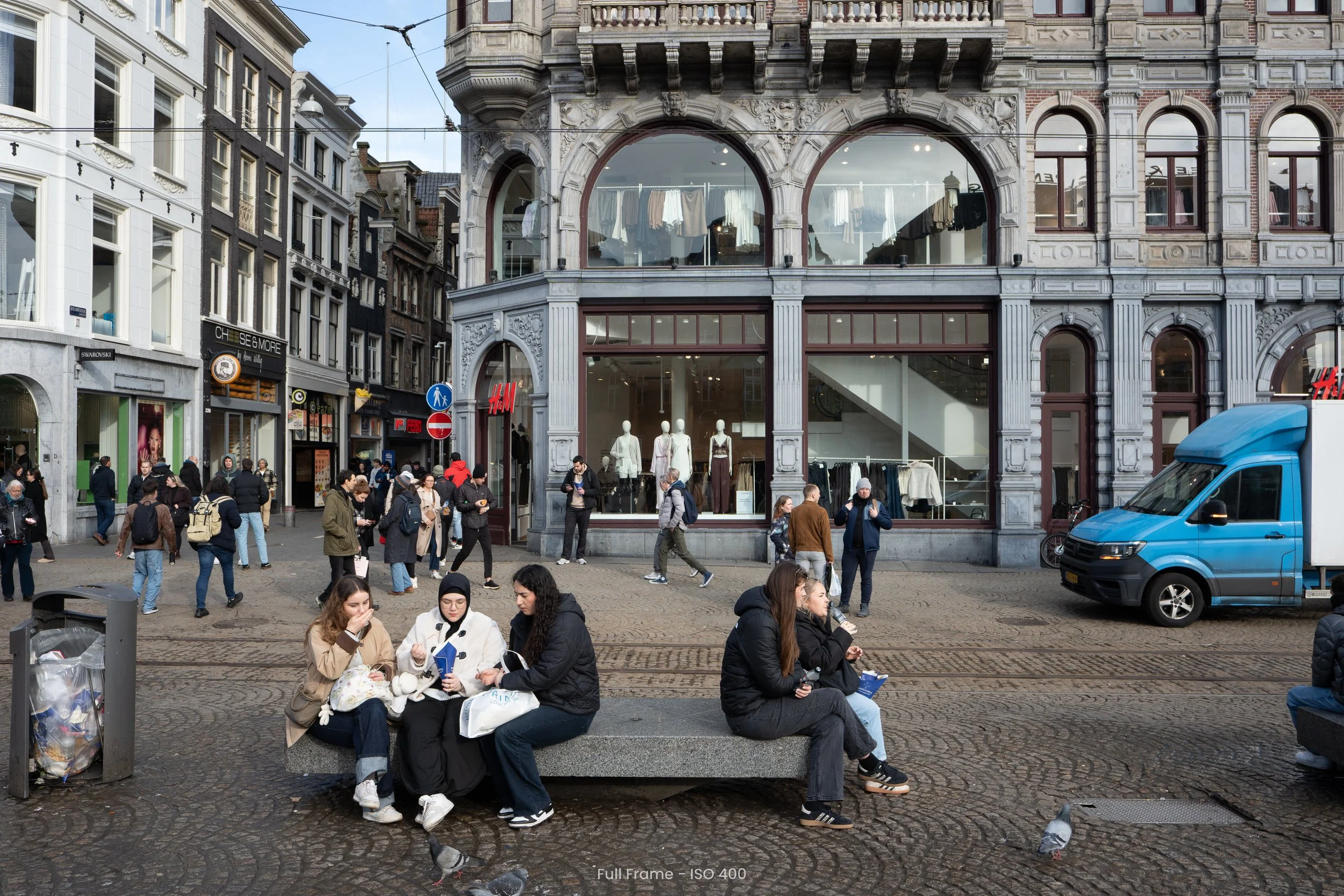
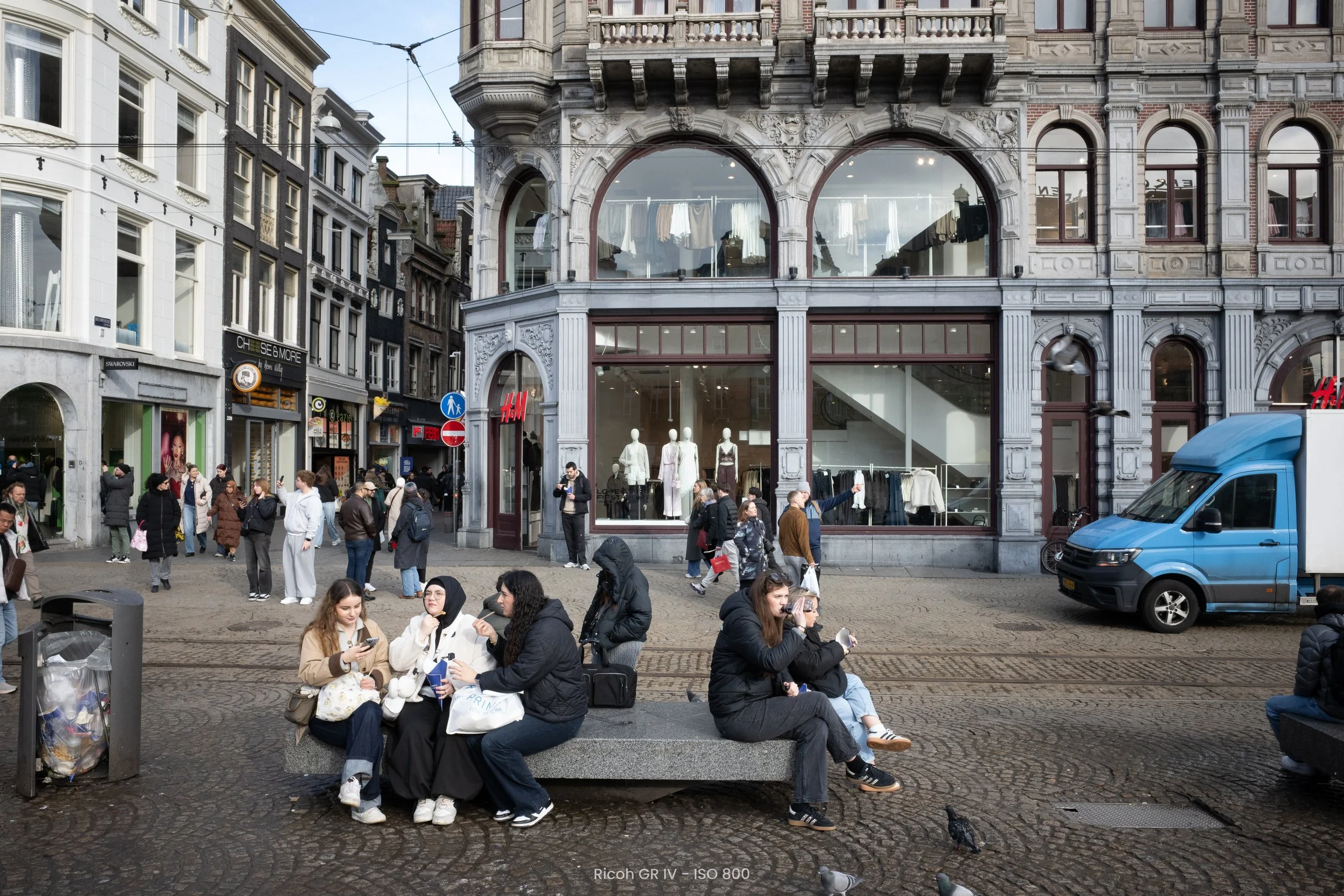
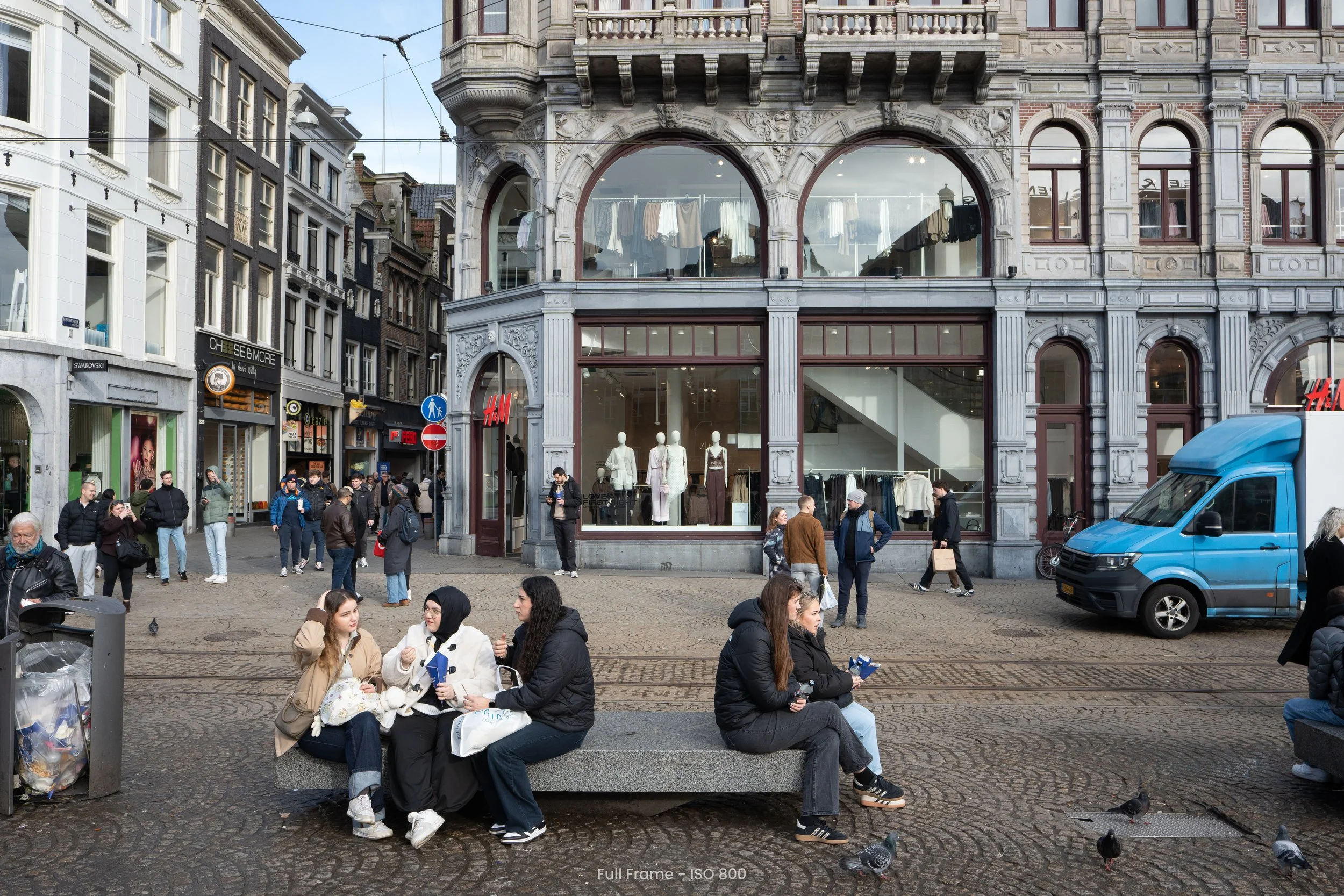
When it comes to ISO performance during the day, the Ricoh GR IV holds up surprisingly well against a full-frame camera. At low ISO, there’s almost no noise in either camera. Noise becomes more noticeable above ISO 3200, but even at ISO 6400, the GR IV’s photos are perfectly usable. Try to zoom in and you’ll still see almost no difference between the two cameras which honestly surprised me. This might change in low-light conditions, but for daylight shooting, the GR IV is performing impressively so far.
⚠️ I have disabled any kind of noise reduction in the settings for both cameras to keep things fair and I haven’t applied any noise reduction.
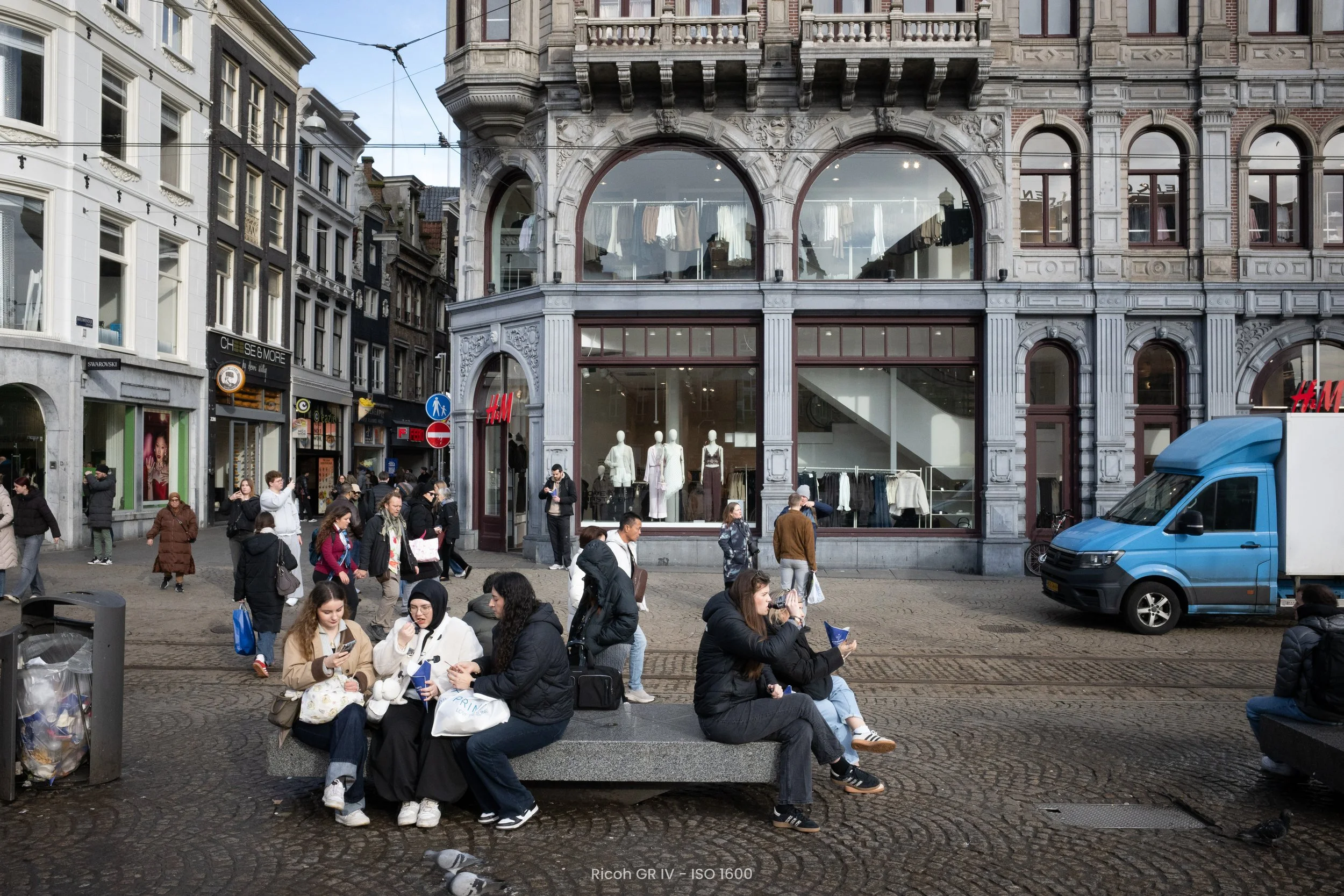
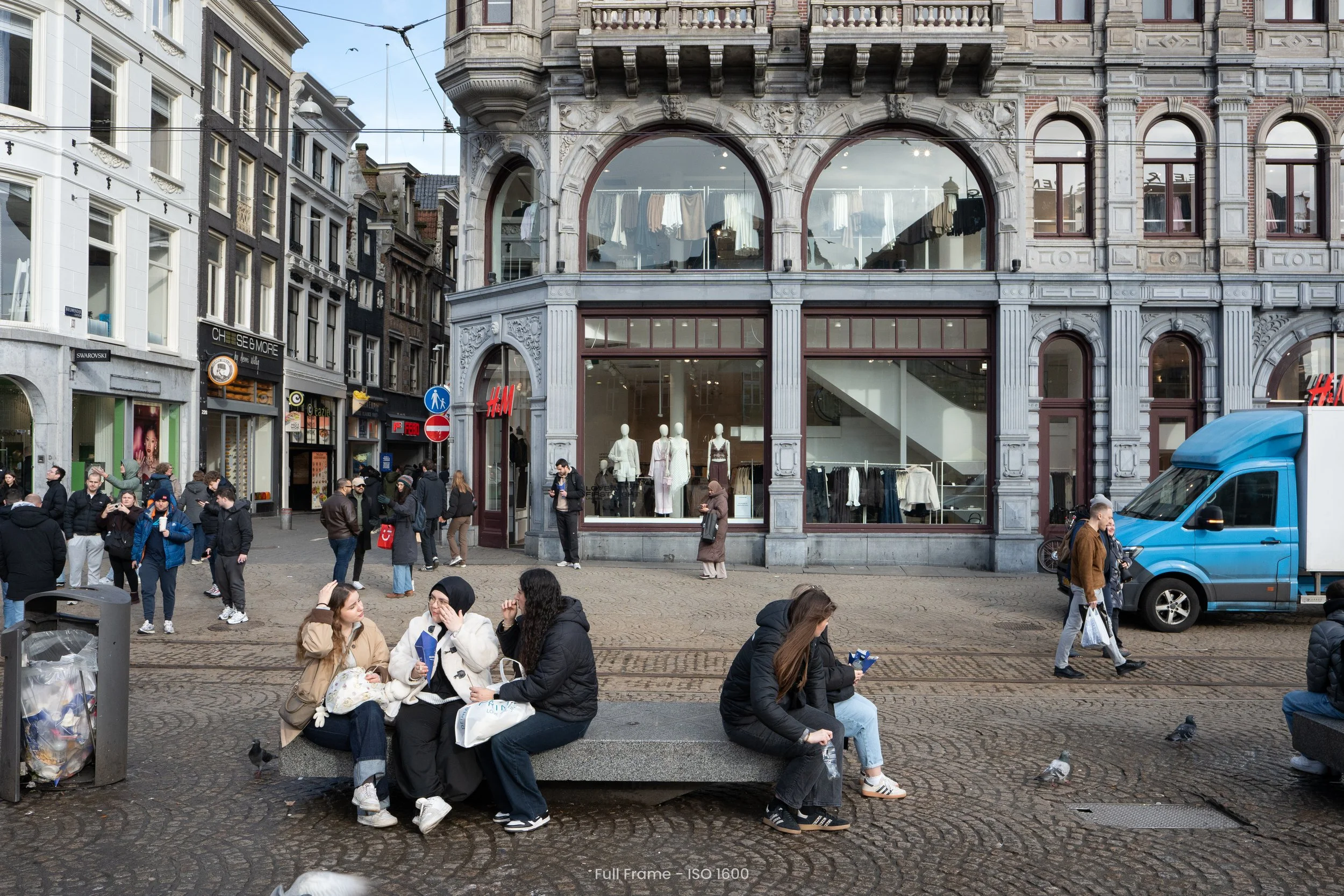
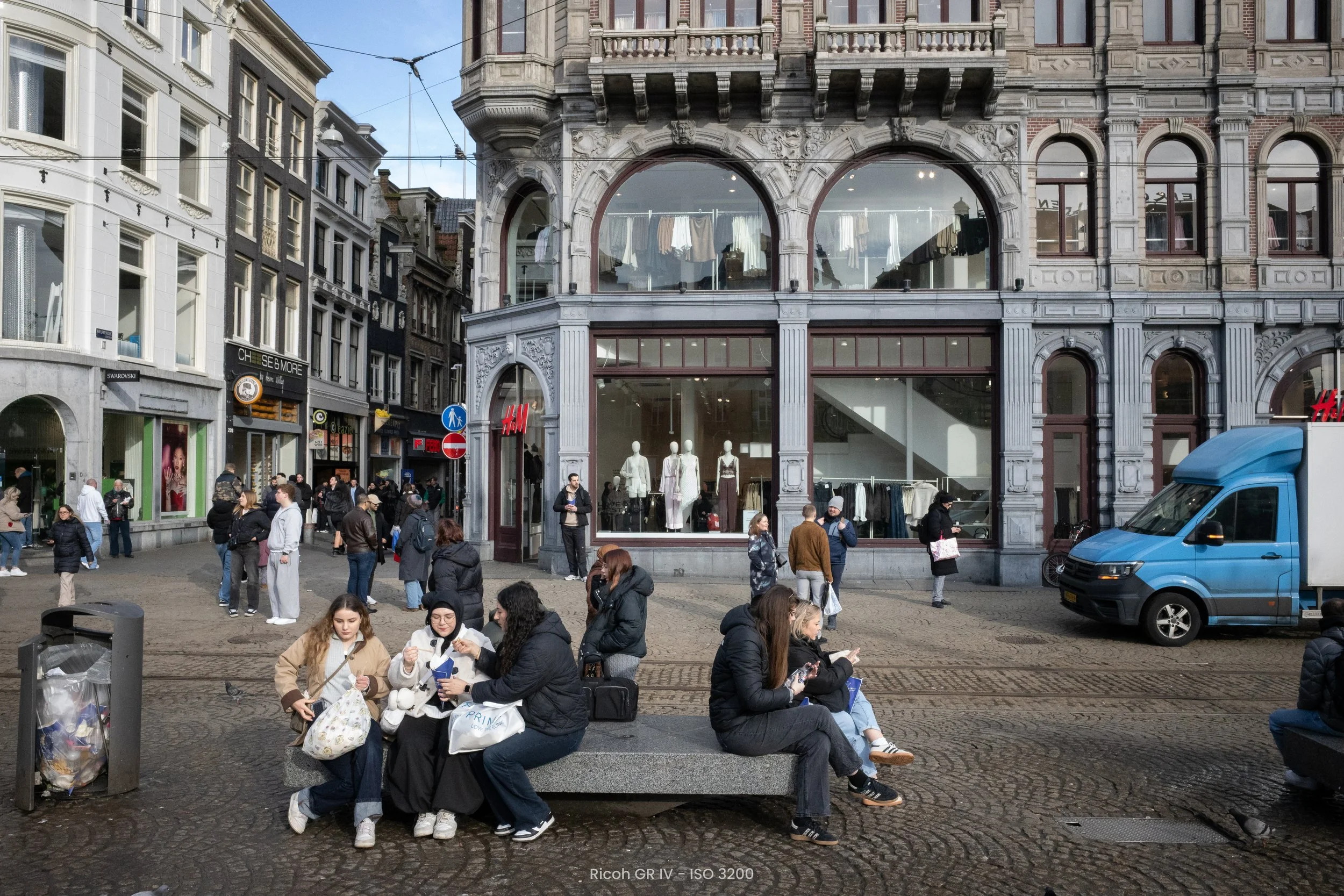
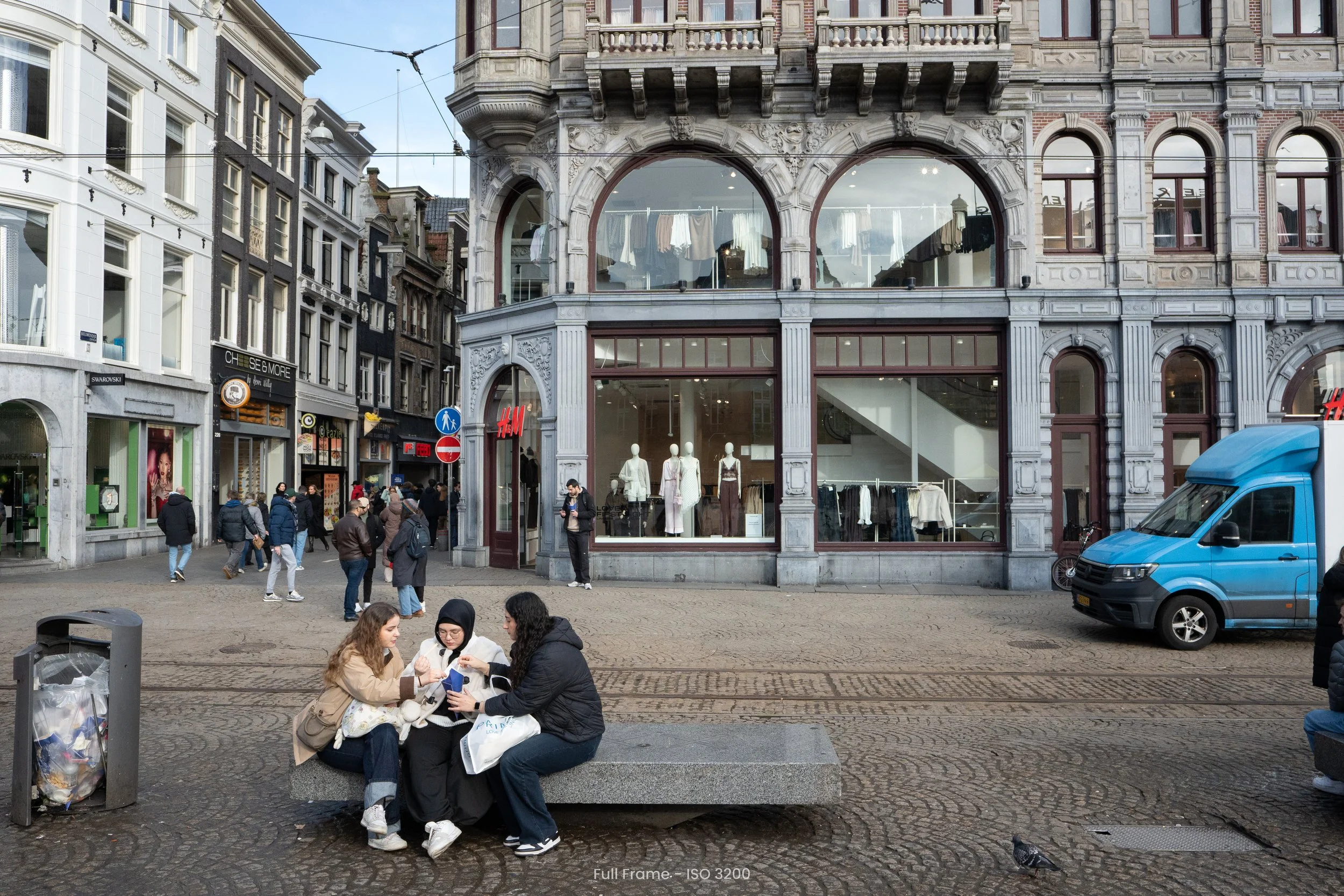
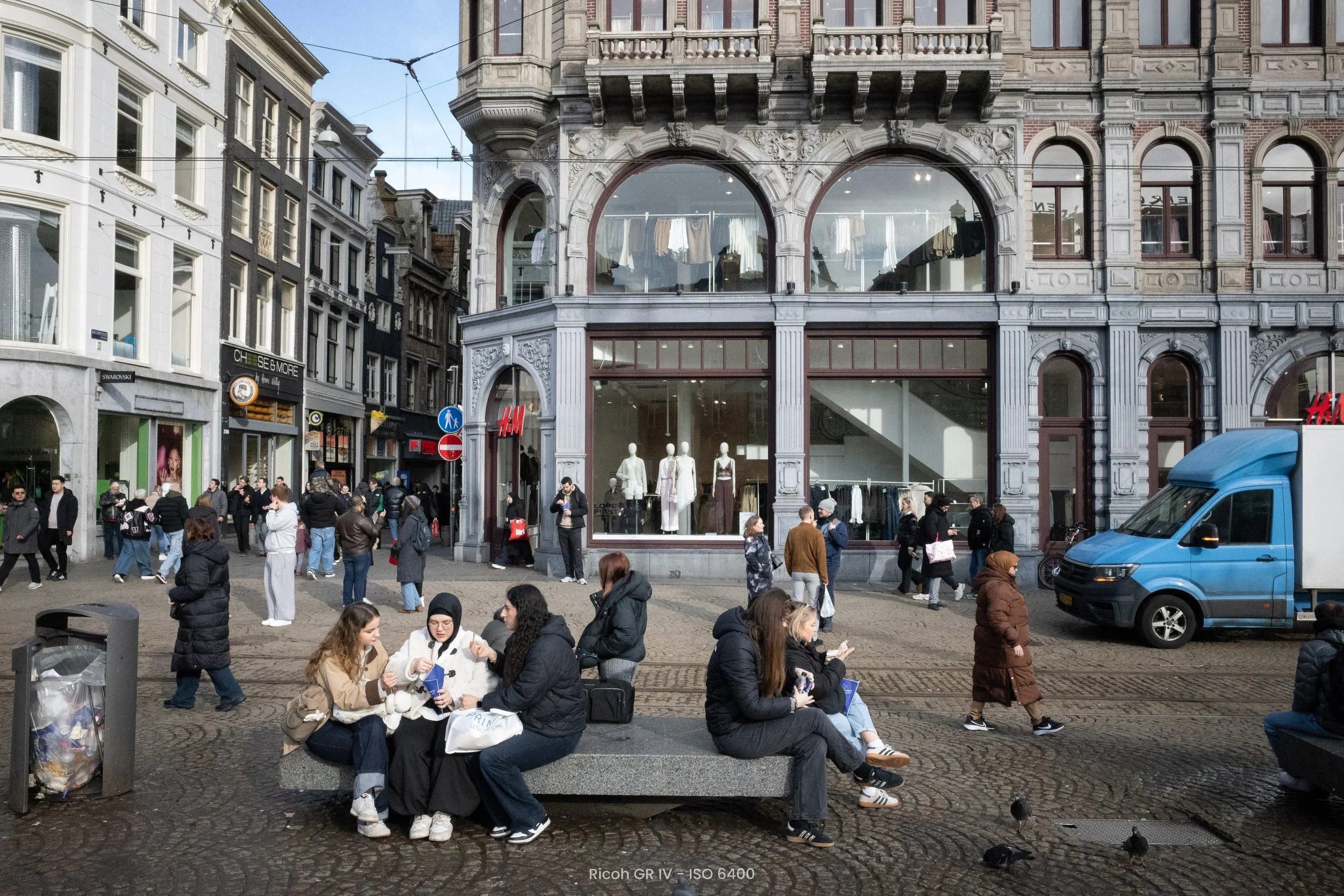
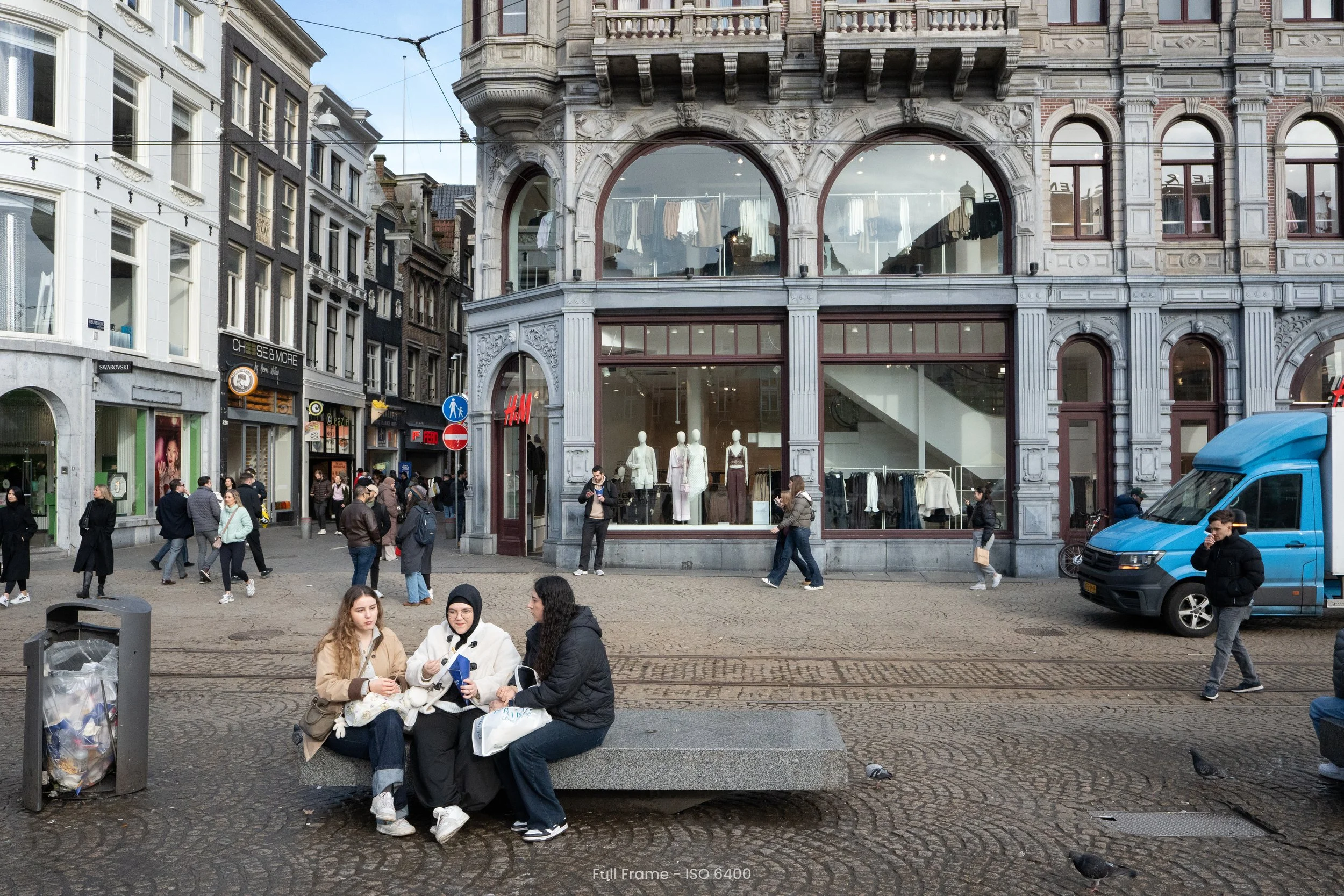
Color Reproduction
Color reproduction tends to vary depending on the camera manufacturer. But since all photos were shot in RAW, the color differences are minimal and mostly subjective. However, the Ricoh GR IV has a wide range of custom customrecipes giving it an advantage if you like to shoot in JPEG.
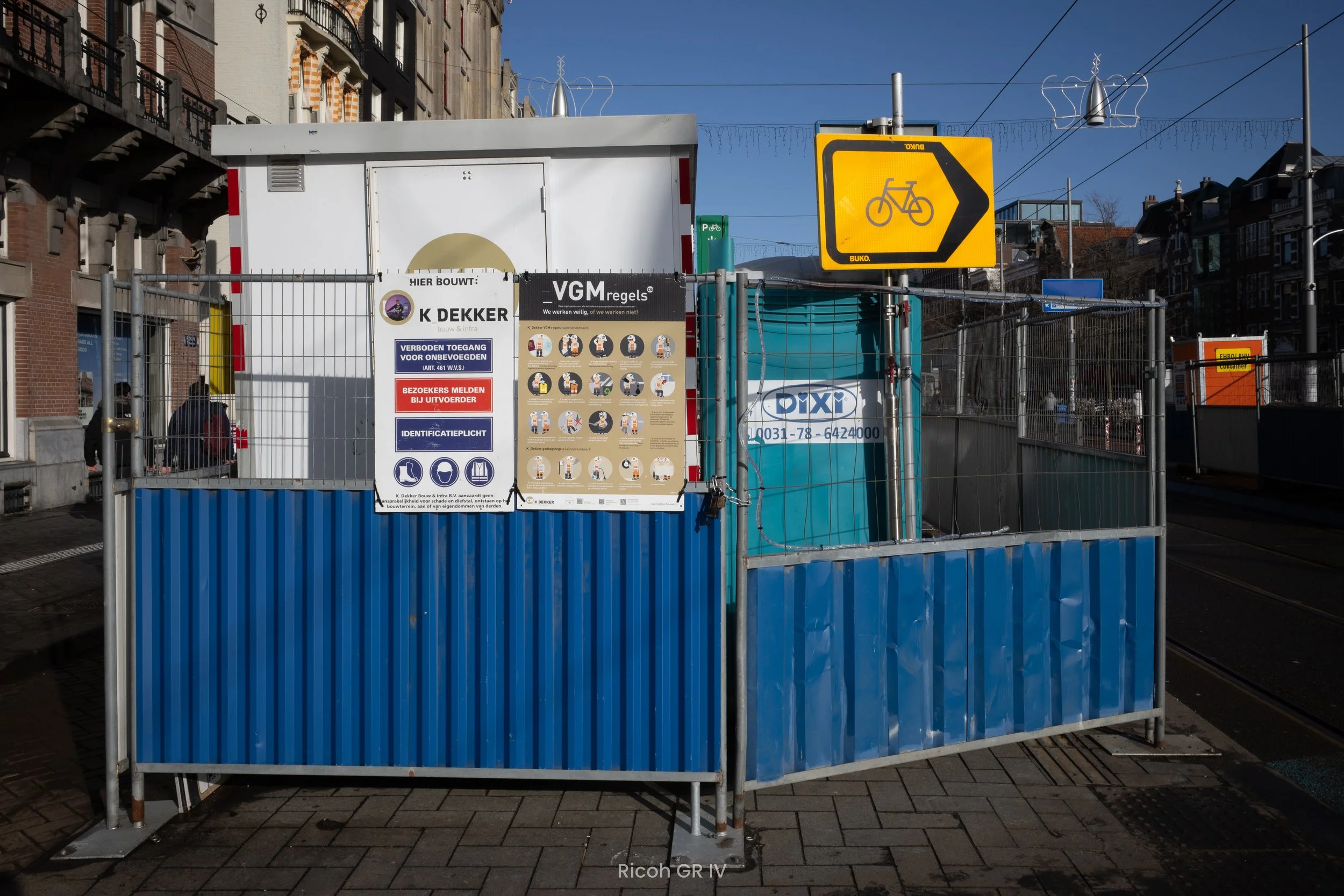
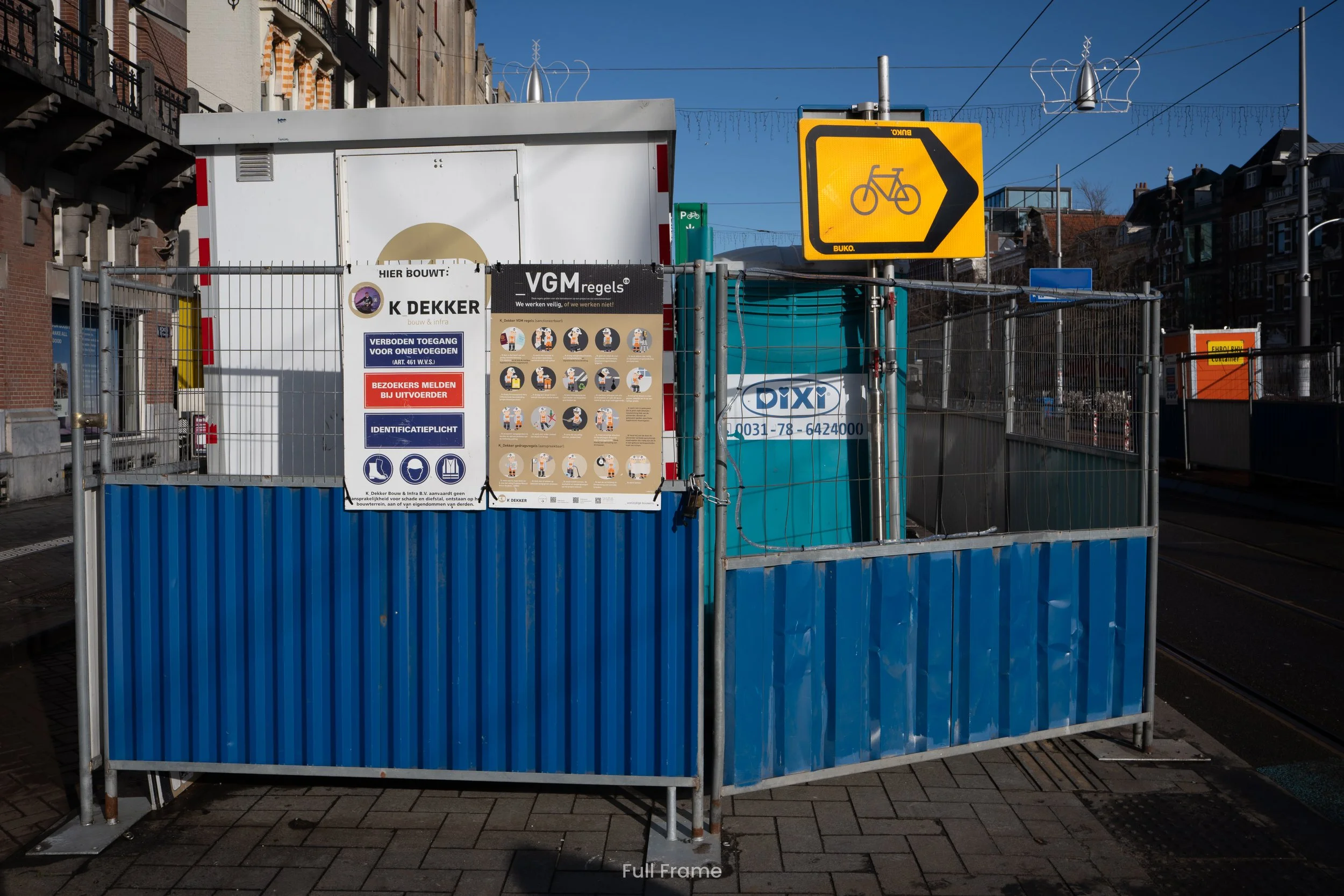
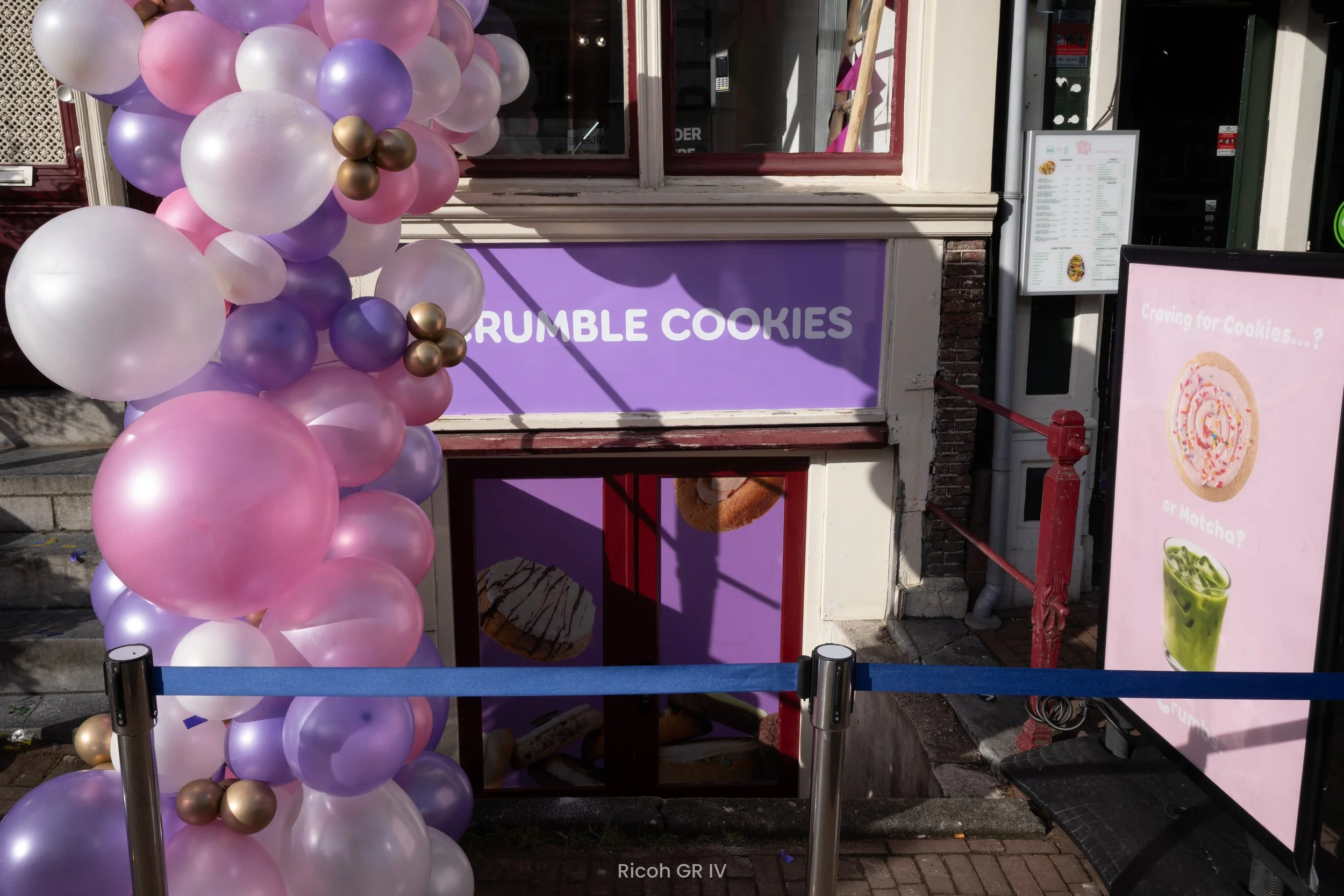
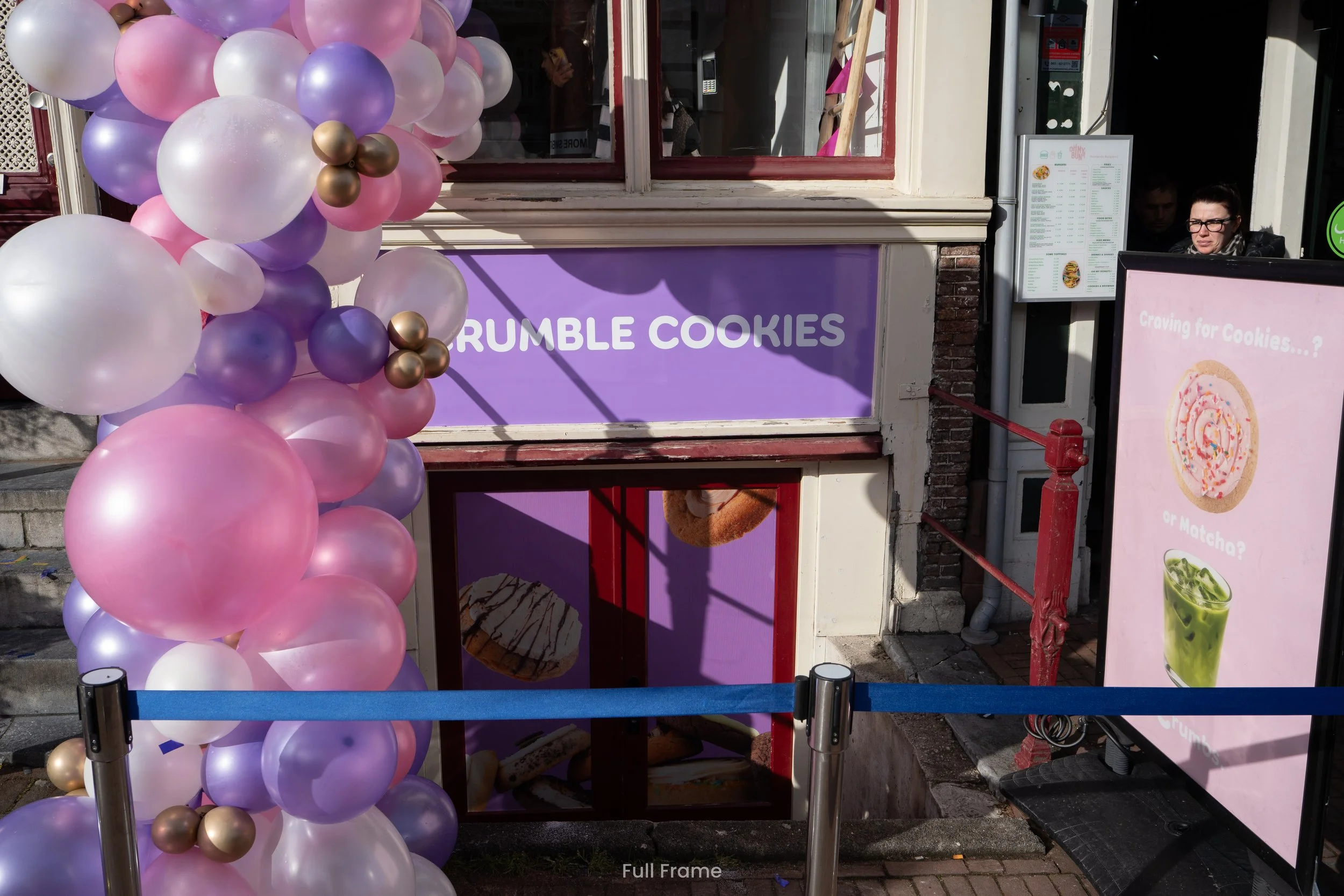
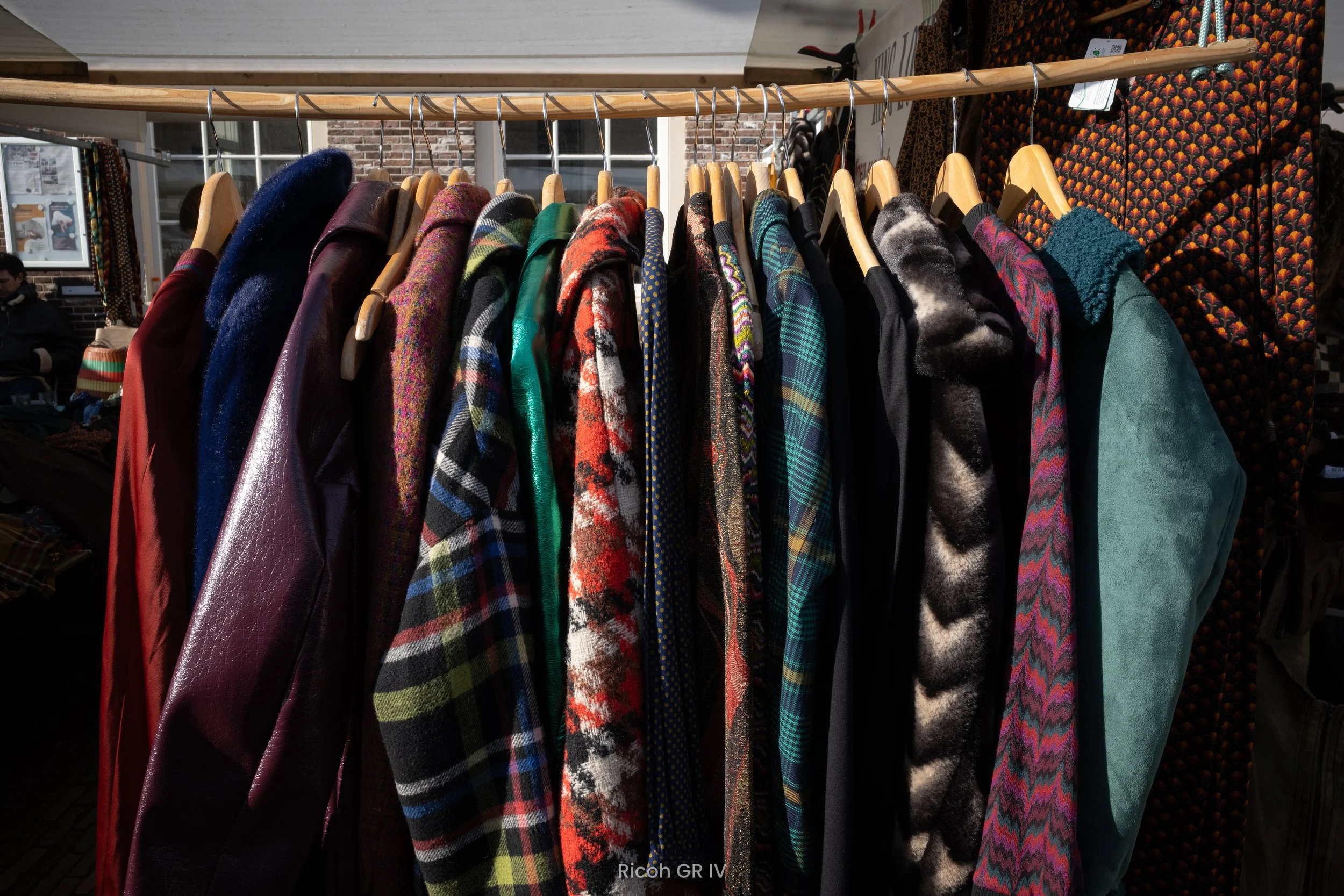
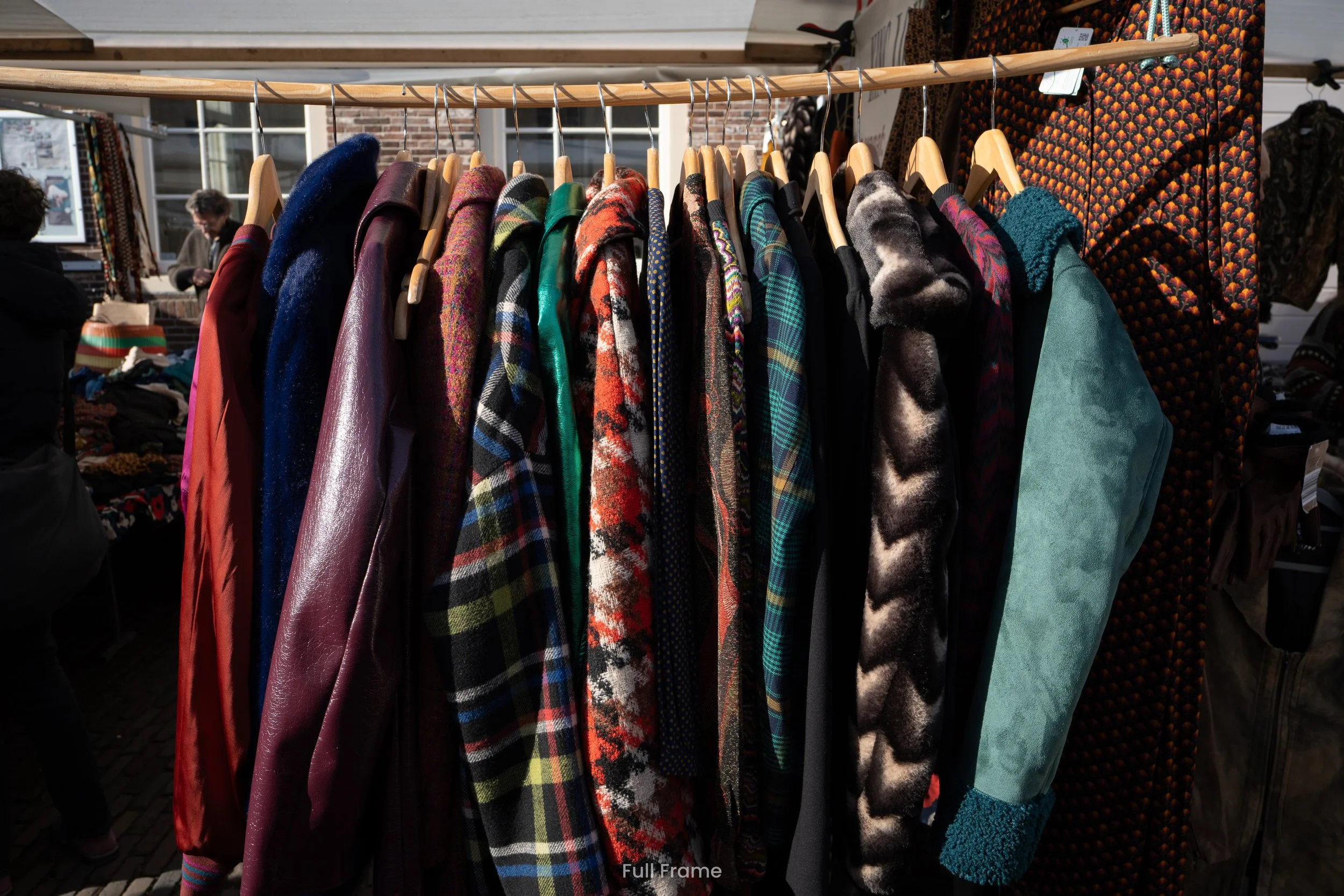
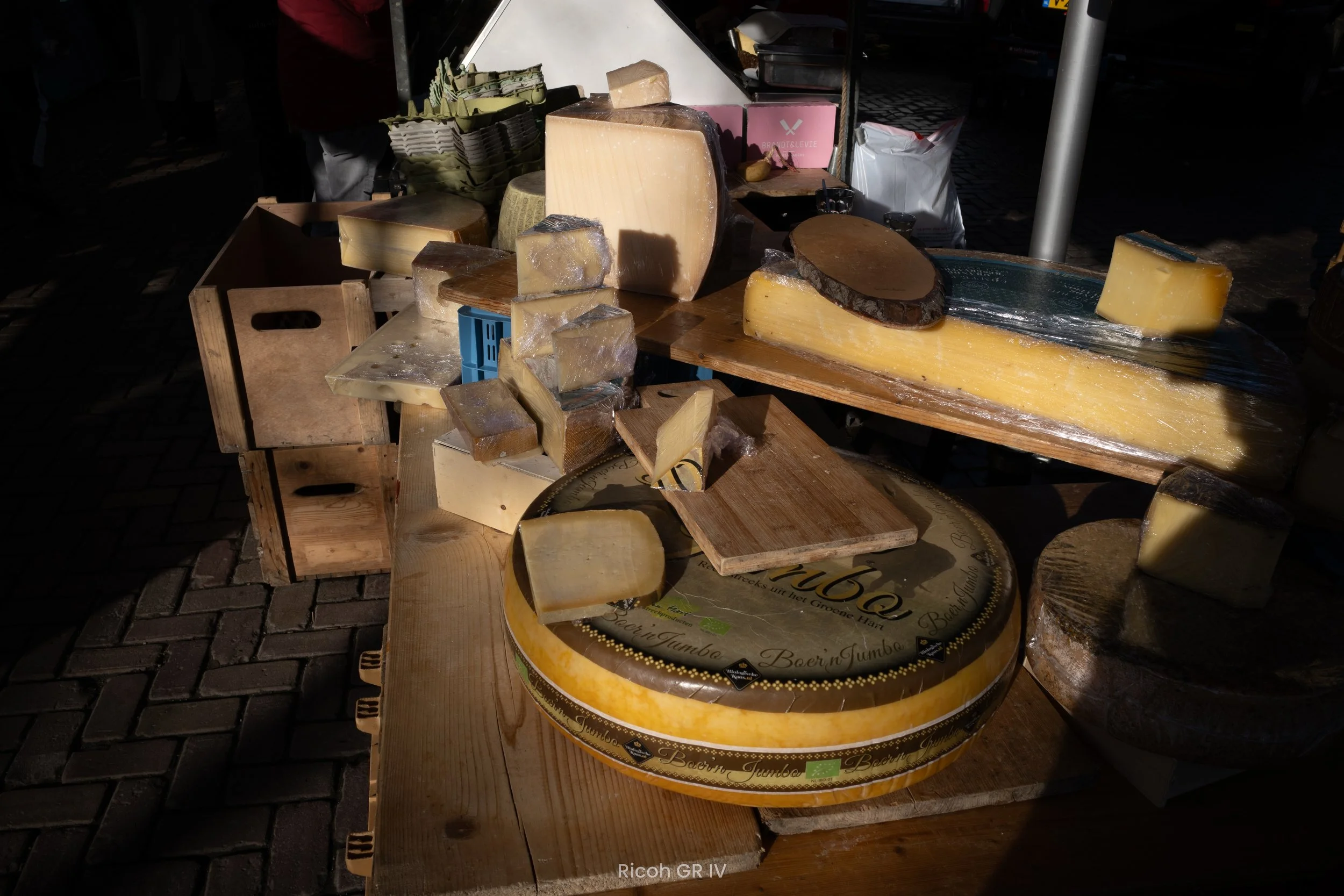
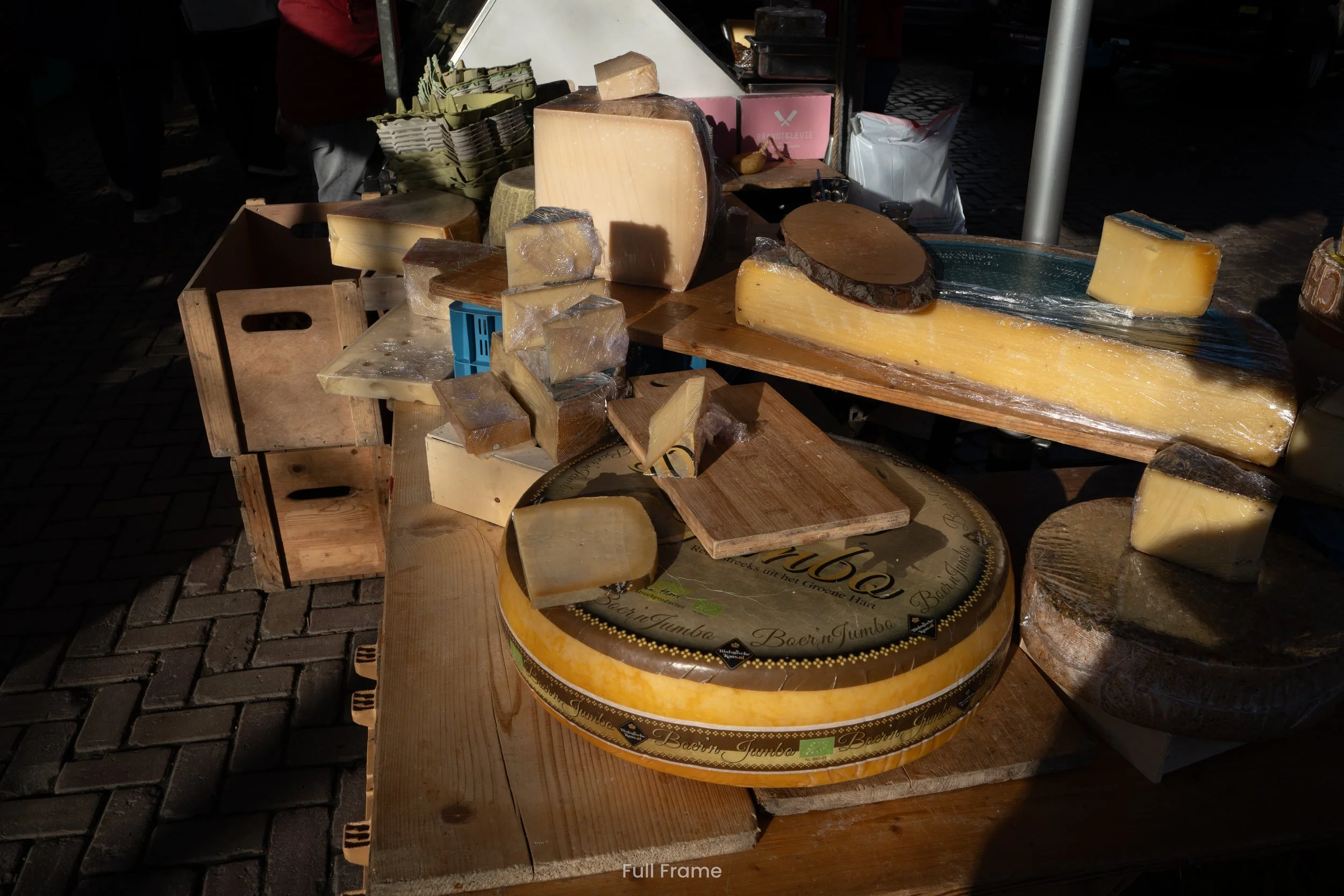
Sharpness
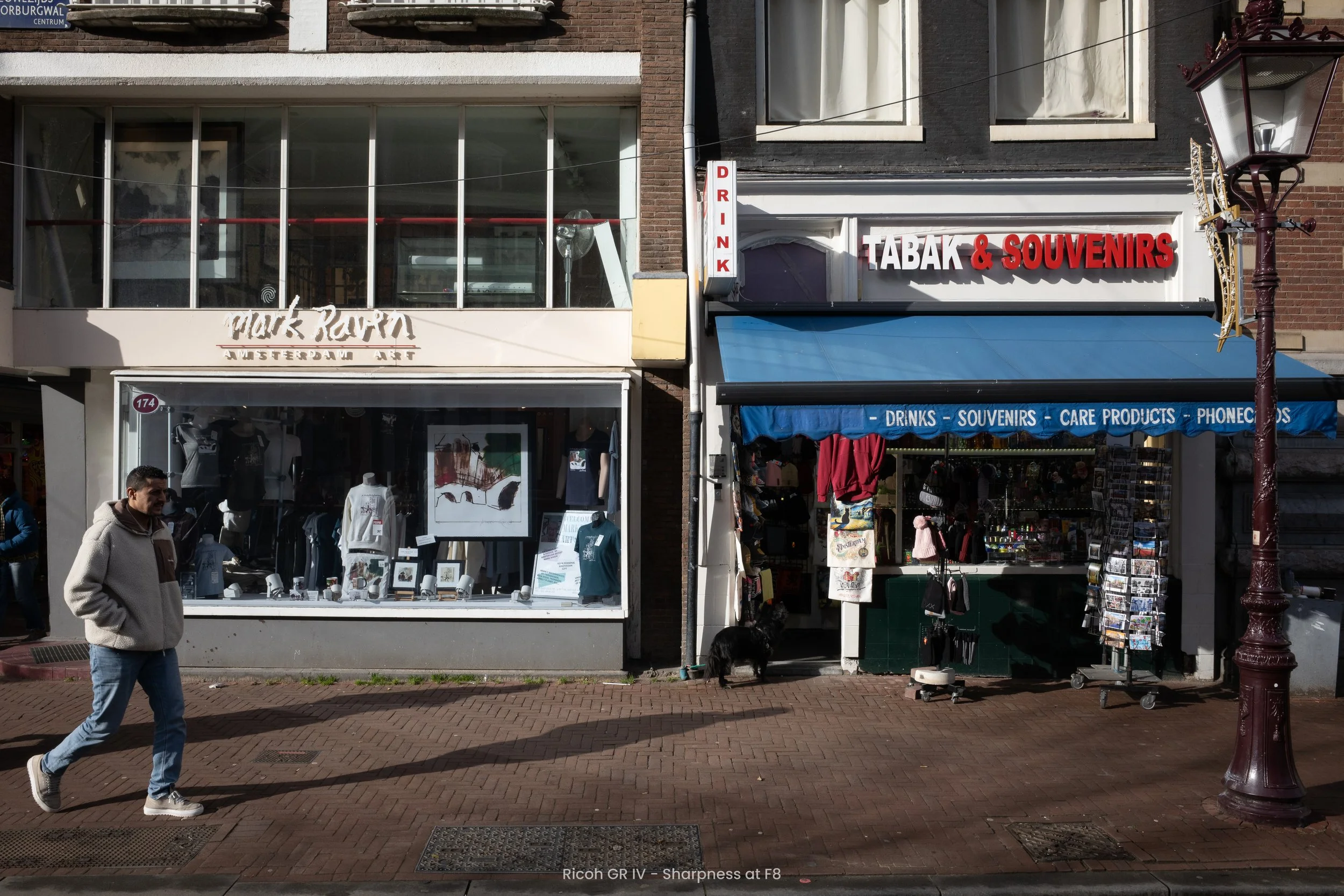
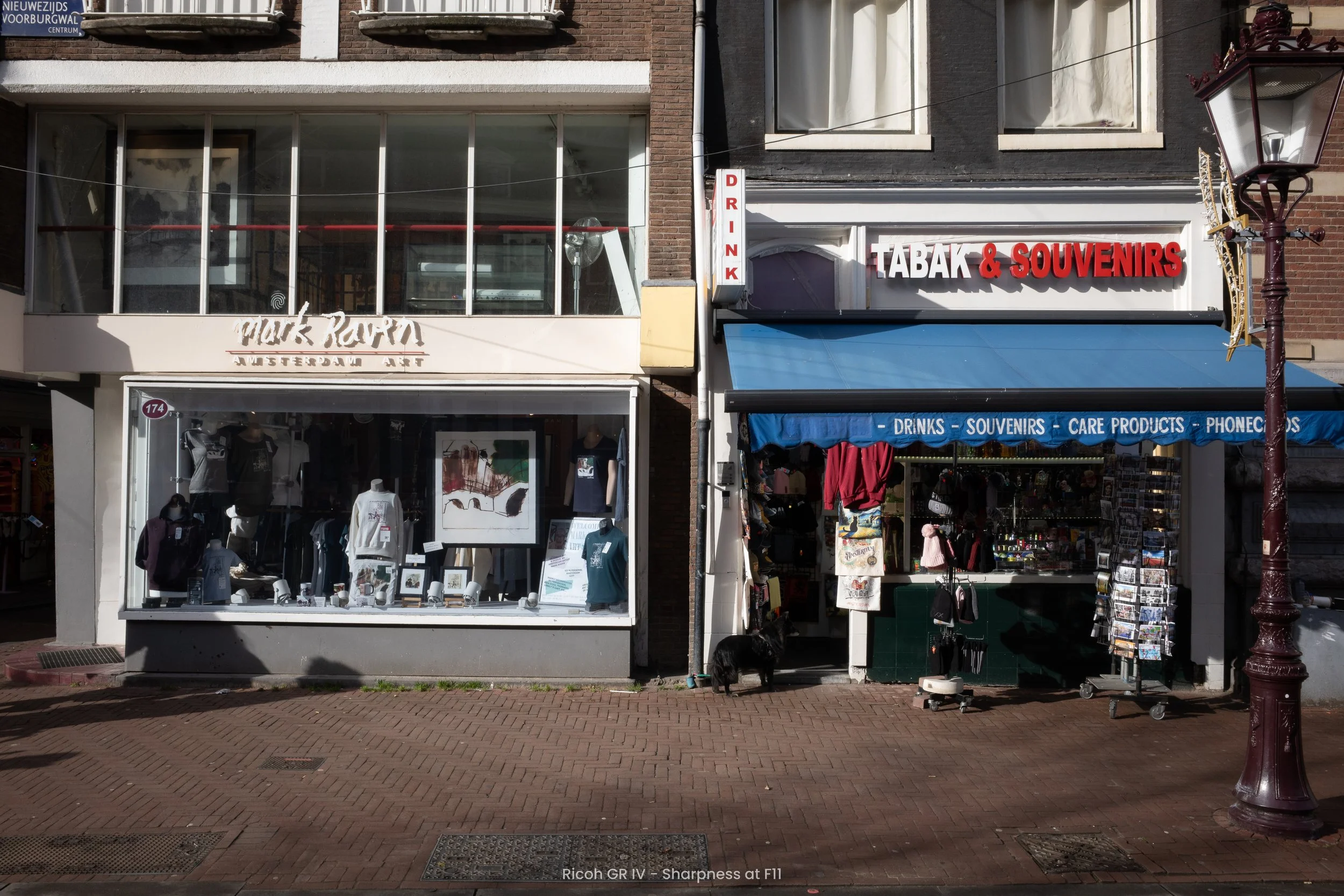
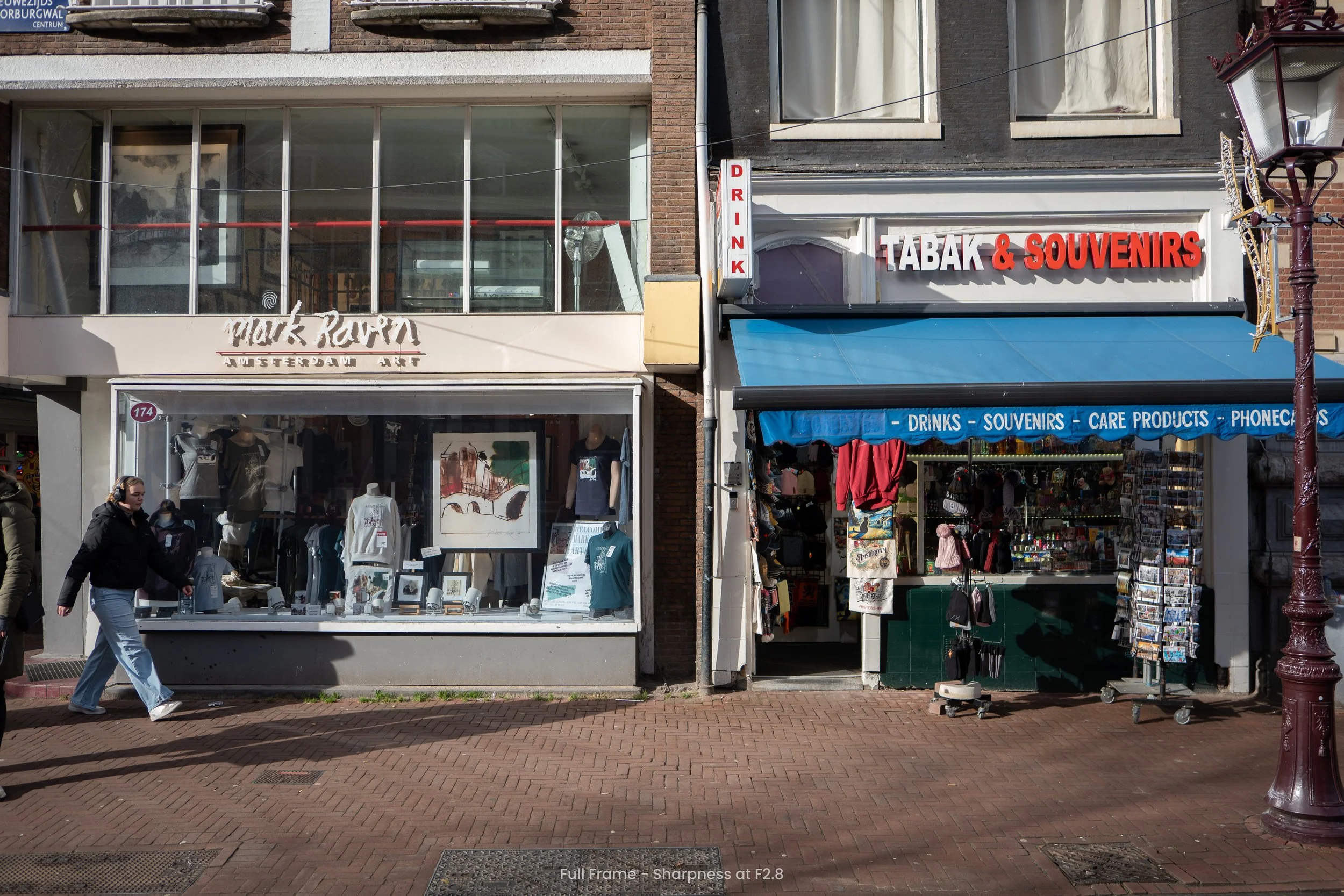
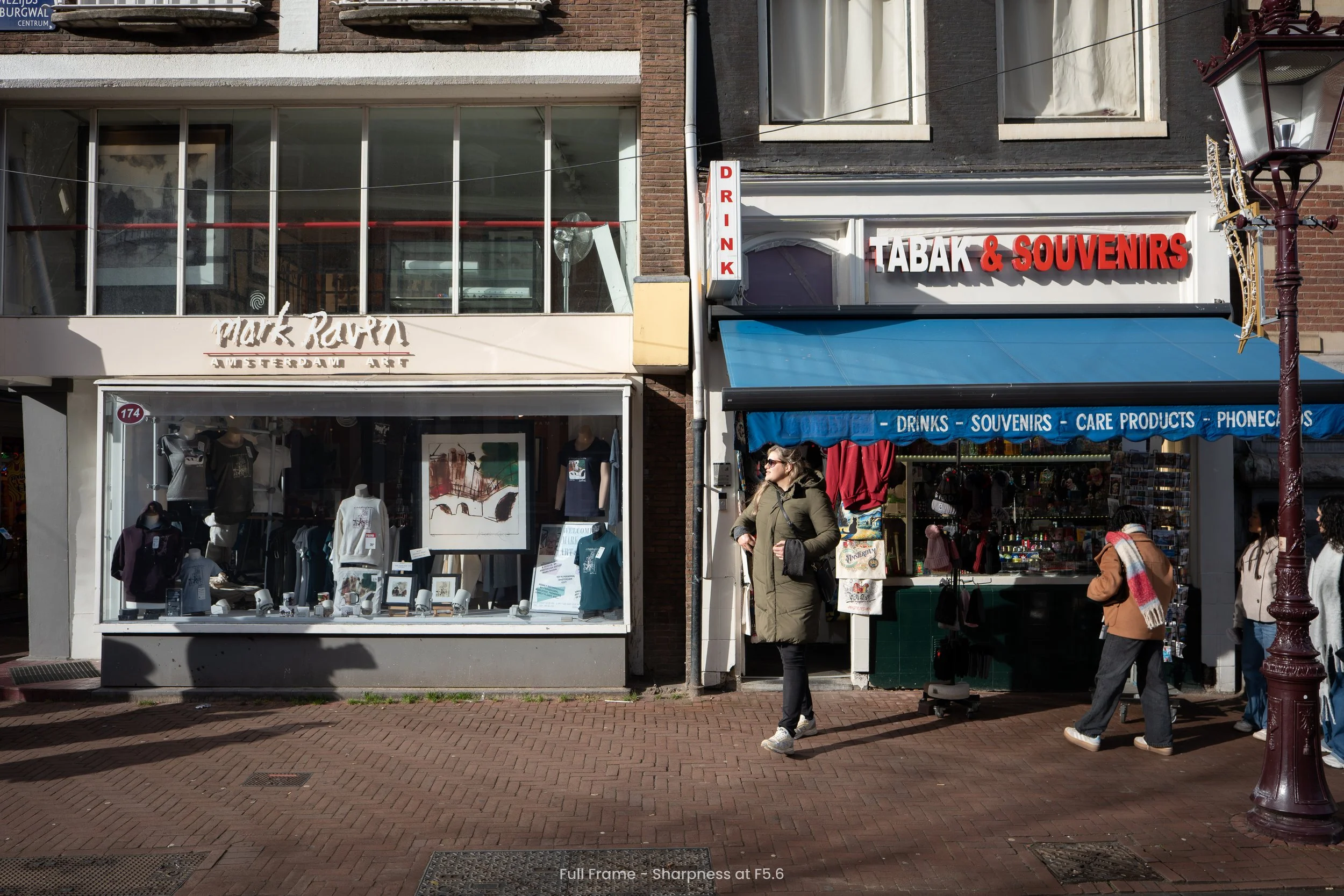
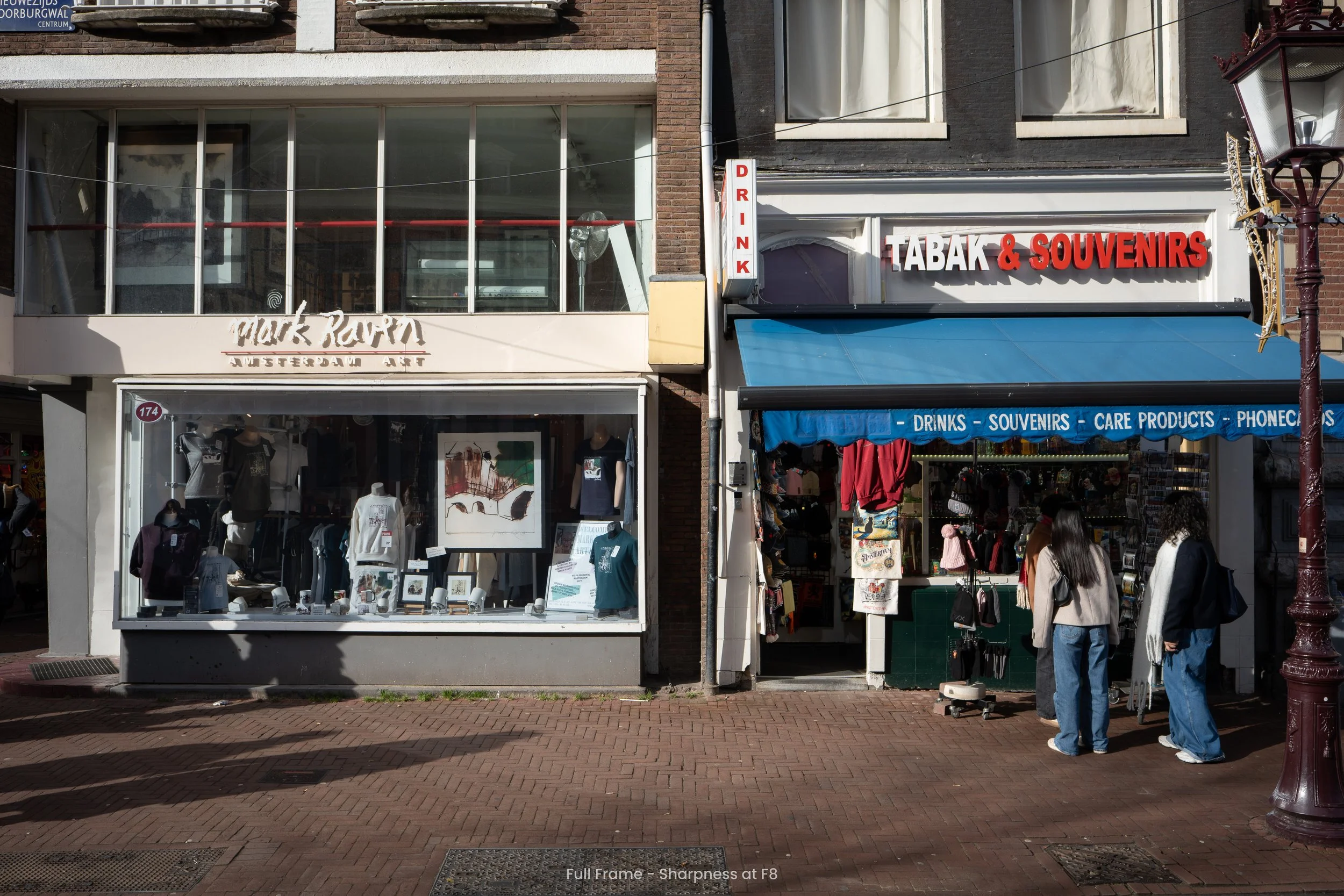
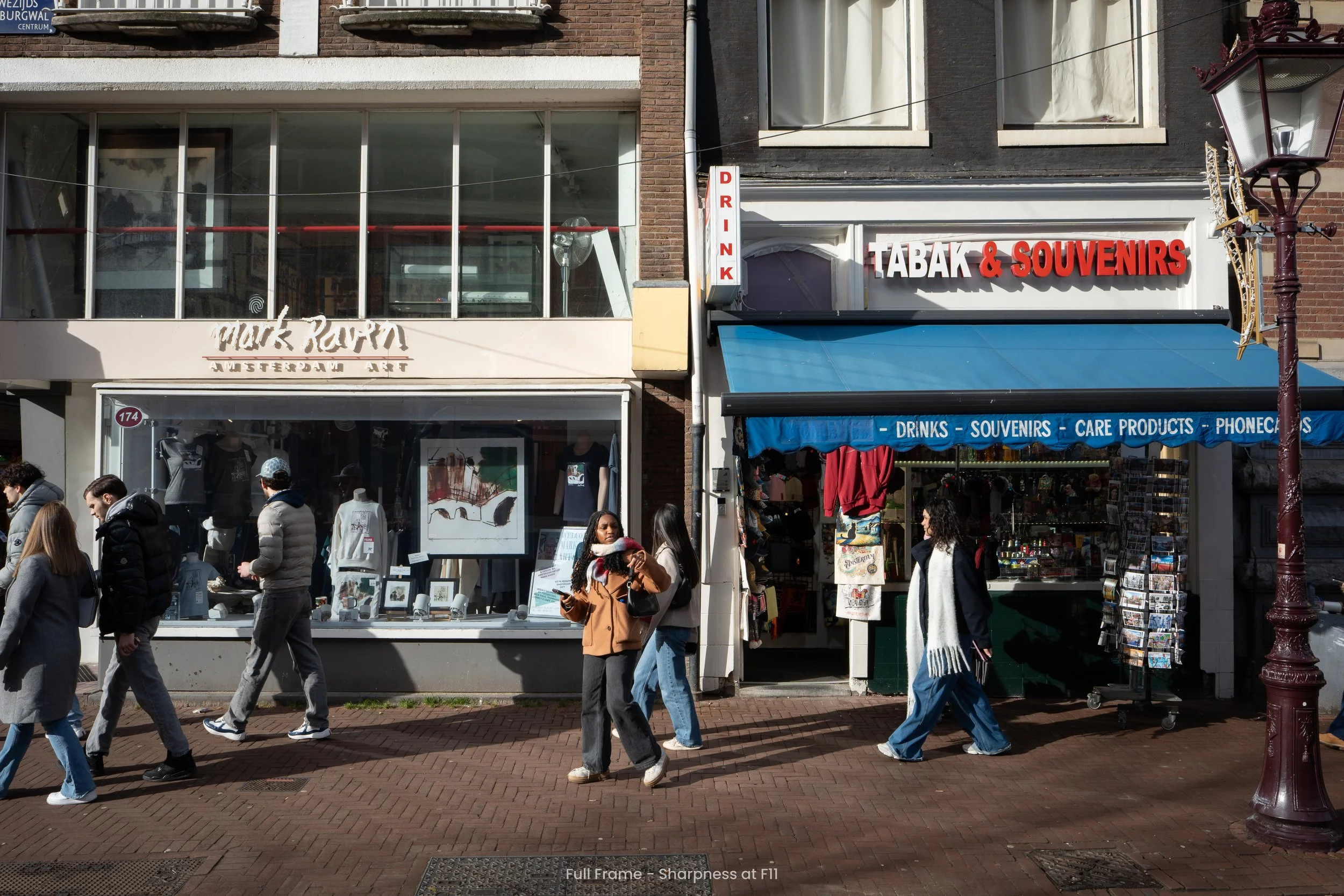
For this part of the test, keep in mind we’re comparing a tiny 28mm fixed lens to a high-end full-frame lens that’s bigger than the Ricoh camera itself. Even so, the GR IV delivers exceptionally sharp photos. I was aware that the GR IV delivers incredibly sharp images but I didn’t believe until I saw it. Even at wide apertures like F2.8 the images stay crisp from center to corners.
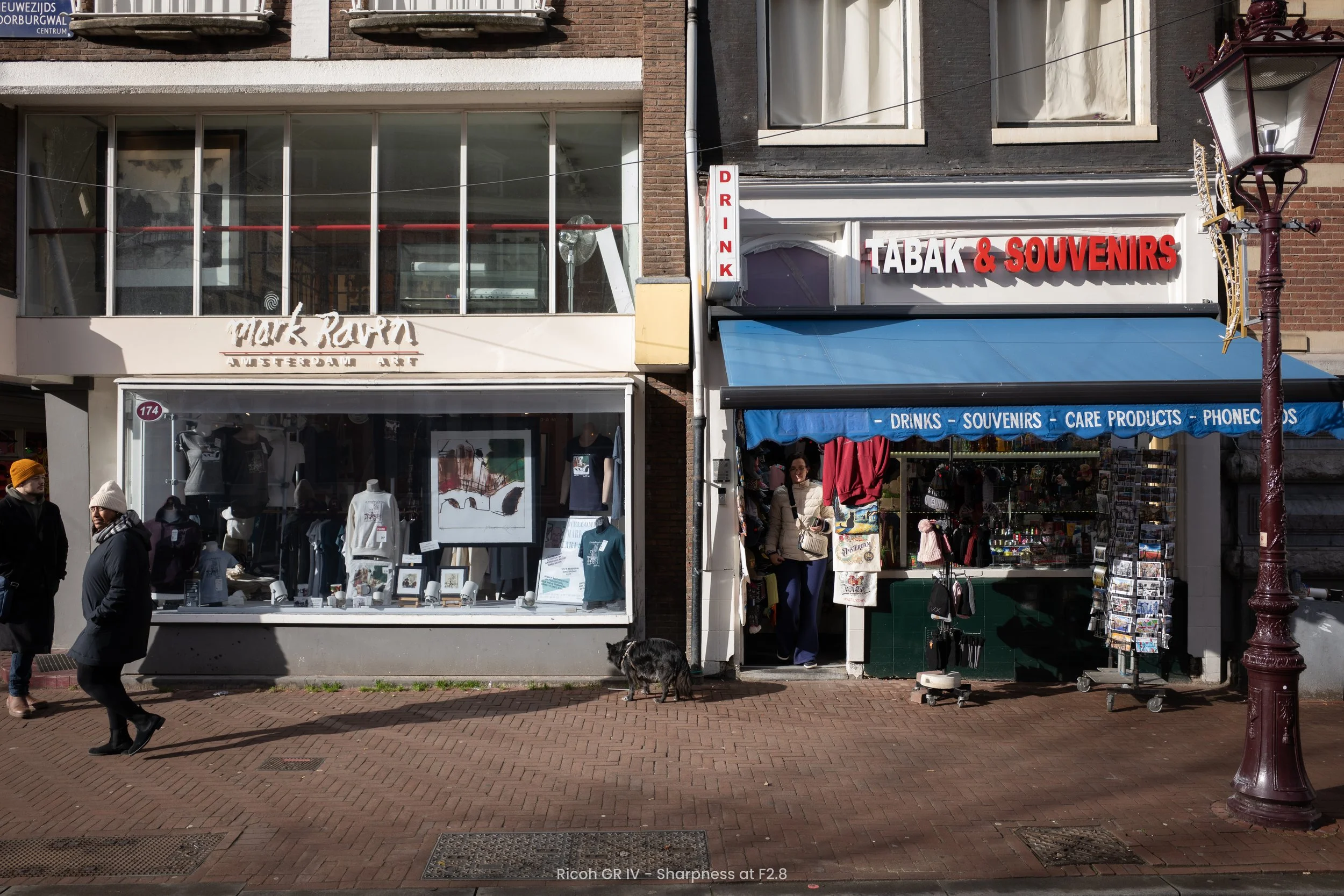
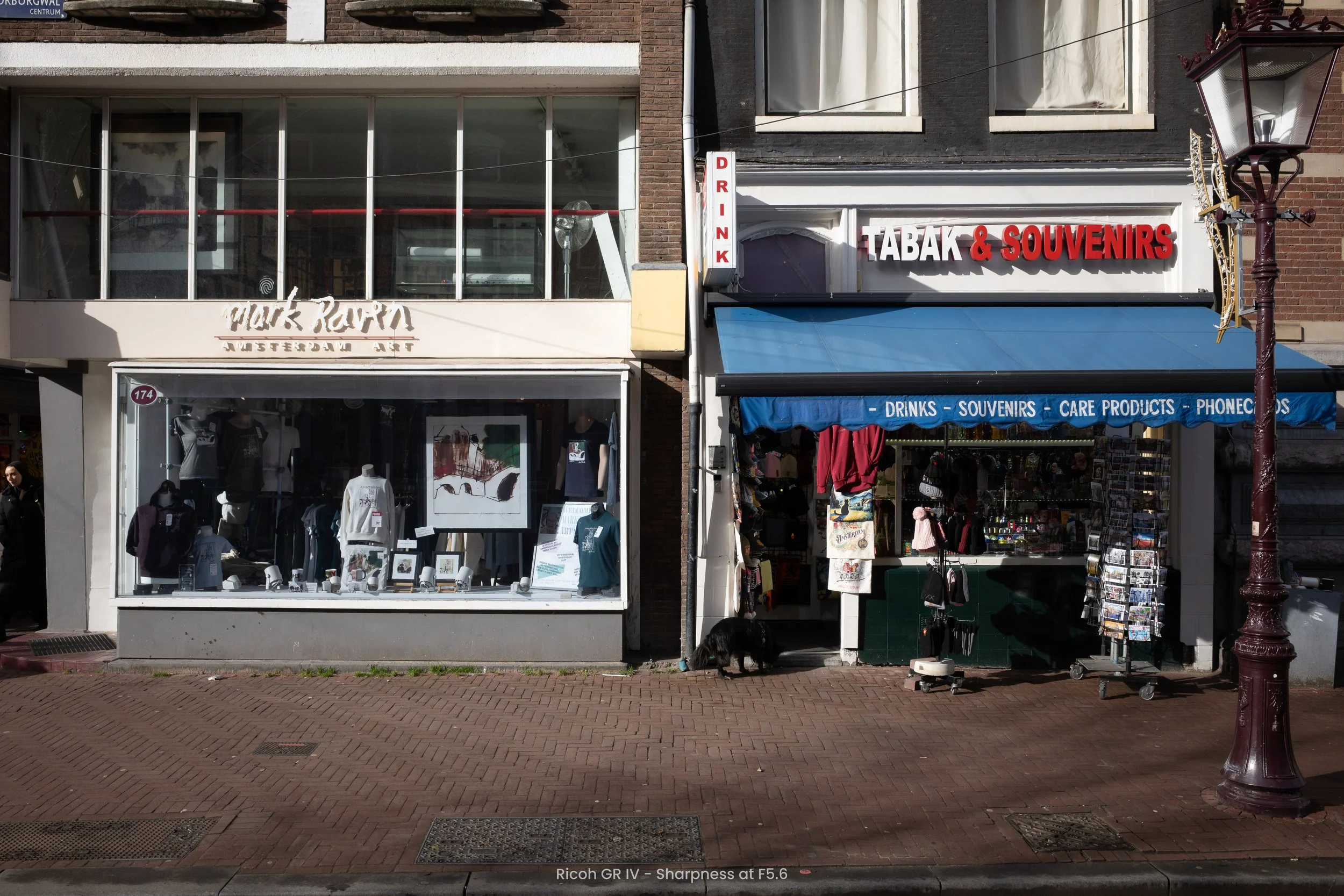
Low Light Performance
Time for the big moment! I took both cameras out at night with the goal of testing image quality in low light conditions as well. This is where full-frame cameras are expected to dominate, and honestly, this is where I was expecting the GR IV to struggle the most. The results continued to surprise me. Let’s have a closer look.
ISO Performance
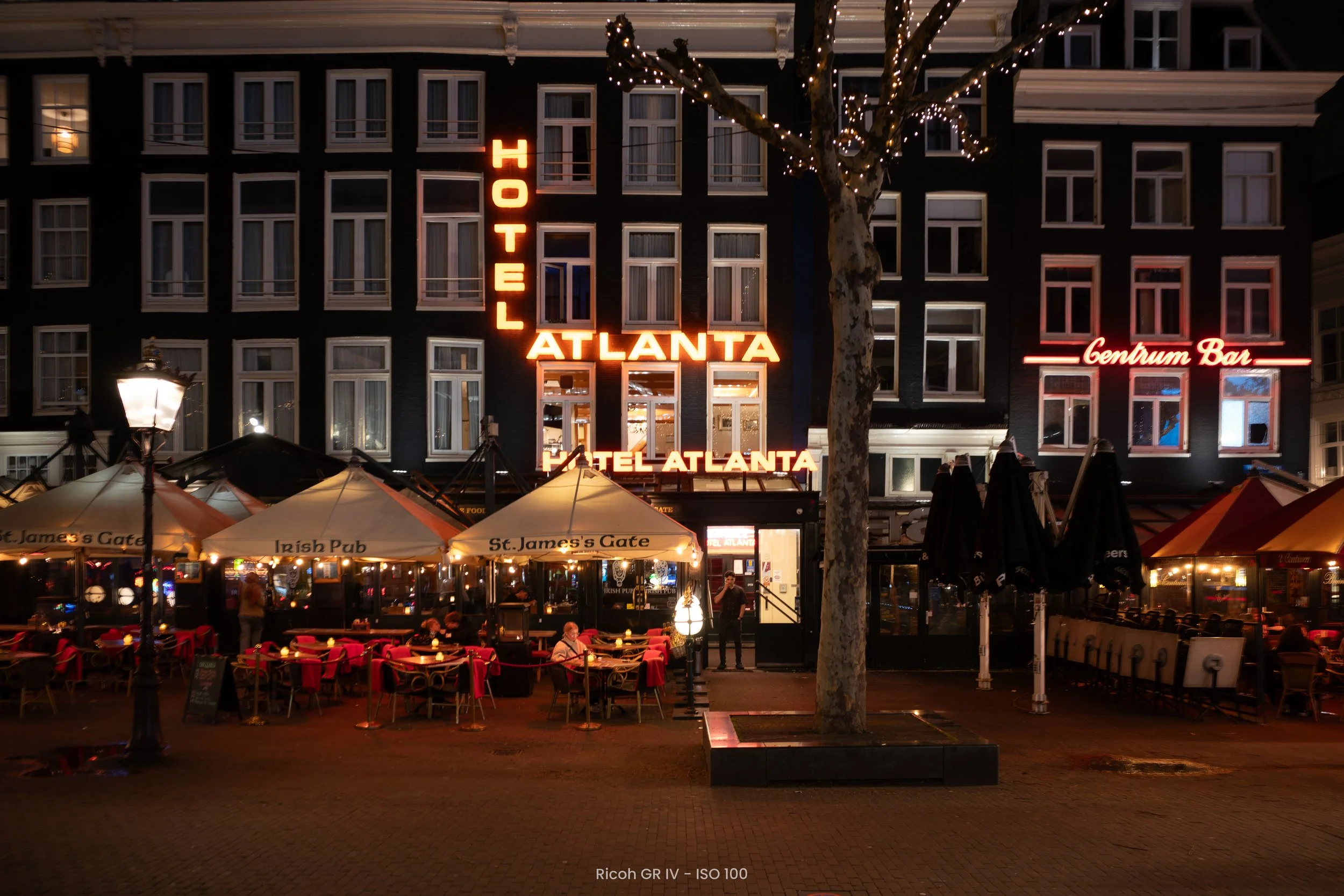
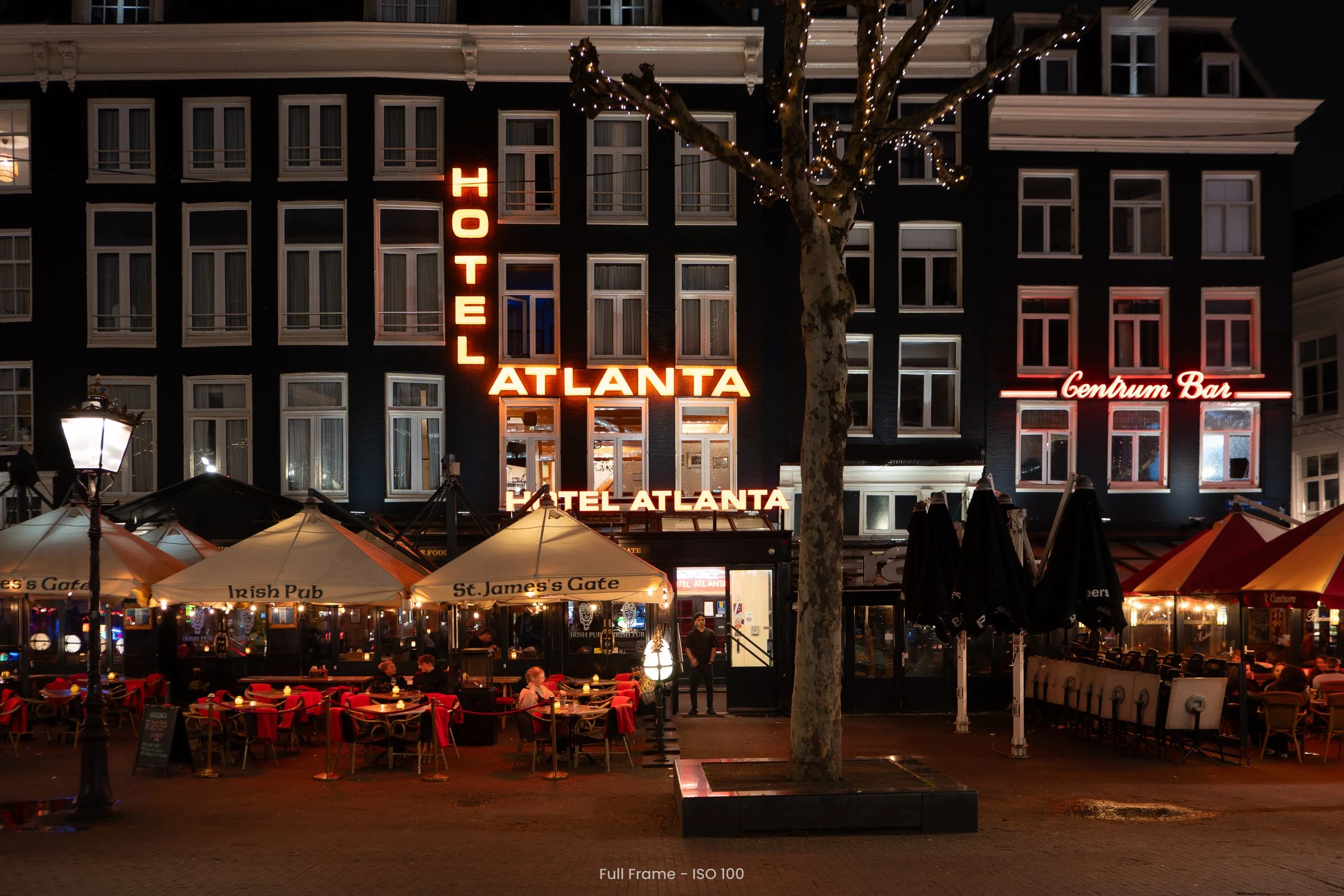
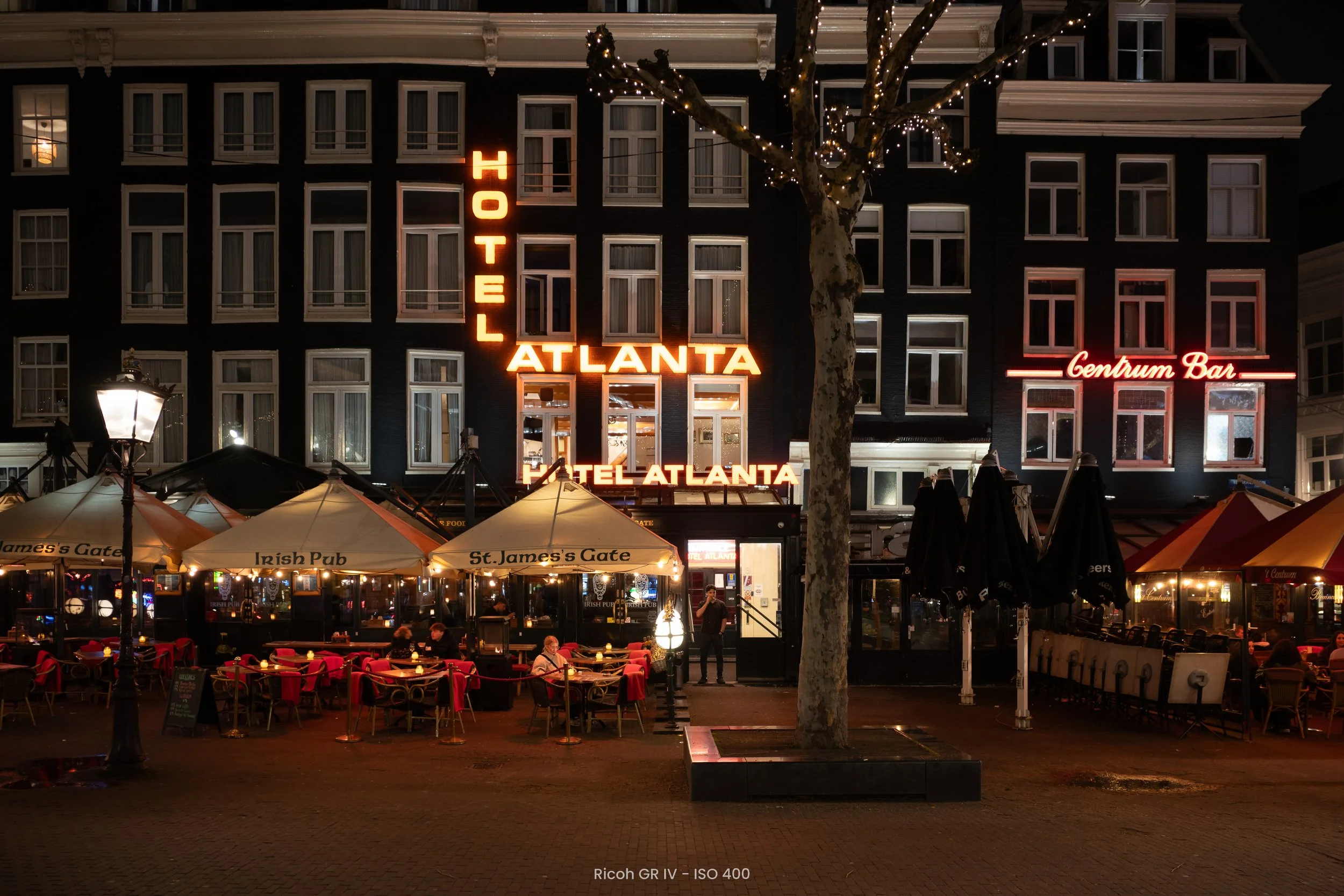
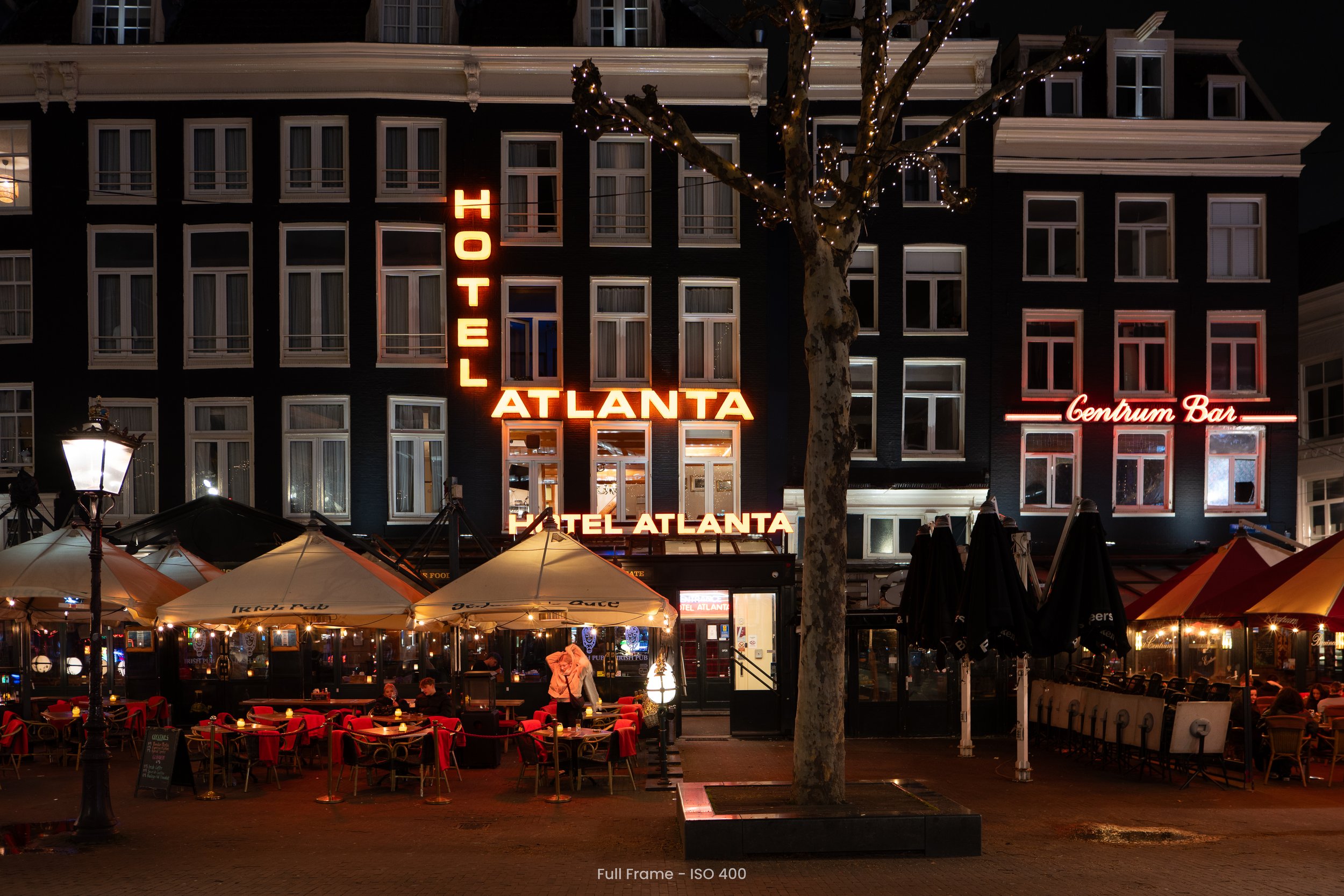
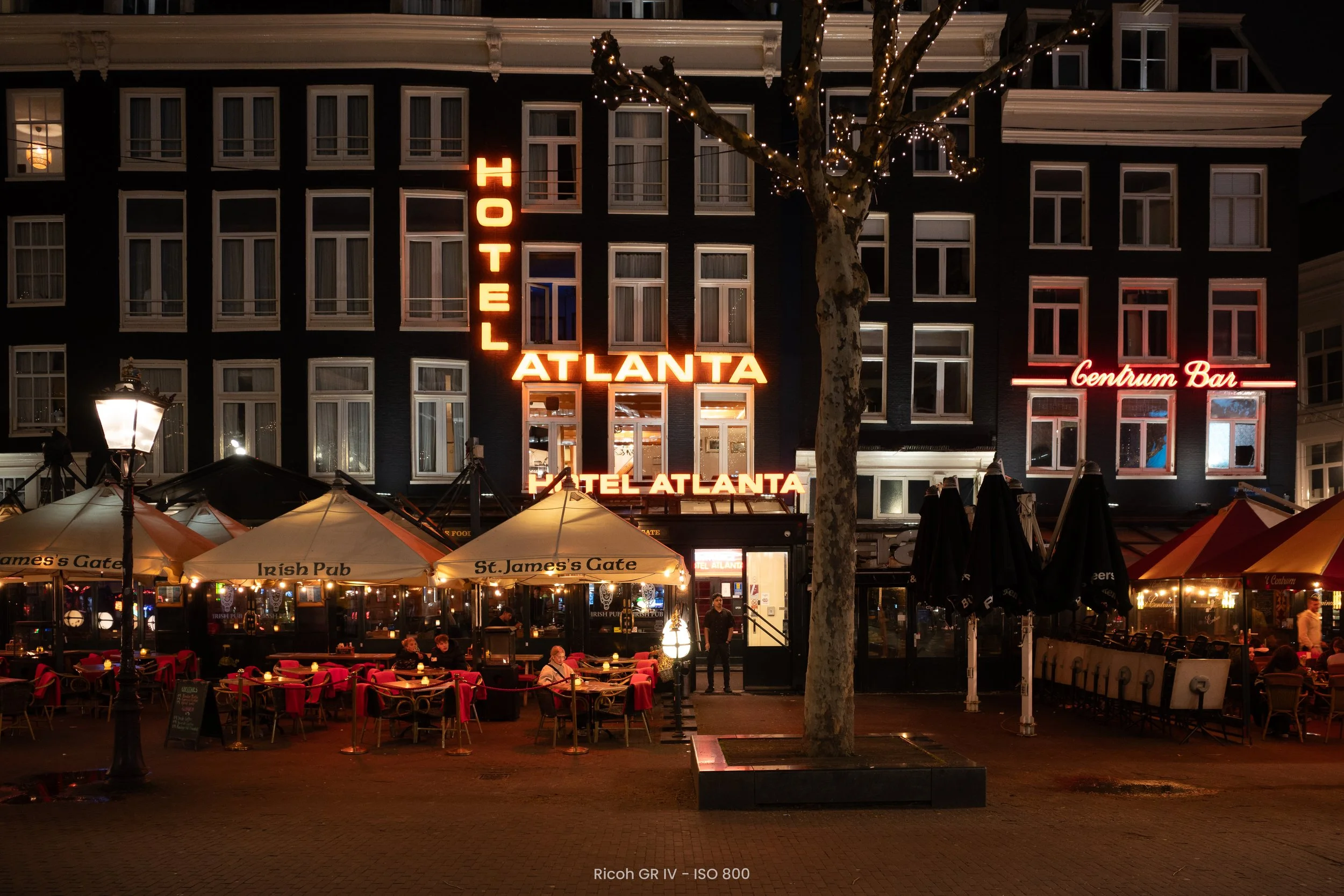
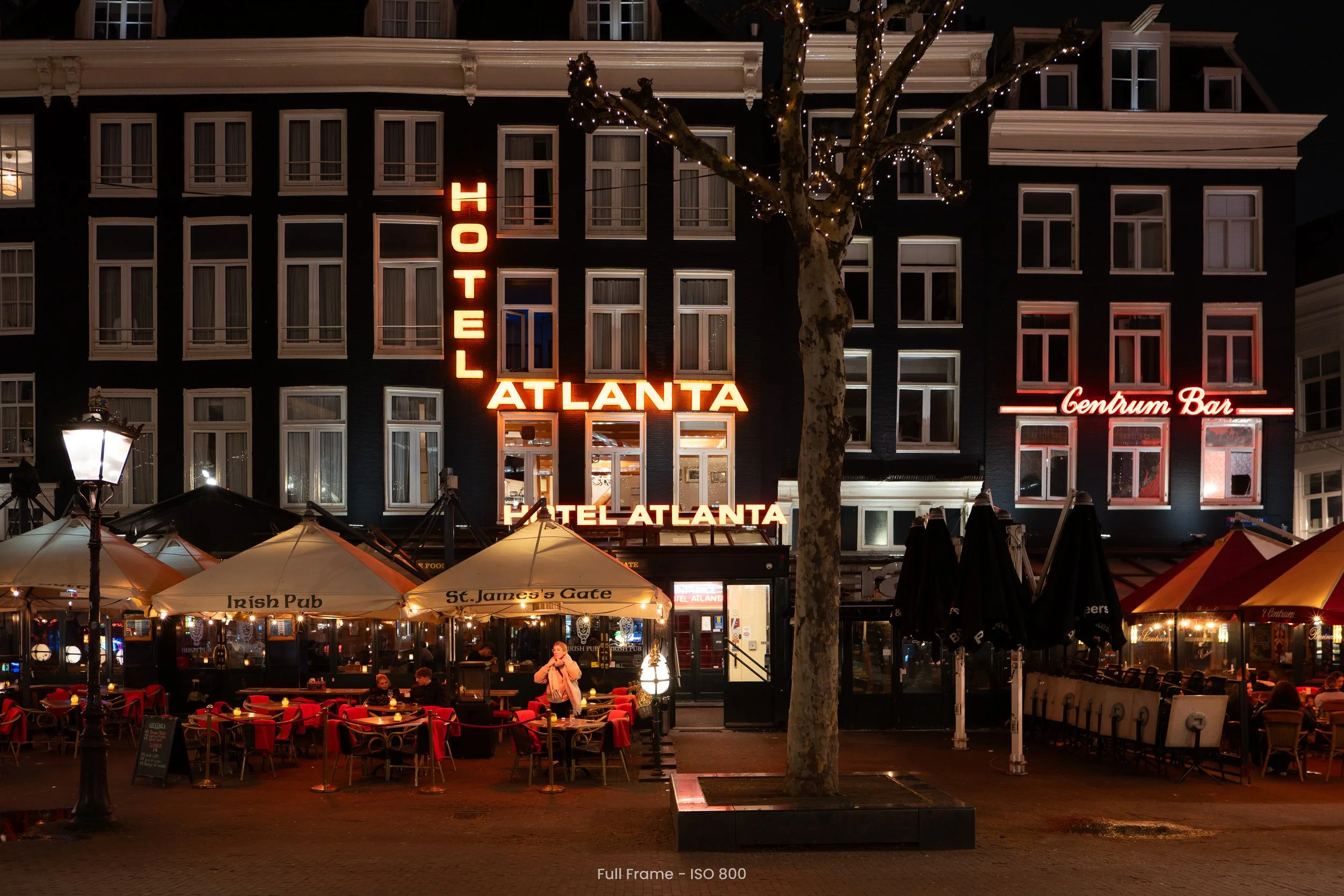
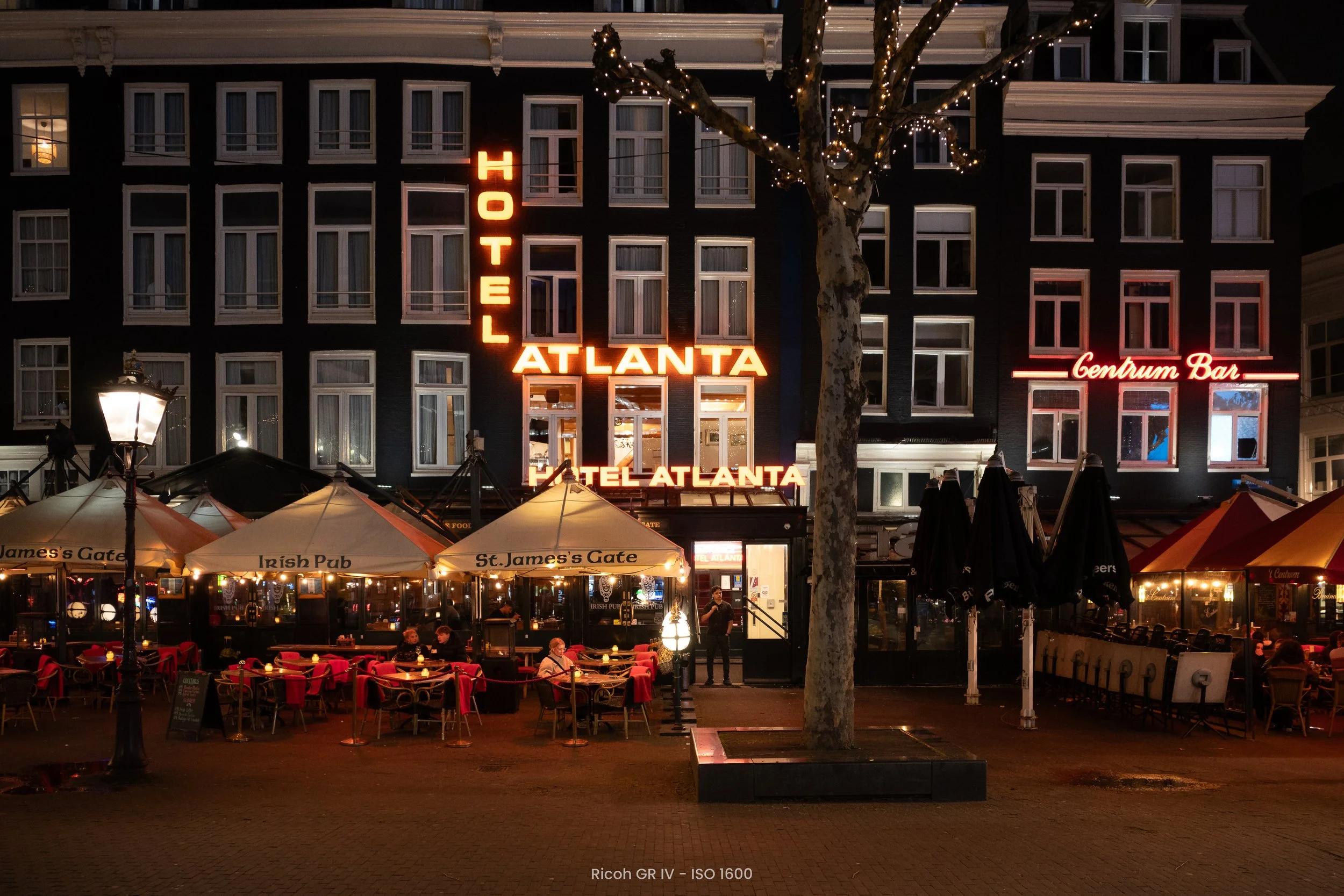
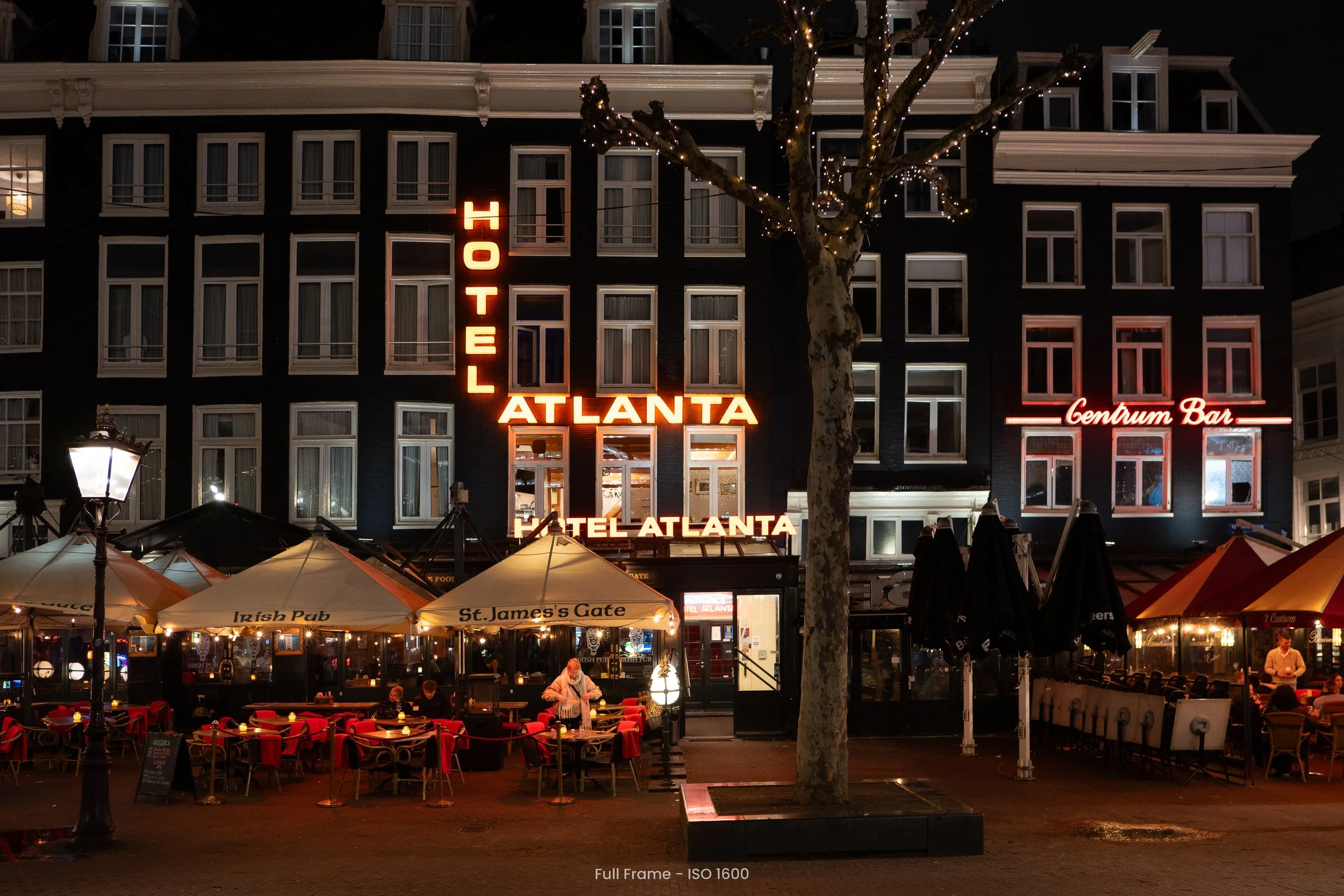
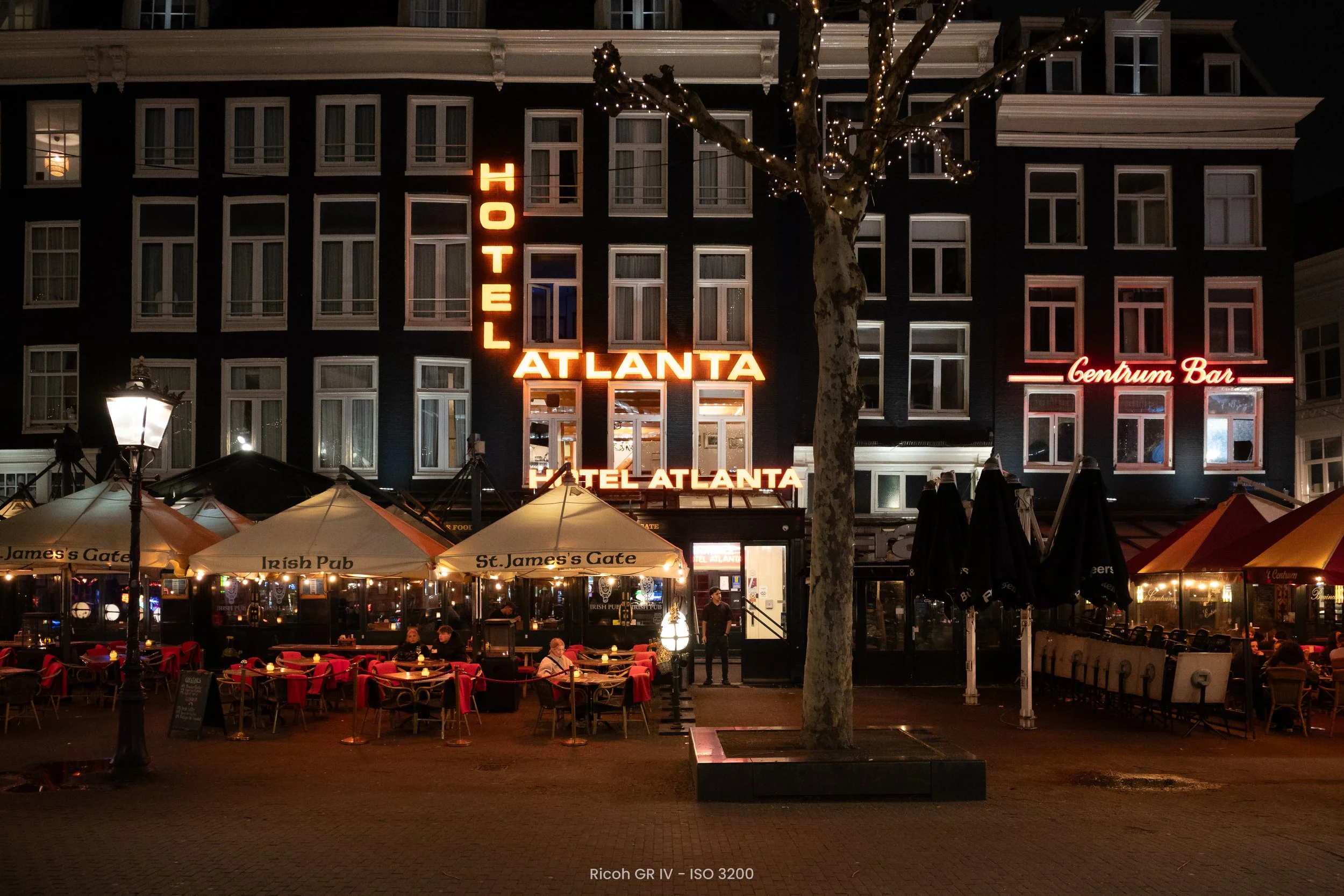
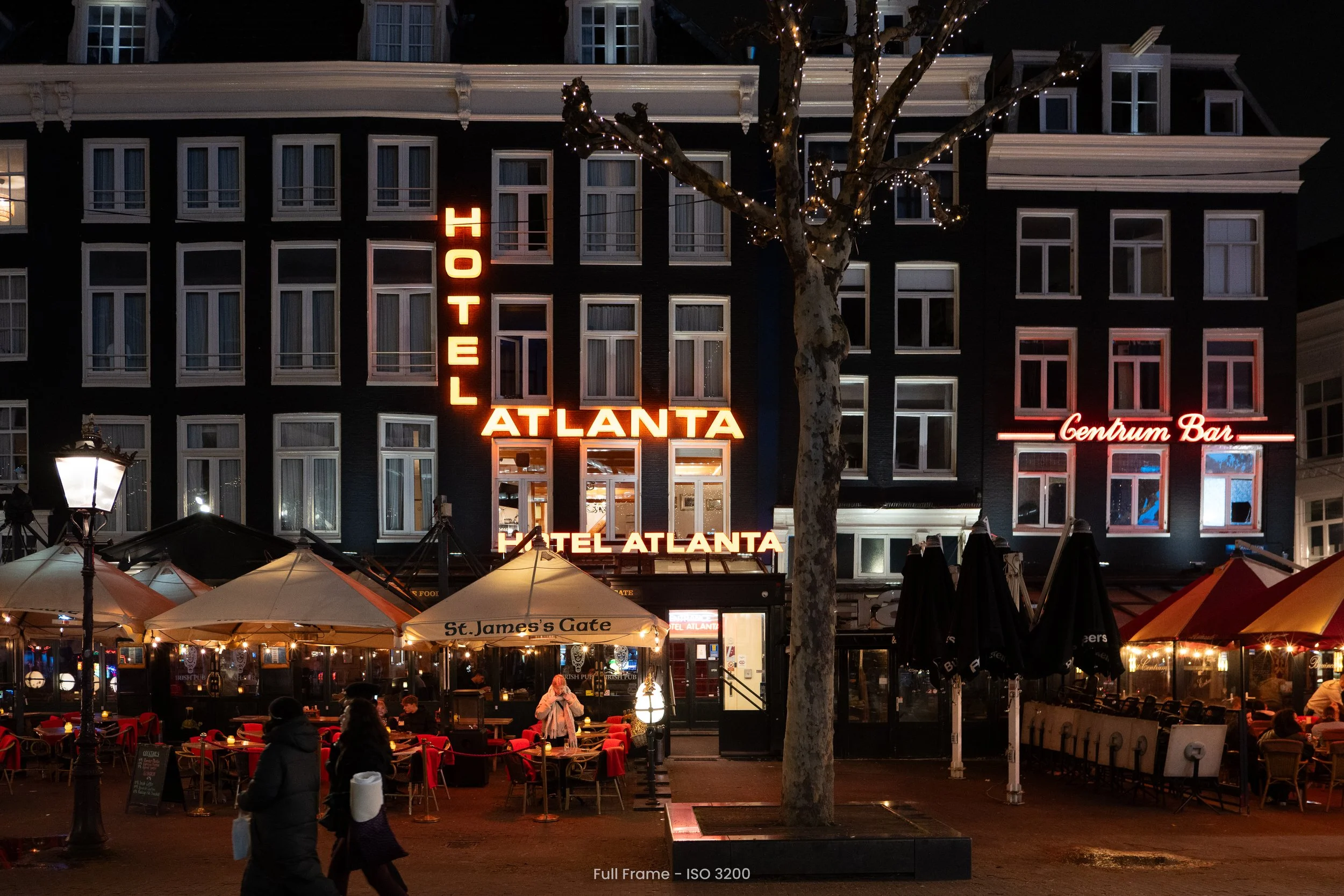
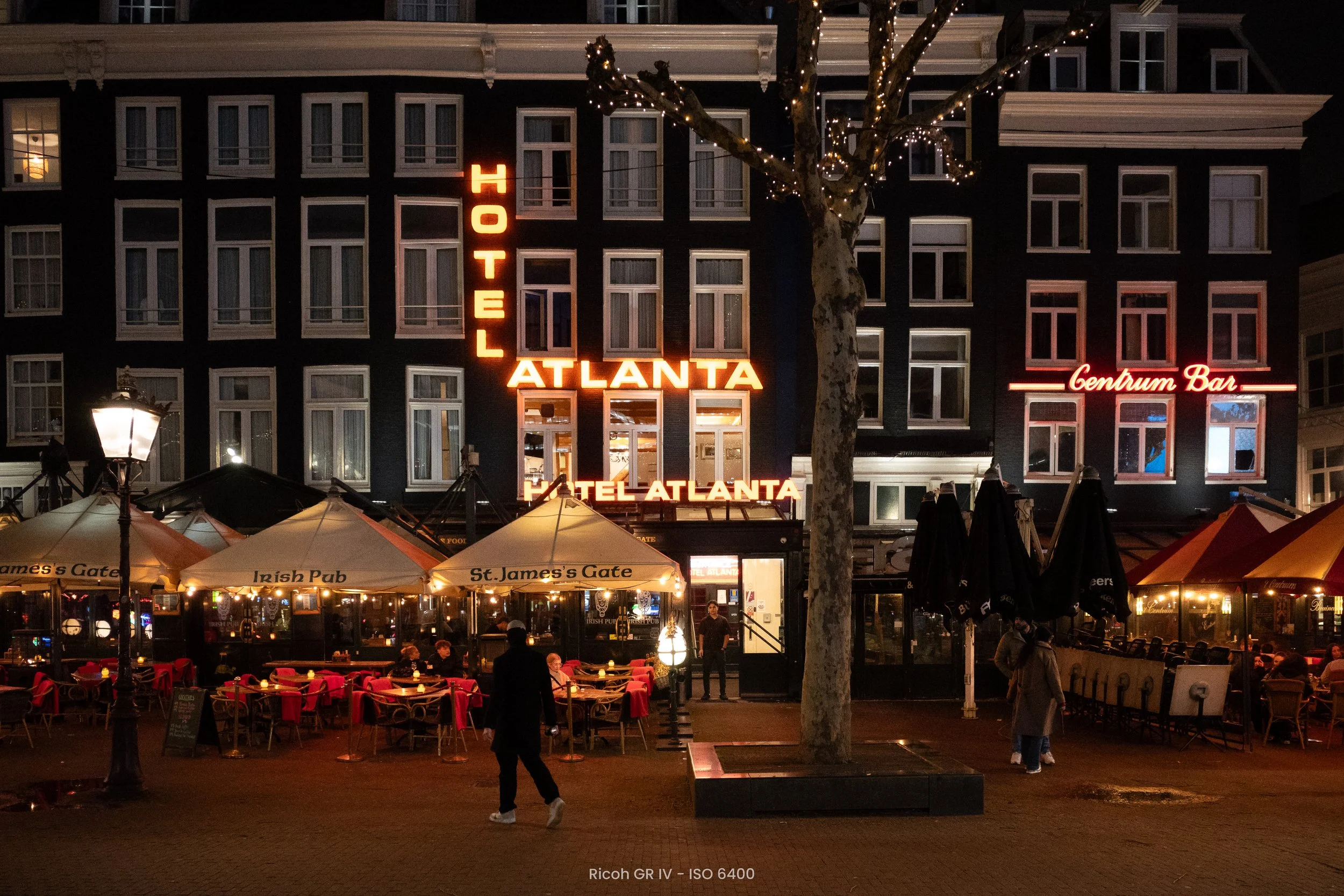
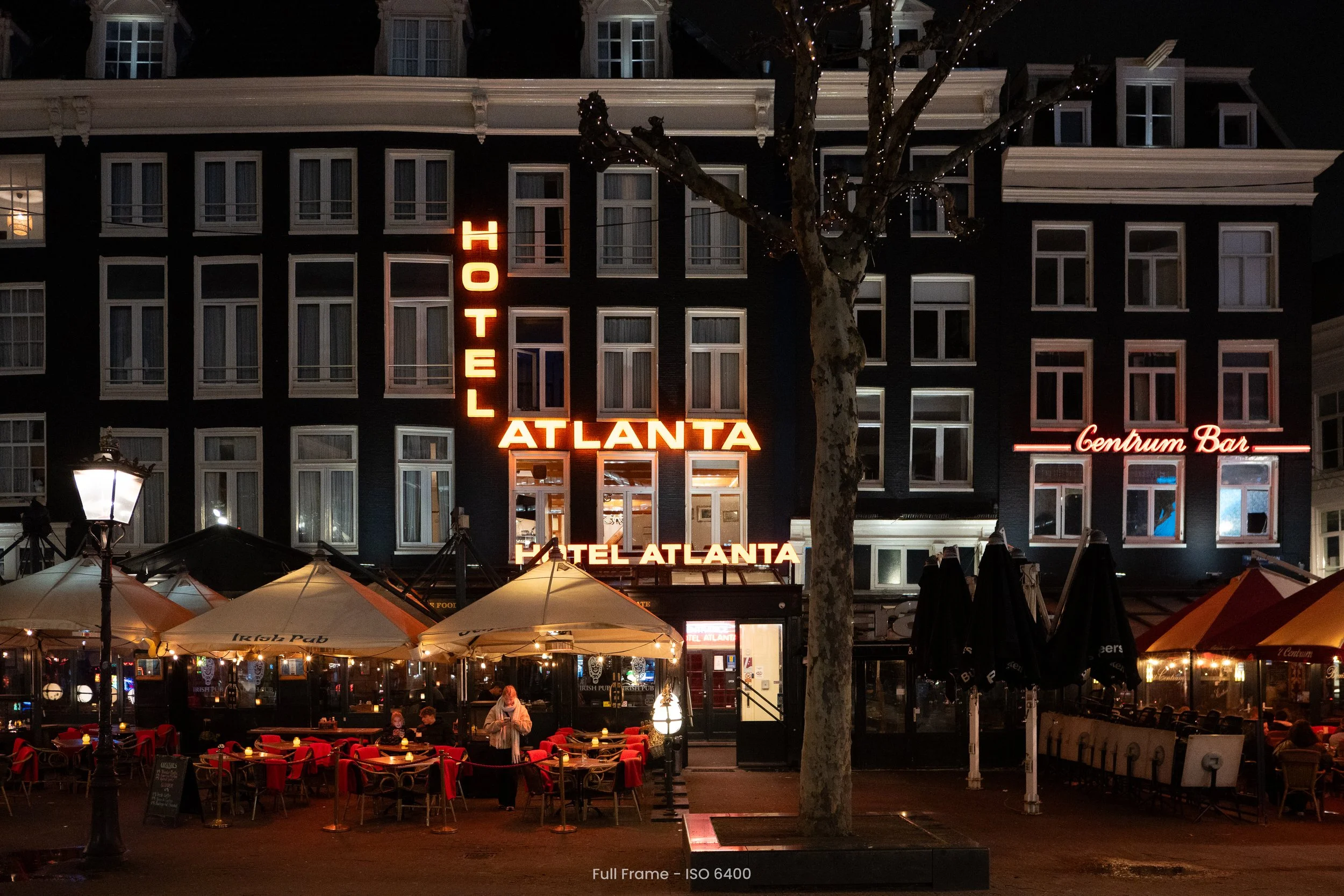
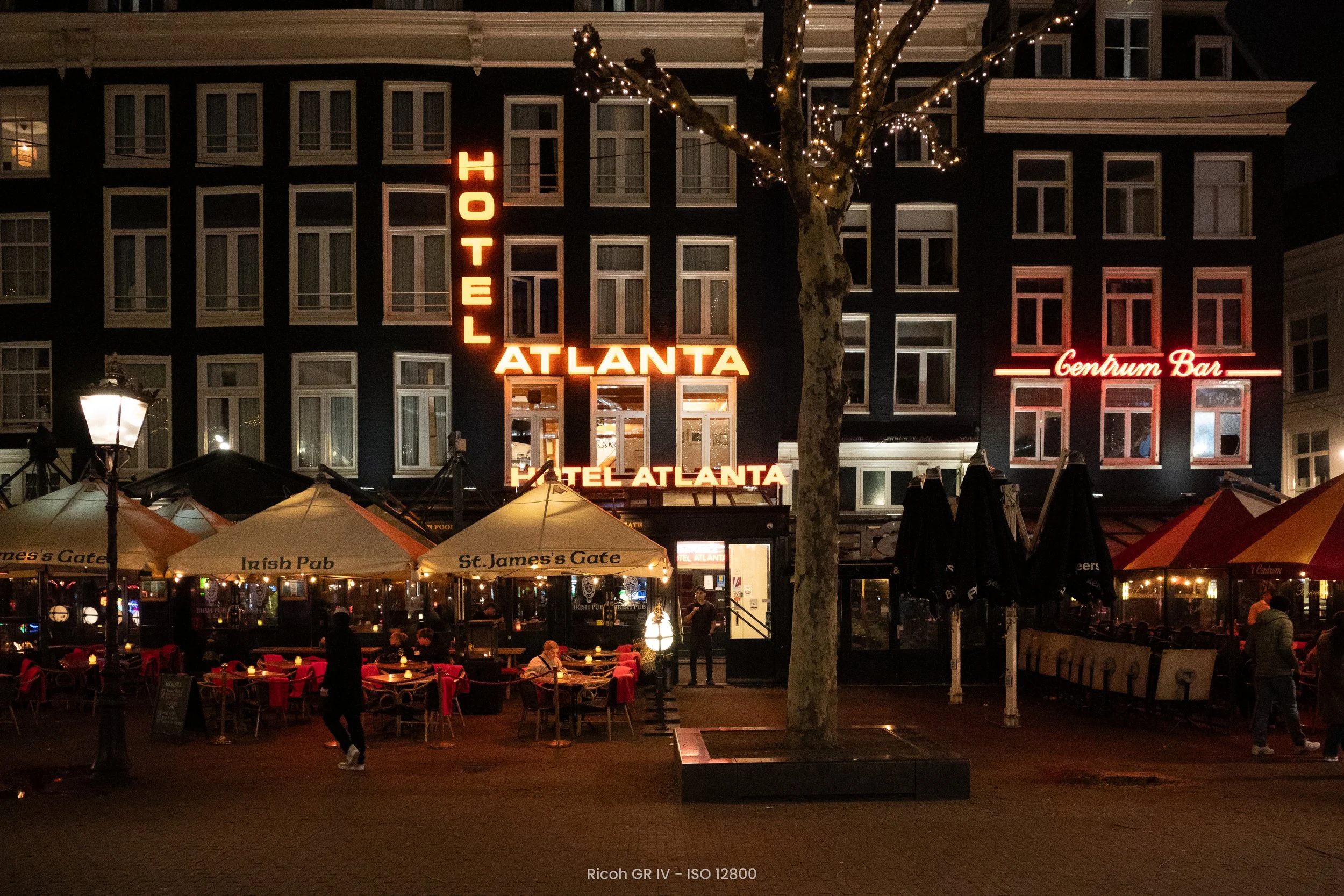
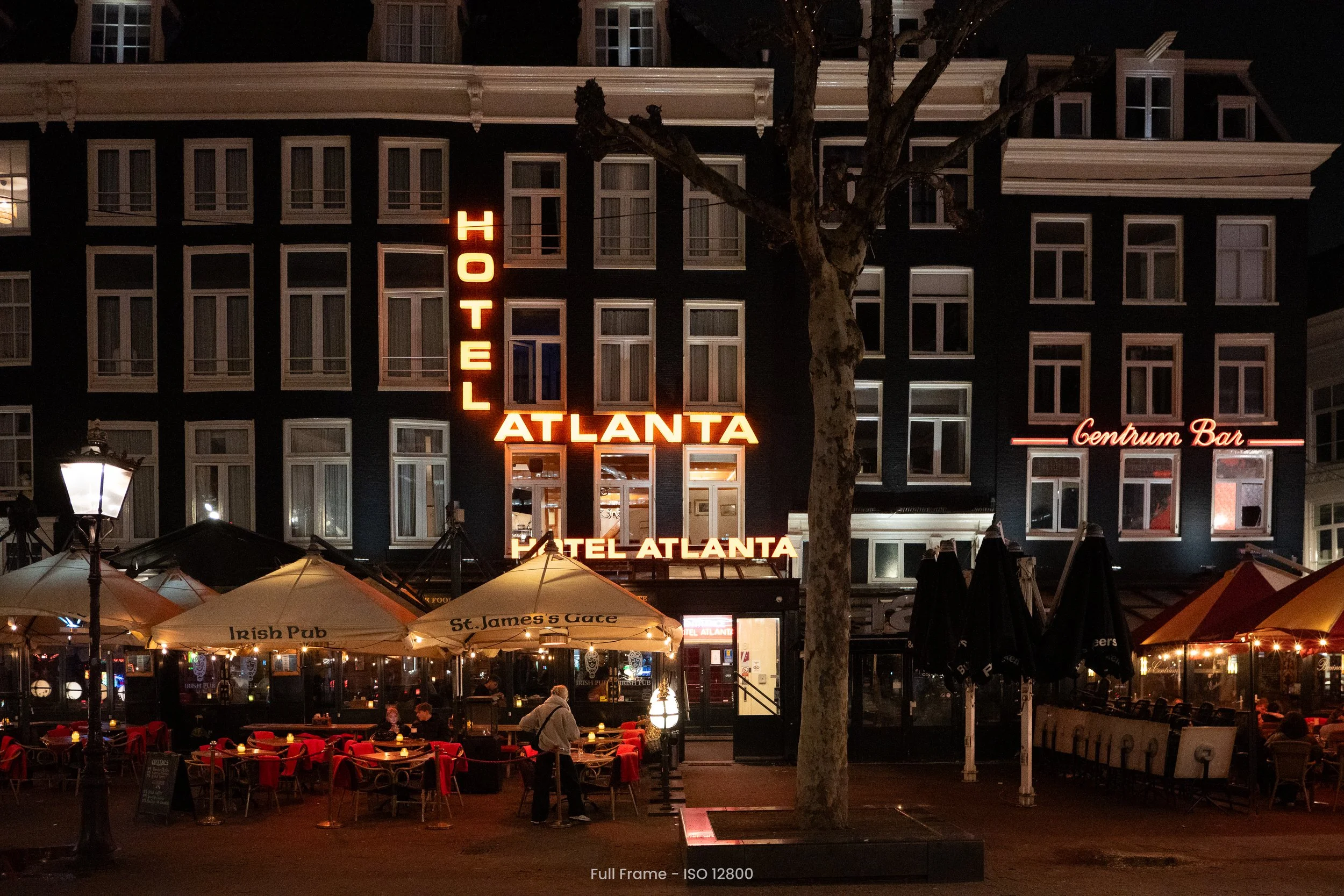
Similar to the daylight test, noise stays low on both cameras up to ISO 3200. The images remain sharp and the colors hold up well. The Ricoh GR IV performs really well even at ISO 6400 and its photos are totally usable for night photography. When there’s enough light, both the GR IV and the full-frame camera produce nearly the same amount of noise. I pushed the test further to ISO 12800 and again the results were very close, the GR IV keeps up surprisingly well. Only in extreme low-light situations (see the last four images with the tower) the full-frame camera produces noticeably less noise and even then the difference is about 10% better, certainly not 2 or 3 times better that many might expect.
⚠️ I have disabled any kind of noise reduction in the settings for both cameras to keep things fair and I haven’t applied any noise reduction.
-
Click the links below to open the uncompressed files for a more accurate comparison:
Ricoh GR IV: ISO 100 | ISO 400 | ISO 800 | ISO 1600 | ISO 3200 | ISO 6400 | ISO 12800
Full Frame: ISO 100 | ISO 400 | ISO 800 | ISO 1600 | ISO 3200 | ISO 6400 | ISO 12800
Extreme Low Light: Ricoh 6400 | Ricoh 12800 | Full Frame 6400 | Full Frame 12800
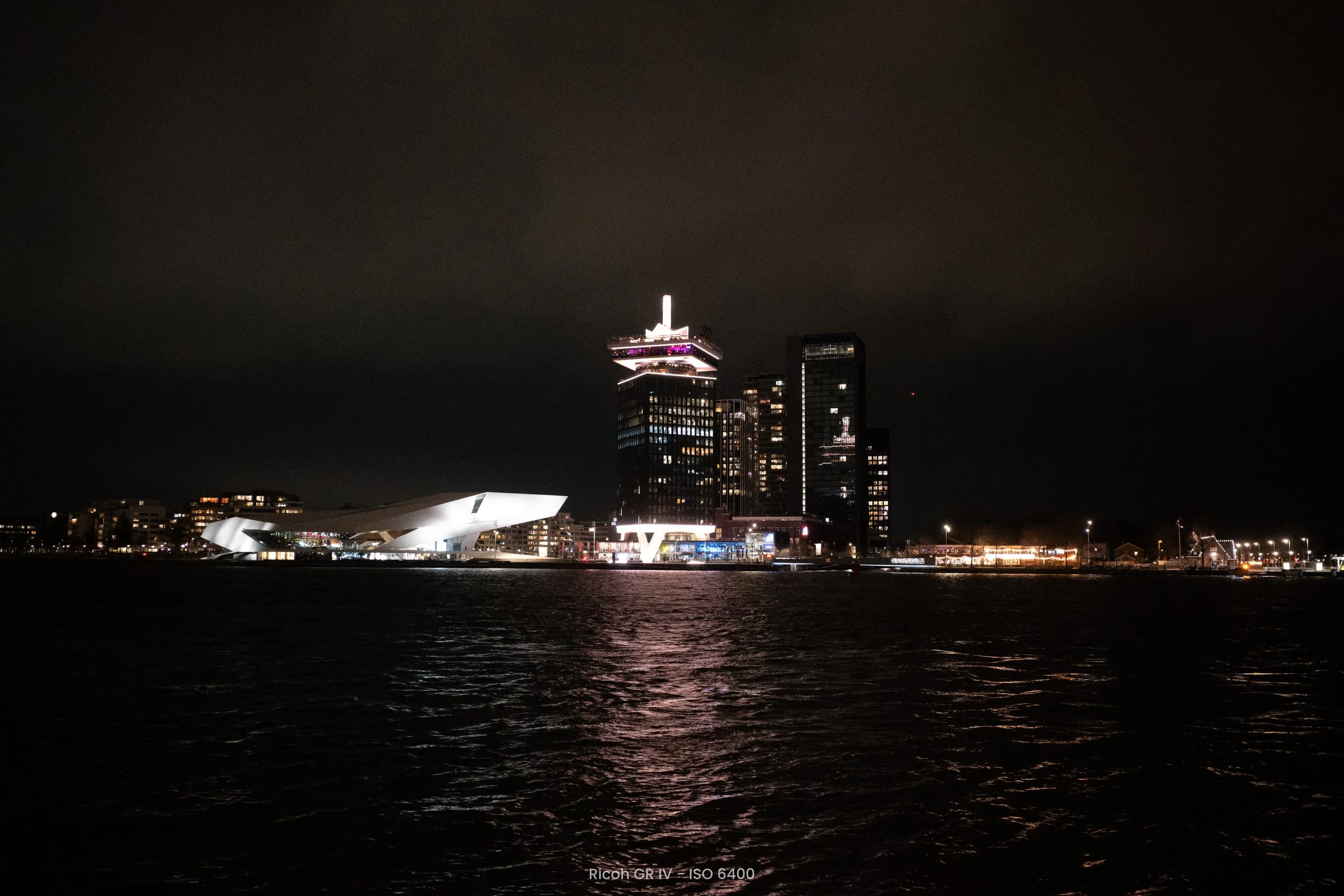
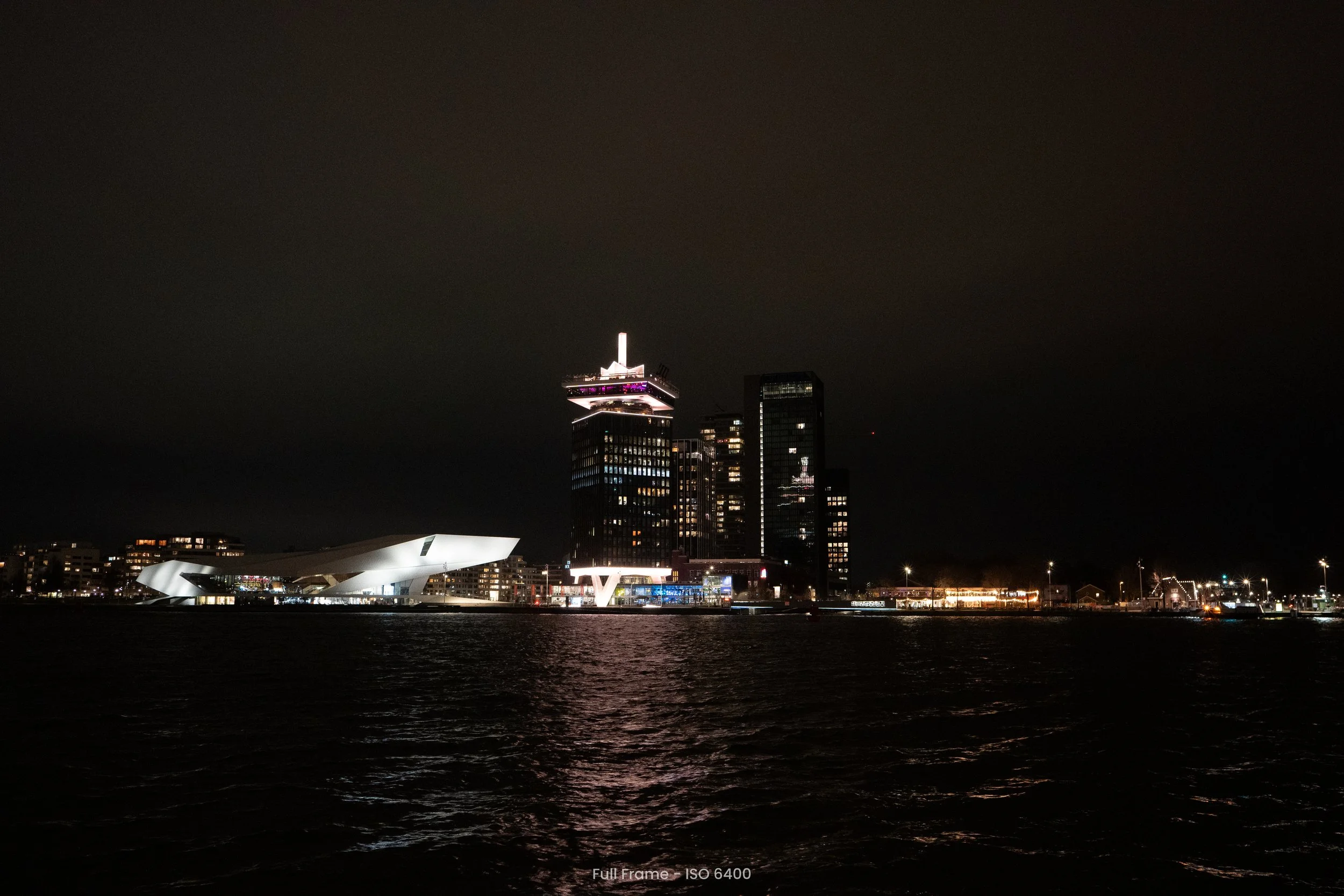
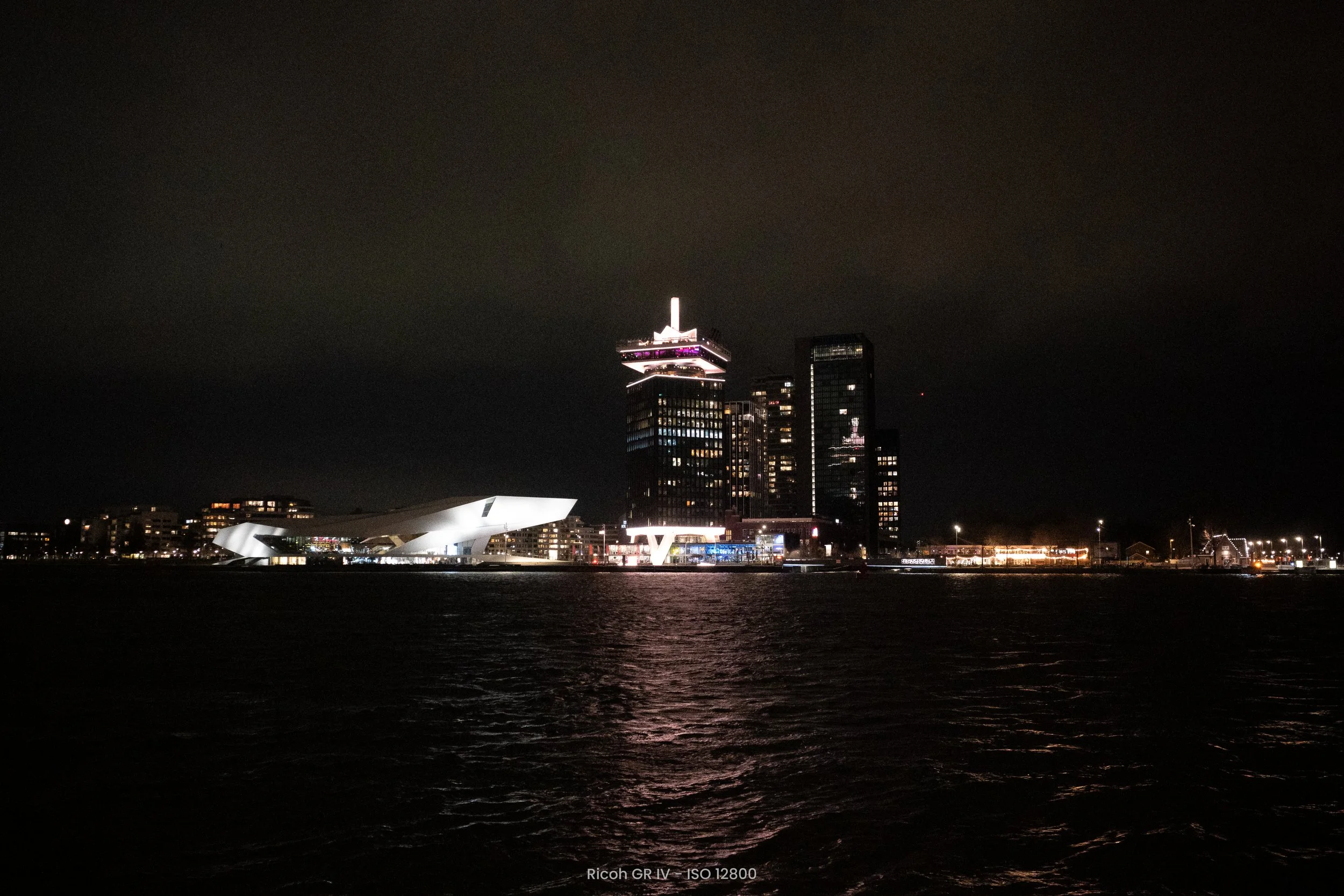
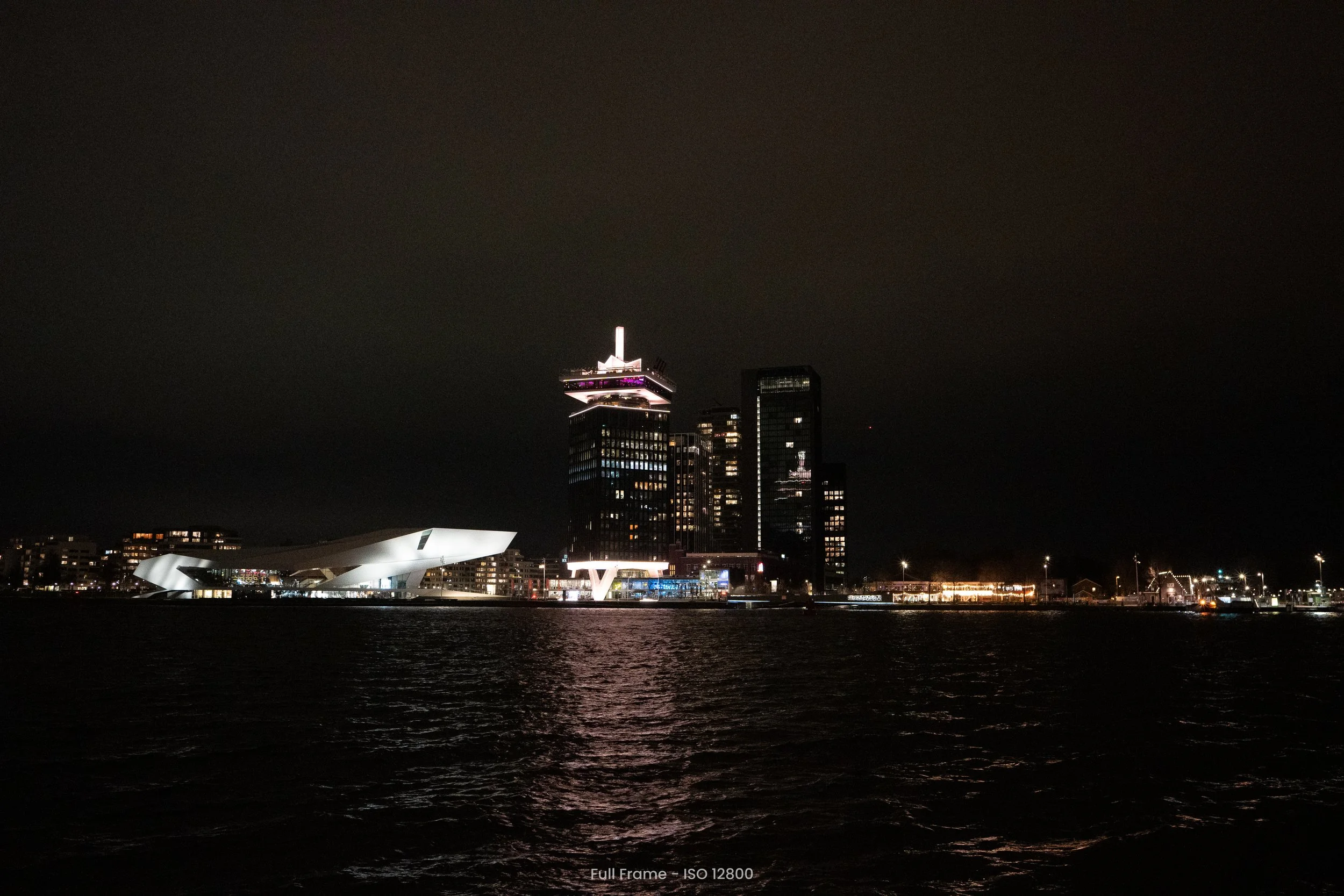
Shadow Recovery
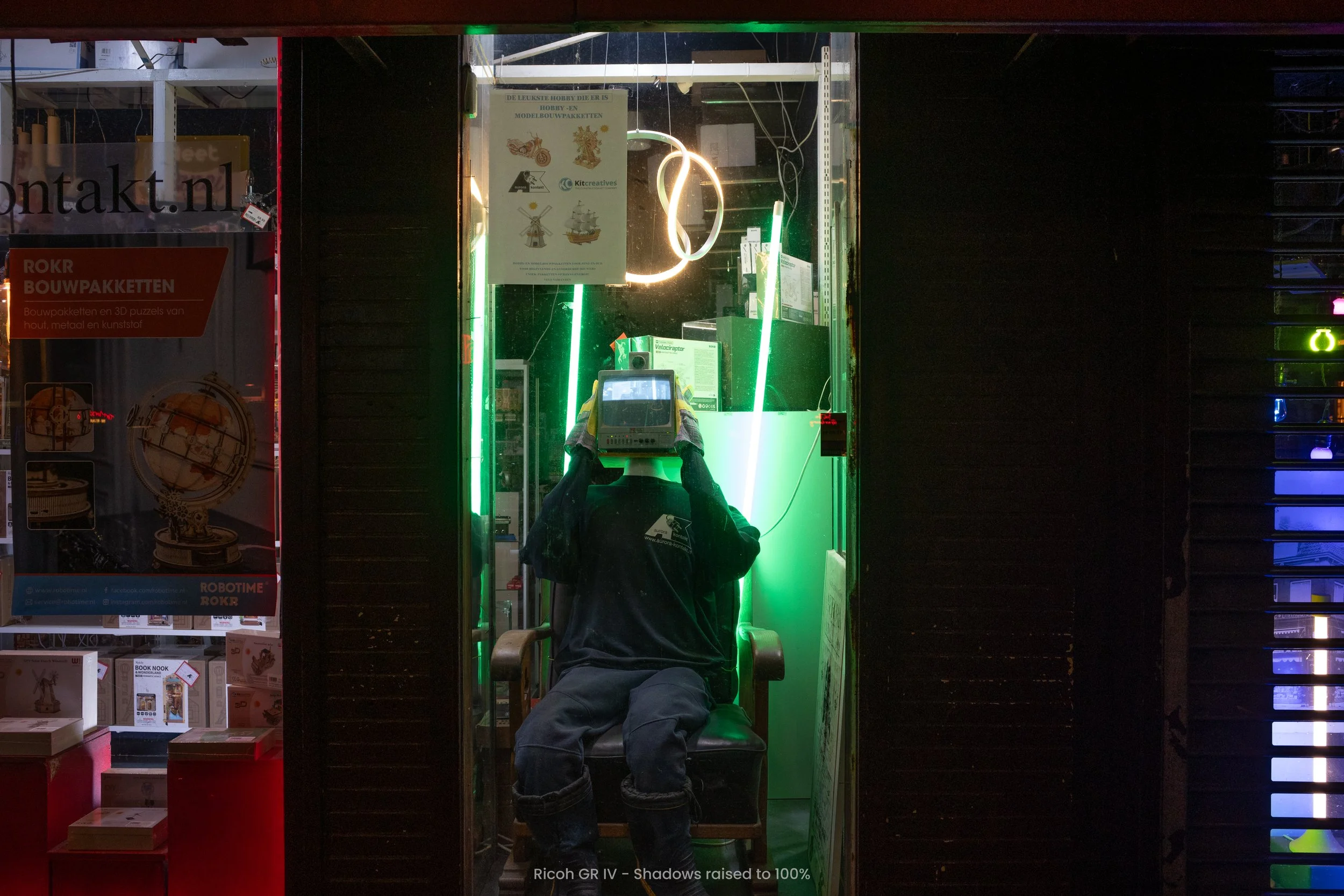
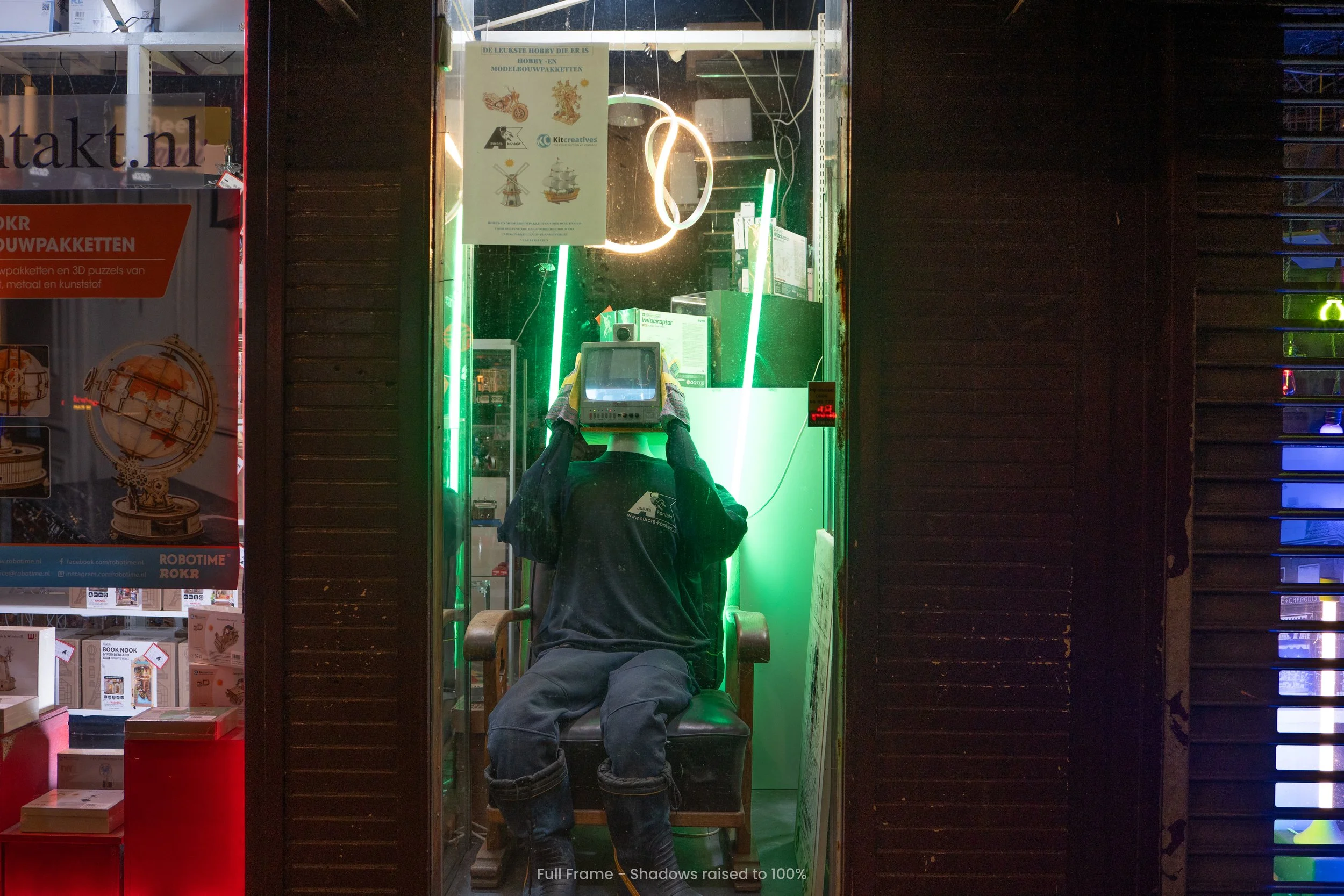
An APS-C sensor does have physical limitations and when it comes to editing the full-frame camera clearly has the advantage. Lifting the shadows on a photo shot with exactly the same settings reveals more detail with less noise. We briefly saw that earlier but the difference becomes even more noticeable in low light. Still, considering its size, the photos from the GR IV are impressive and I do believe it’s a great camera for shooting at night. A full-frame might give you more headroom for fixing mistakes during editing, but as long as you expose correctly, the Ricoh GR IV will get the job done.
Stabilization
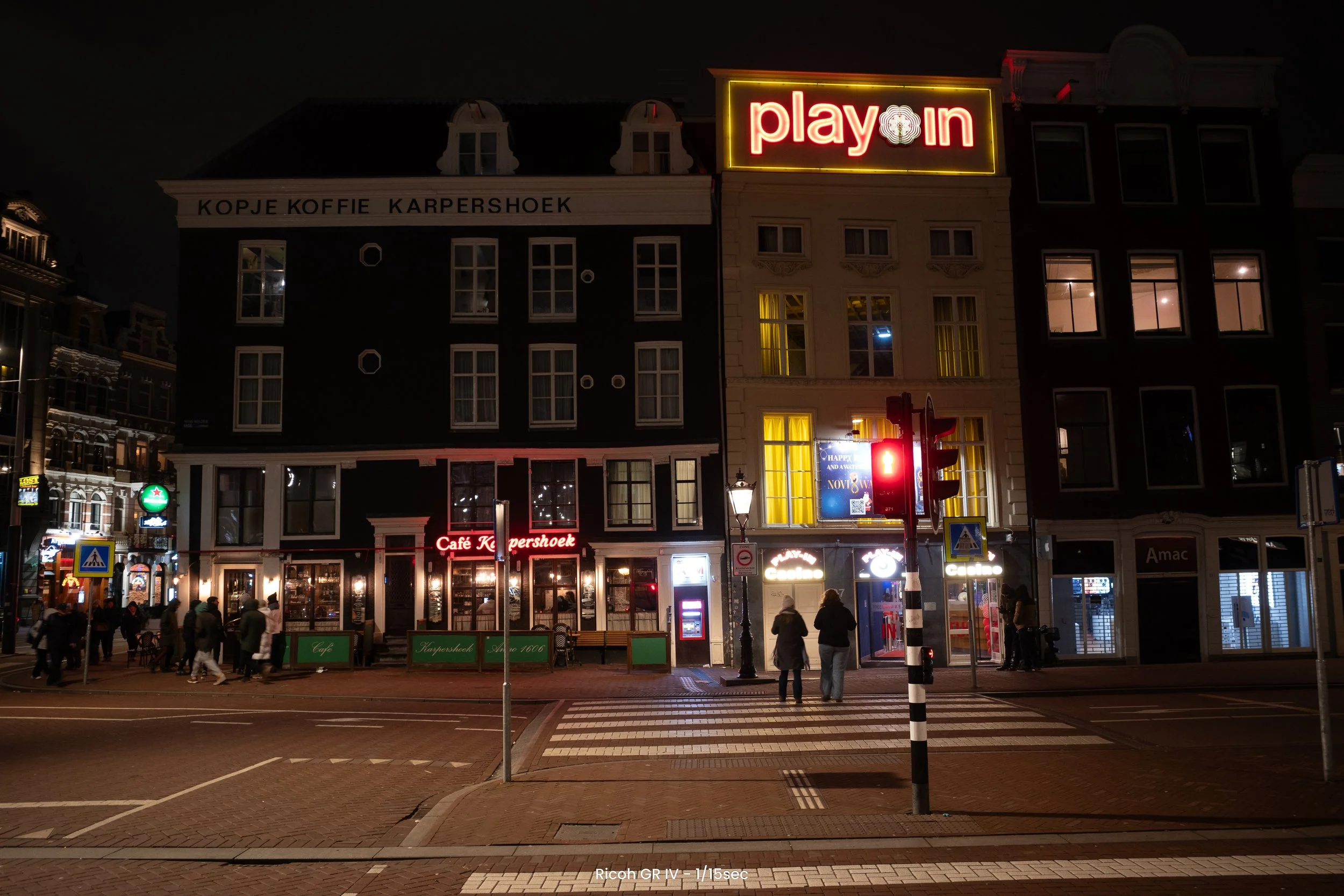
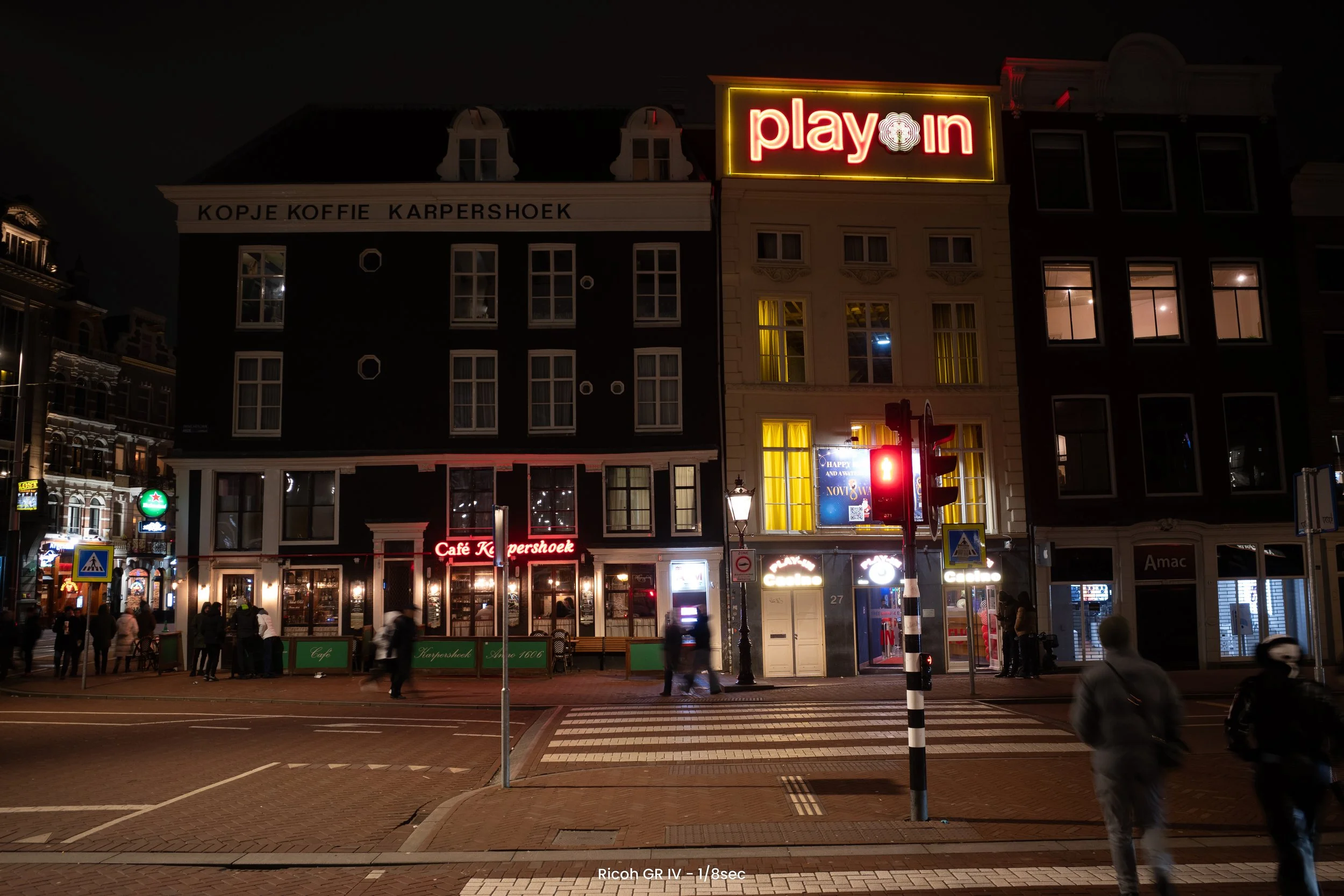
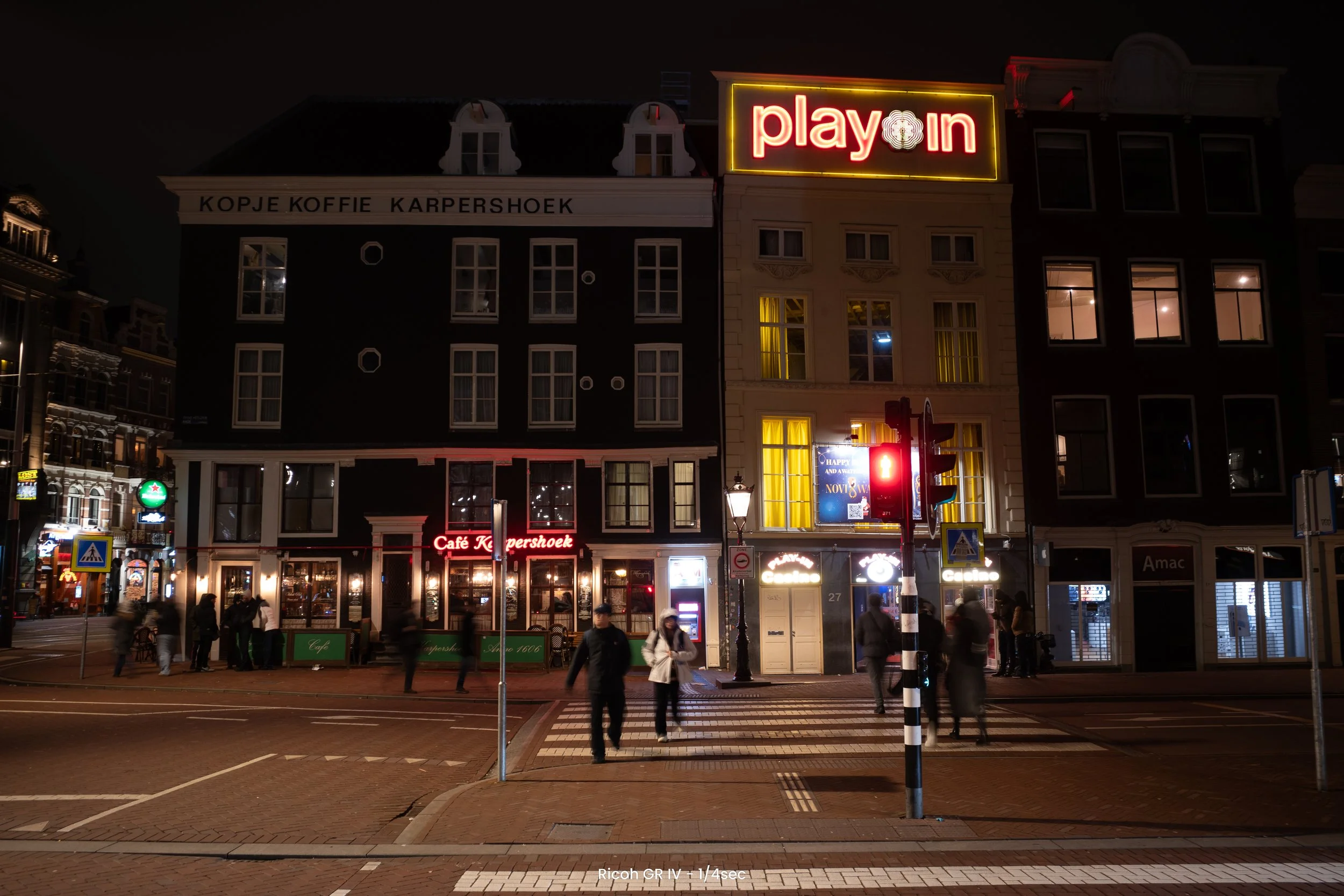
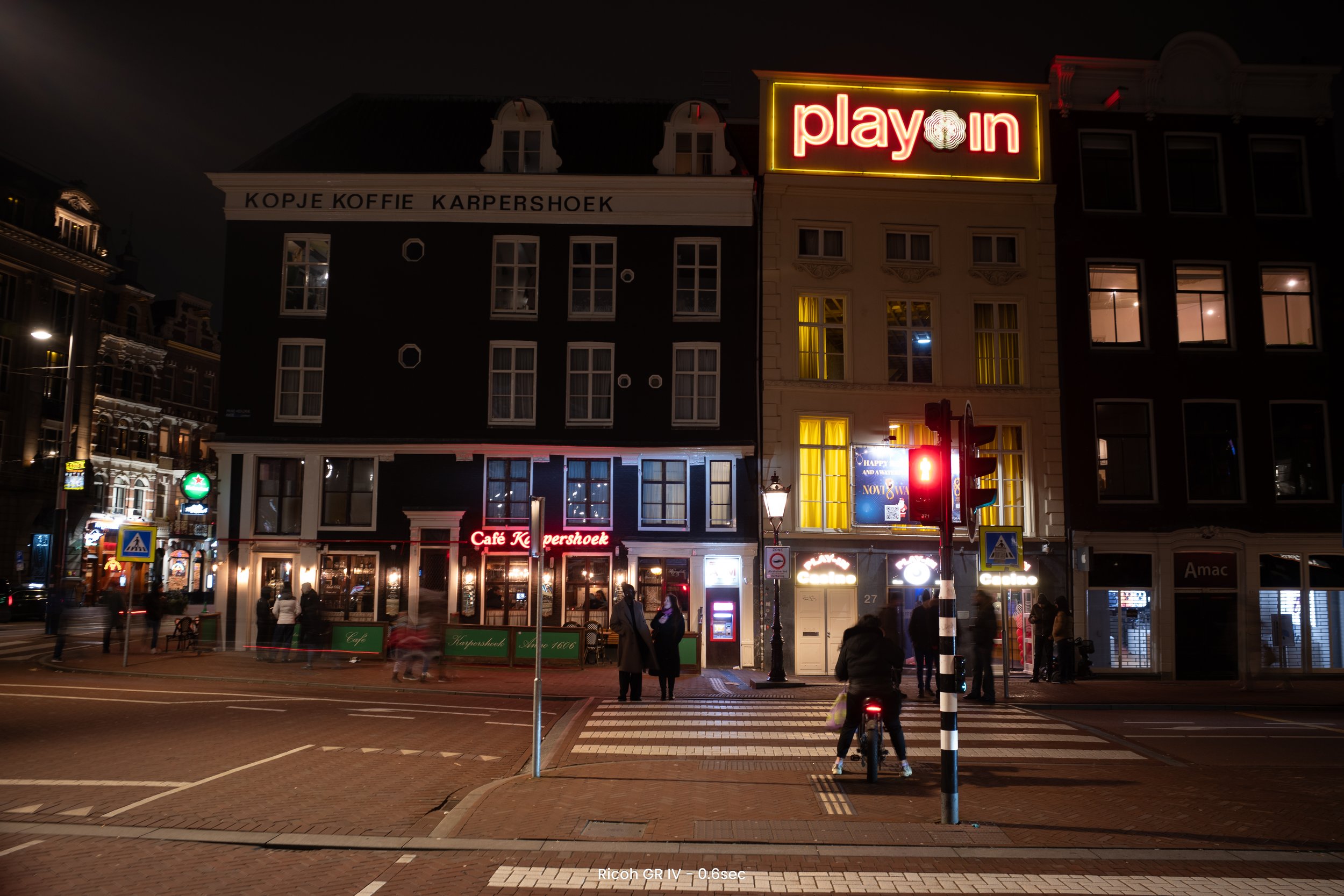
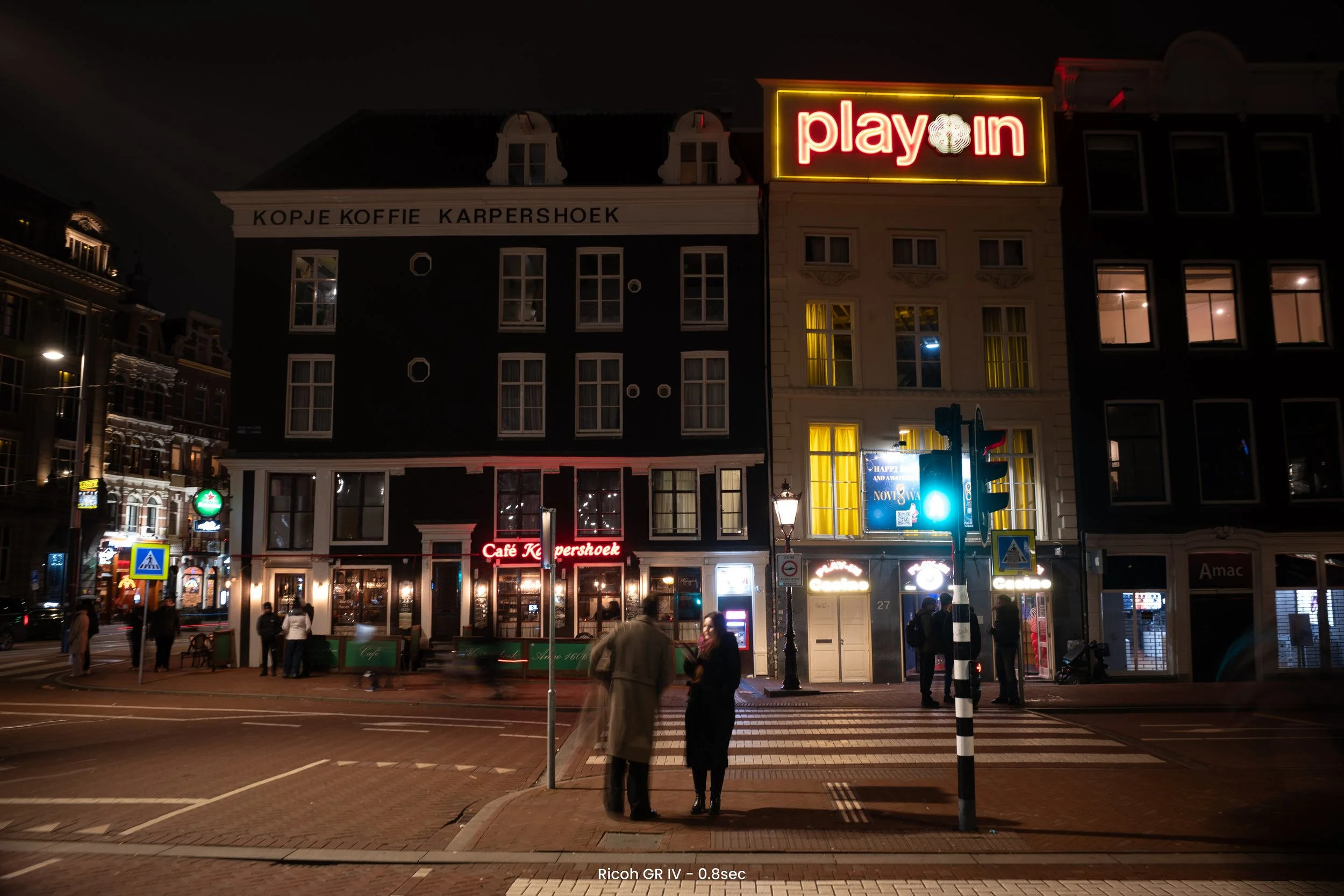
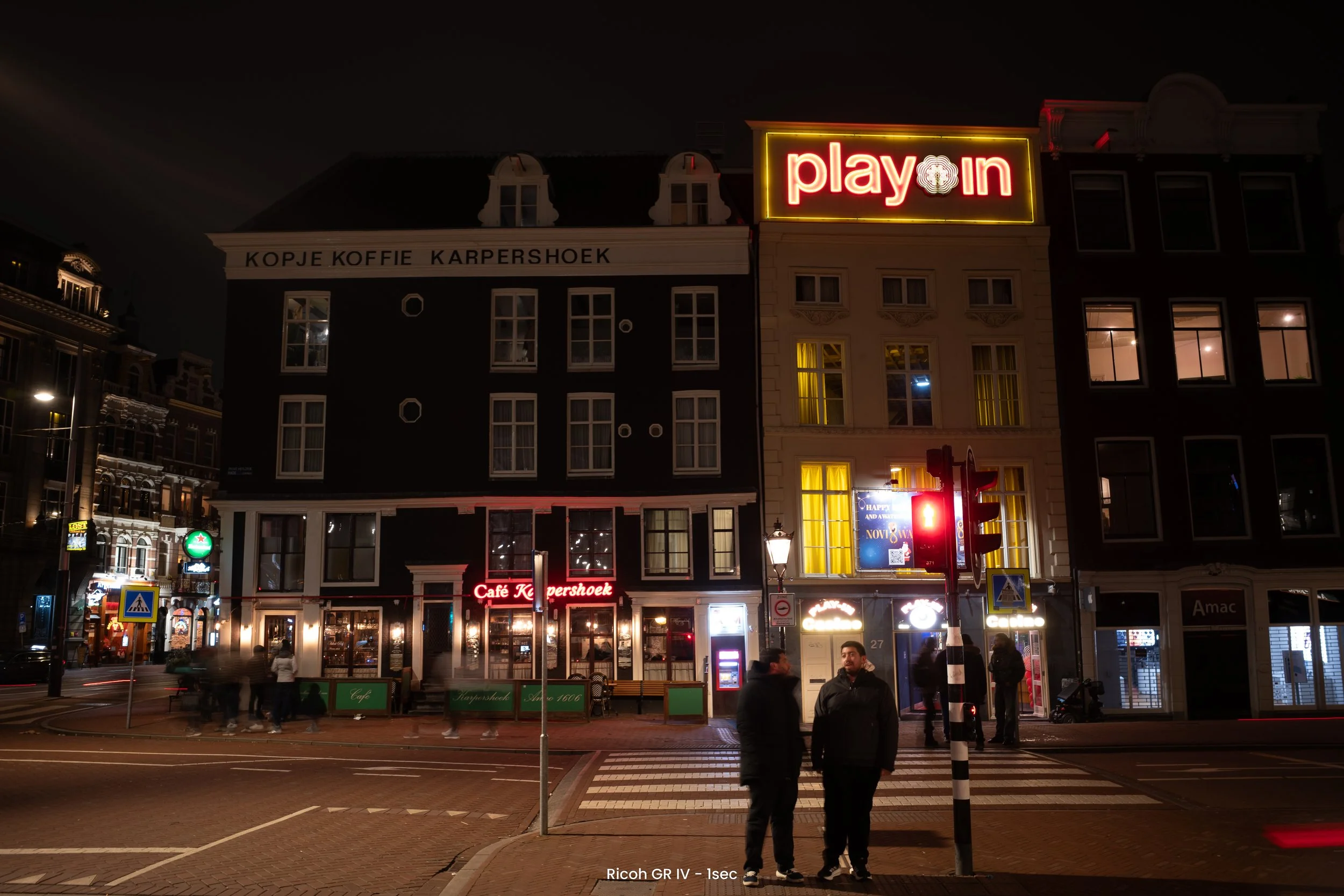
ISO performance is only part of the story. In real street shooting, stabilization matters just as much, since low light often requires slower shutter speeds. The GR IV performs impressively here, thanks to its 6 stops of image stabilization. I was able to get sharp results at shutter speeds up to half a second and in some cases even captured usable shots at a full second.
Conclusion
Overall, the Ricoh GR IV performs remarkably well, especially considering its small APS-C sensor and compact lens. In daylight, image quality (including ISO performance and sharpness) is identical to a full-frame camera and even in low light it continues to impress. While the full-frame camera still holds an advantage in extreme low light conditions, particularly for shadow recovery and noise, the GR IV proves that a pocket camera can deliver excellent results in real-world street photography even at night. I do believe that APS-C cameras in general have come a long way and we can now put them to the test directly against full-frame sensors. A tiny camera like the Ricoh GR IV proves exactly that!
If you want to see a more in depth comparison and things we didn’t cover here like shooting experience, customizability and autofocus performance feel free to check out my YouTube video below.
If you're interested in my long-term experience with both of these cameras, you might also enjoy: